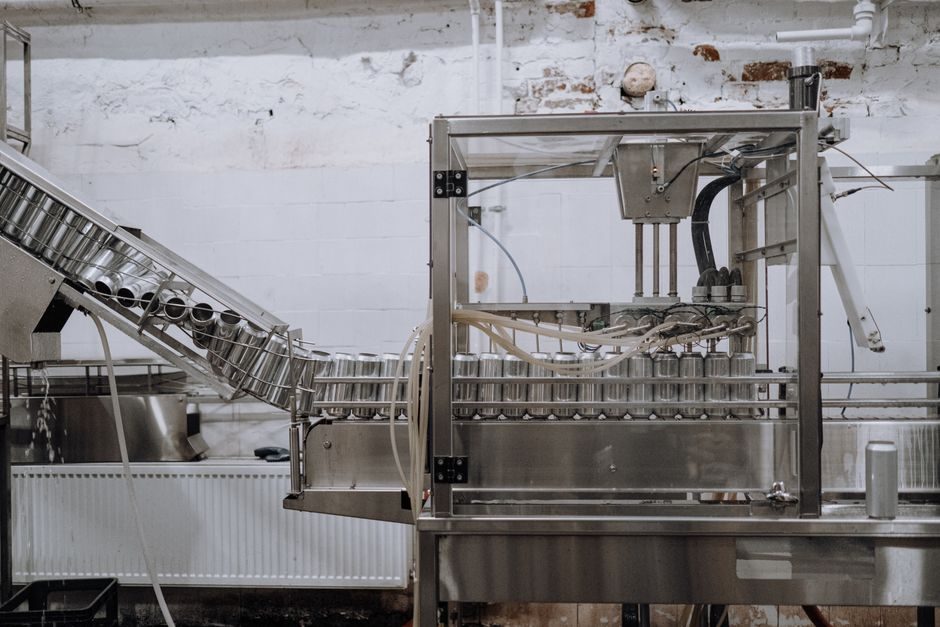
Aluminum die casting encompasses five distinct process families — high-pressure cold chamber, hot chamber, gravity, low-pressure, and vacuum — selected by alloy, part geometry, and mechanical-property target. High-pressure cold chamber machines clamp between 250 and 850 tons and account for the majority of structural aluminum components produced globally, with A380, A383, A384, and ADC12 as the dominant alloys [S1][S2].
Selection among the five process types is governed by part weight, wall thickness, alloy family, and required pressure tightness. Foundries such as Dynafond (Eure, France, operating since 1991) and Fulltech Industry (Kunshan, Jiangsu, founded 2012) operate dedicated high-pressure cells, with maximum casting envelopes commonly reported up to 1500 mm L × 900 mm W × 400 mm H for general industrial work [S3][S4].
High-Pressure Cold Chamber Die Casting
High-pressure cold chamber is the dominant process for aluminum, using injection pressures typically between 30 and 100 MPa and a separate shot sleeve that keeps molten aluminum below the pump mechanism. Technical Die-Casting (Stockton, MN) operates a 400–850 ton cell floor of 11 cold chamber machines, with 100% real-time shot-scope monitoring on every machine [S2]. The process routinely produces thin-wall parts down to ~2 mm wall thickness and supports alloys such as A380 (most common), A383 (improved die life), A384 (high-ductility), and ADC12 (Asian market equivalent) [S1][S6].
Cold chamber is the right choice when the part is structural, requires high tensile strength (typically 240–330 MPa for as-cast A380), and demands cycle times below 60 seconds. It is NOT a good fit for very large parts over ~10 kg shot weight or for alloys with iron content too low to prevent soldering to the die — in those cases gravity or low-pressure is preferred. For a deeper primer on the equipment, see die casting machine fundamentals and the dedicated aluminum die casting machine reference.
Hot Chamber Die Casting for Aluminum
Hot chamber die casting for aluminum exists but is uncommon because molten aluminum aggressively attacks (dissolves) the iron-based gooseneck and plunger, dramatically shortening tooling life. The hot chamber process is generally reserved for low-melting-point zinc, magnesium, and lead alloys, with typical melt temperatures around 400 °C for zinc; aluminum melts at ~660 °C and is therefore processed almost exclusively in cold chamber equipment [S1].
Where hot chamber aluminum cells are reported, they use special iron-nickel-chromium alloy goosenecks and run at very slow cycle rates — a trade that almost never pays off compared with cold chamber. If a buyer sees "hot chamber aluminum" on a quote, it usually means a small specialty shop running a niche alloy such as an Al-Si eutectic with a refractory-protected plunger. For magnesium (the common hot-chamber structural metal), see magnesium die casting machine coverage.
Gravity and Low-Pressure Die Casting
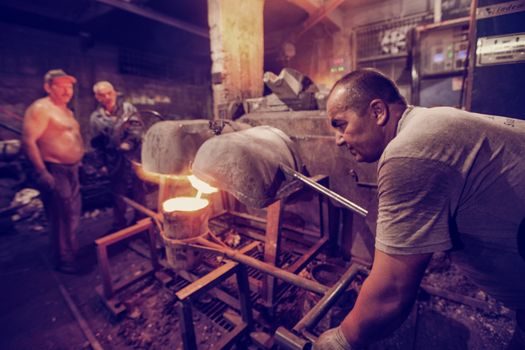
Gravity die casting (permanent mold) fills the cavity under gravity alone and yields denser, lower-porosity parts than high-pressure, at the cost of longer cycle times (typically 3–8 minutes vs. under 60 s) and limited thin-wall capability. Minimum practical wall thickness sits around 4–5 mm, and parts routinely reach 20–30 kg shot weight. The process is widely used for automotive cylinder heads, engine blocks, and structural nodes where pressure tightness matters more than cycle time [S1][S4].
Low-pressure die casting (LPDC) fills the cavity at 0.3–1.0 bar (roughly 30–100 kPa) from below, using pressurised air on a sealed furnace. This yields even lower gas porosity than gravity and is the workhorse for automotive wheels and high-integrity suspension arms. For tonnage-band and alloy pairing on LPDC equipment, the low pressure die casting machine spec map breaks down the machine-class selection criteria. Equipment reference for the permanent-mold family sits under gravity die casting machine.
Vacuum Die Casting for High-Integrity Parts
Vacuum high-pressure die casting evacuates the die cavity (typically to below 50 mbar) before injection, eliminating air entrapment and reducing dissolved-gas porosity that would otherwise require impregnation. The result is heat-treatable components suitable for structural automotive nodes, steering knuckles, and telecom heat sinks where post-casting T6 or T7 heat treatment is specified [S1][S5].
The trade is cycle penalty (~10–20% longer than conventional HPDC) and higher tool cost for the sealed cavity and vacuum-channel machining. Vacuum HPDC is NOT a universal upgrade — for non-heat-treated cosmetic parts the cost is not justified. For deeper engineering coverage, see vacuum die casting machine.
Process Comparison: Selecting the Right Method
A four-criteria comparison lines the main process options against the engineering decision points: [S2]
• Cycle time — HPDC cold chamber: under 60 s; vacuum HPDC: 60–90 s; LPDC: 2–5 min; gravity permanent mold: 3–8 min.<br>• Min practical wall — HPDC: ~2 mm; vacuum HPDC: ~2 mm; LPDC: 3–4 mm; gravity: 4–5 mm.<br>• Typical porosity — HPDC: 5–15% area fraction; vacuum HPDC: under 2%; LPDC: under 1%; gravity: under 1% [S1][S2][S5].<br>• Typical part mass — HPDC: 0.05–10 kg; vacuum HPDC: 0.5–15 kg; LPDC: 5–30 kg; gravity: 1–50 kg [S4].
Buyers should map their required tensile strength, heat-treat status, leak-tightness target, and annual volume to one of these process envelopes before quoting tooling. Switching process families mid-program usually means a new die, so the choice belongs in the design-for-manufacturing review, not the RFQ stage.
Common Alloys and Their Selection Logic
Aluminum die-casting alloys sit in the Al-Si system (typically 7–13% Si) for fluidity and low hot-tearing. A380 (UNS A03800) is the global default for general-purpose HPDC parts, offering tensile strength of ~240–330 MPa, elongation 1–3%, and good die-fill behaviour. A383 (UNS A03830) trades slightly lower strength for improved die life under high-temperature runs. A384 (UNS A03840) targets higher ductility (~3–5% elongation) and is used where impact resistance matters [S1][S6].
ADC12 (Japanese equivalent to A383) dominates Asian supply, including the Made-in-China supplier base; Longhua's horizontal cold-chamber injection machines and supporting degassing/auto-trimming equipment are commonly quoted alongside it [S6]. Special alloys such as AlSi9Cu3 (European equivalent) and AlSi10Mg0.3 (heat-treatable, used in structural vacuum HPDC) round out the engineering palette. Avoid mixing alloy families between HPDC and LPDC without re-qualifying the heat treatment, since cooling rates differ by an order of magnitude.
Industrial Applications by End-Use

Automotive and transport remain the largest end-use segment, driven by transmission housings, engine brackets, inverter enclosures for EVs, and structural nodes (vacuum HPDC, T6/T7 heat-treated). Telecom is the second major structural user — aluminum heat sinks, RF filter bodies, and 5G base-station housings exploit HPDC's thin-wall and EMI-shielding behaviour [S2][S3].
Industrial machinery (valve bodies, pump housings, gear cases), electric motor end-caps, lawn & garden, off-highway, agricultural, motion-control, and commercial appliances round out the demand base. Technical Die-Casting's published line of business explicitly lists electric motor, lawn & garden, motion control, agricultural, telecom, recreational, power transmission, valve, commercial appliance, and off-highway vehicles as primary served markets [S2]. Custom OEM auto parts on Made-in-China list typical FOB price bands from US$1.00–5.00 per piece at 100-piece MOQ for alloy auto parts, while complete horizontal cold-chamber cells from Longhua list in the US$49,685–49,885 range per piece and dedicated die-casting equipment sets around US$431,700–432,200 [S6][S7]. For context on how aluminum die-cast valve and pump housings fit into fluid-handling assemblies, diaphragm valve sizing and material selection shows the downstream spec map.
Tooling, Defects, and Engineering Controls
The single biggest defect in HPDC aluminum is porosity — gas entrapment and shrinkage — controlled through shot profile, vacuum assist, and die design. Engineering-driven suppliers such as EMP Tech (Shenzhen) run proactive Moldflow simulation on wall thickness uniformity before cutting steel, and pair this with robotic extractors and in-line AI visual inspection to flag defective parts [S5].
Other routine defects are cold shuts (insufficient die temperature or fill velocity), soldering (alloy sticking to die steel, mitigated by iron-content control and die coatings), and flash (excess clamping tonnage or worn shut-off). Buyers should ask suppliers for a documented shot-scope report and a first-article CT or dye-penetrant inspection plan before releasing tooling for production. Standard reference for die construction is covered under die casting die.
Standards, Certification, and Sourcing Watch-Points
Most automotive and industrial buyers now require ISO 9001:2015 certification as a baseline, with IATF 16949 mandatory for tier-1 automotive supply. Material certifications should reference UNS alloy designations (A03800, A03830, A03840) and the relevant casting tolerance standard, commonly ISO 8062-3 (CT5–CT7 for die casting) [S2][S3].
For high-pressure die-casting equipment buyers, watch for CE-marked cold-chamber machines (the Made-in-China product feed lists CE-approved Longhua cells explicitly) and confirm vacuum-system integrity specifications before acceptance [S6][S7]. Surface-finish buyers (anodising, powder coat) should request a 3-axis CMM dimensional report and a salt-spray rating to ASTM B117 if the part will see external exposure. The Dynafond long-running Eure operation, EMP Tech's automotive tier-2 position, and the Made-in-China/Longhua equipment ecosystem are the most verifiable Western and China-based supply nodes surfaced in the July 2026 dataset [S4][S5][S6].
Next step: lock the alloy (A380 vs. ADC12 vs. AlSi10Mg0.3) and the process family (HPDC vs. LPDC vs. vacuum HPDC) in the DFM review, then request a Moldflow simulation report and a CT-scanned first-article from any shortlisted foundry before releasing tooling for serial production. Trackable signals to watch: ISO 9001:2015 audit renewals, IATF 16949 surveillance audit results, and published Longhua / EMP Tech / Dynafond capacity updates on their respective July 2026 site snapshots.