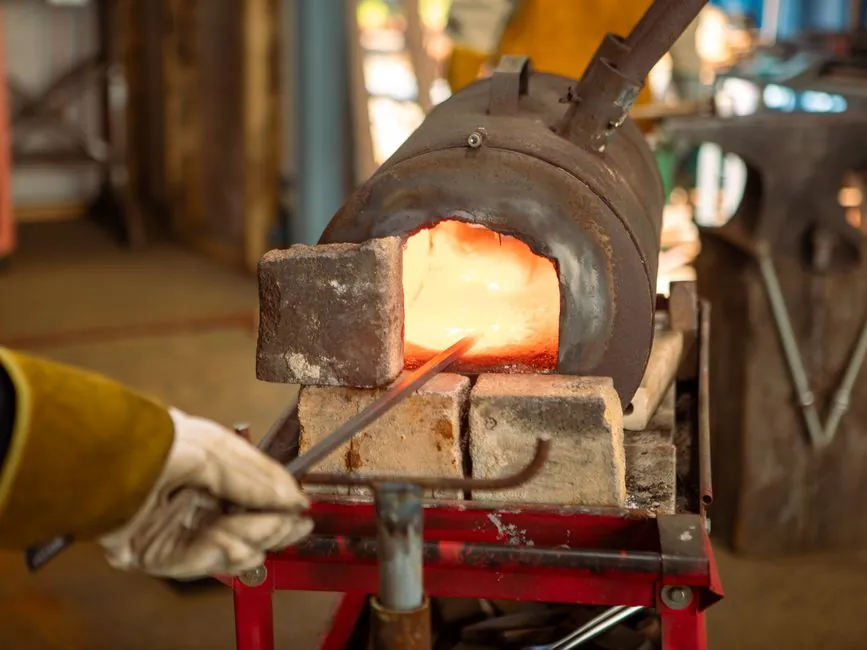
Molten aluminum and its common foundry alloys stay in a 680 to 750 °C window for holding, since pure aluminum melts at 660 °C while alloys require control between 700 and 750 °C to maintain fluidity without excessive oxidation [S7].
Within that band, electric resistance and induction furnace systems reach temperature precisions of ±5 °C, versus ±15 to ±20 °C for gas-fired holders, making the 720 ± 20 °C midpoint the practical target for most continuous casting and die casting cells [S3].
What the 680 to 750 °C Window Means in Practice
The 680 °C lower bound sits just 20 °C above pure aluminum's 660 °C melting point, and the 680 °C figure is cited as the safe holding threshold for portable low-cost aluminum melting systems in published 2023 research, with a 600–750 °C work envelope covering all common Al-Si and Al-Cu foundry grades [S4]. A dedicated holding furnace does not melt the metal; it only maintains it at a stable temperature after a primary melter has done the latent-heat work, so 700–750 °C is the cited holding band for clean molten metal supply [S1].
Pushing toward 750 °C is acceptable for alloys with higher liquidus lines, but molten aluminum becomes chemically aggressive toward certain refractory types above 750 °C, which is the upper ceiling most refractory suppliers still recommend for long-term service [S6]. The result is a narrow 70 °C operating corridor where the foundry trades off fluidity, dross generation, refractory wear, and energy input on every shift.
Why Electric and Induction Beat Gas-Fired Holding
Induction holding delivers zero direct CO₂ emissions, since the metal itself is the heating element rather than a flame, and 90–95% electrical-to-thermal efficiency on medium-frequency coreless designs operating at 50–500 Hz [S3]. By contrast, gas-fired reverberatory holders sit around 20% thermal efficiency, while modern direct-electric systems such as the Acutrak® DEH reach up to 92% efficiency and most induction melters land near 60% on a cold-charge basis [S5].
The control benefit compounds at the holding stage. Medium-frequency coreless induction gives ±5 °C control against ±15 to ±20 °C for gas units, which directly cuts scrap from cold shuts and porosity in die cast cells [S3]. Electric immersion-heater holders (resistance elements in a side-well) keep the heating surface isolated from bath turbulence, so heater life and melt cleanliness both improve versus flame-and-stack designs [S2].
Comparison: Induction vs Gas-Fired vs Electric-Resistance Holding
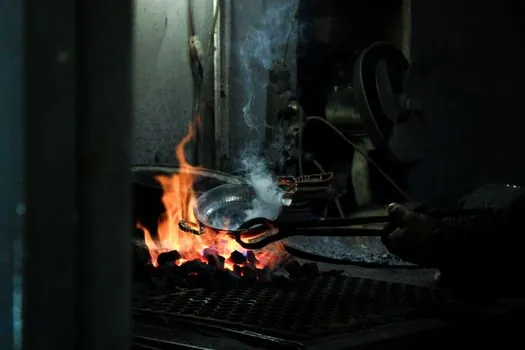
Four criteria separate the three main gas aluminum melting furnace and electric holder options in this 680–750 °C window. Energy efficiency: induction 90–95% (medium-frequency), direct electric 92%, gas-fired ~20% [S3][S5]. Temperature precision: induction ±5 °C, electric immersion ±5 to ±10 °C, gas-fired ±15 to ±20 °C [S3]. Direct emissions: induction and electric zero direct CO₂, gas-fired proportional to fuel input [S3]. Capital throughput: gas units dominate at >50 t/h, induction coreless and electric immersion dominate 0.1–10 t/h, and portable 600–750 °C units cover field and lab use [S4][S8].
The table makes the trade-off concrete: gas-fired still wins on raw tonnage per dollar, but for any 680–750 °C application that needs ±5 °C stability, low oxidation, or alloy-change flexibility, induction and direct-electric holders are now the default spec, with portable 600–750 °C units covering small-batch and education use cases [S3][S4][S5].
Specifying the Window for a Given Alloy
Pure aluminum (1xxx series) can be held near the 680 °C floor, but most casting alloys need 700–750 °C to keep silicon and copper in solution and to feed thin sections in aluminum alloy die castings without premature solidification [S7]. Holding too close to 660 °C risks freezing at the launder and cold-shut defects; holding above 750 °C accelerates MgO and Al₂O₃ dross formation and shortens crucible life on clay-bonded or phosphate-bonded refractories [S6].
For continuous casting and high-pressure die casting, the cited practice is to set the controller at 720 °C with a ±20 °C alarm band, matching the ±5 °C sensor accuracy available on modern medium-frequency induction holders [S3]. For sand and permanent-mold casting with longer pour cycles, dropping the setpoint toward 700 °C reduces hydrogen pickup and gas porosity in the finished part, which is why the same furnace is often run at different setpoints across a multi-shift foundry [S2].
Capacity, Footprint, and Throughput Sizing
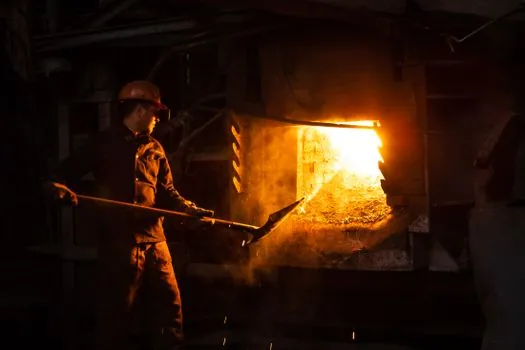
Standard aluminum holding furnaces are quoted from 660 lb/h melt-and-hold throughput up to 6,600 lb/h in production-scale electric immersion designs, with melt-rate scaling roughly linearly with kW input [S2]. Coreless induction melters and holders cover 1 t/h to 50 t/h in published OEM ranges, while MF Series medium-frequency induction units span 100 kg to 10,000 kg bath capacity at 50–500 Hz [S3][S8]. Smaller specialty holders, including the Lindberg/MPH non-ferrous line, are built to custom footprints for cells where a standardized crucible does not fit [S10].
In practice, foundries that already run a 5–10 t batch melter pair it with a 10–20 t holder as a buffer for multi-machine cells, and the larger the buffer relative to throughput, the tighter the holding setpoint can be held because incoming ladle additions do not swing the bath [S2][S9].
Limitations and Common Failure Modes
The 680 to 750 °C window has three real failure modes worth tracking. First, refractory attack accelerates above 750 °C and the supplier community treats that number as a soft upper limit for long crucible life on standard alumino-silicate linings [S6]. Second, holding at the low end near 680 °C risks alloy-specific freezing, particularly with high-silicon 390-type alloys whose liquidus can sit close to the 680 °C floor if the controller drifts. Third, gas-fired holders expose the bath to combustion products, raising hydrogen and oxide inclusion counts versus an electric holder, which is why induction and direct-electric units are favored for aerospace and automotive safety parts [S5].
Inductive stirring is both an advantage and a constraint: it homogenizes the bath and helps submerge floating chips, but it also entrains dross if the surface is not skimmed, so the practical control loop combines a ±5 °C setpoint with regular skimming at the aluminum ladder station [S3][S5].
Standards, Sourcing, and What to Verify on a Quote
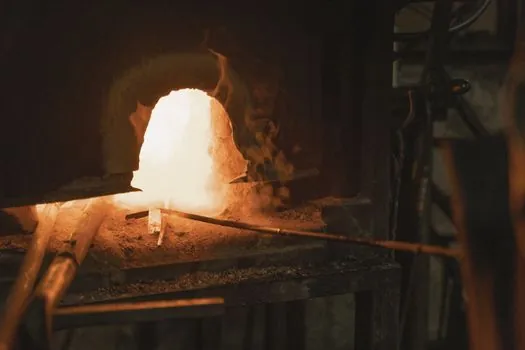
There is no single ISO or ASTM standard that pins the 680–750 °C holding window, so the cited numbers come from OEM technical pages, peer-reviewed portable-furnace research, and trade publications rather than a normative document [S1][S3][S4][S7]. Buyers should confirm three items on any quote: the holding-band setpoint and tolerance (e.g. 720 °C ±5 °C or ±20 °C), the refractory class and its rated maximum continuous service temperature, and the emissions profile (direct electric vs gas) against local air permits [S2][S6].
For multi-shift operations, the next signal to watch is whether 2026-vintage OEM controllers standardize on ±5 °C closed-loop control across both coreless induction and electric immersion holders, which would compress the practical holding band toward 720 ± 10 °C across the industry [S3]. Foundry teams comparing die casting release agent and alloy fluidity behavior can cross-reference the alloy fluidity and release-agent selection guide when tuning the holding setpoint, since the same ±5 °C drift that affects release-agent wetting also affects the 680–750 °C window discussed here.