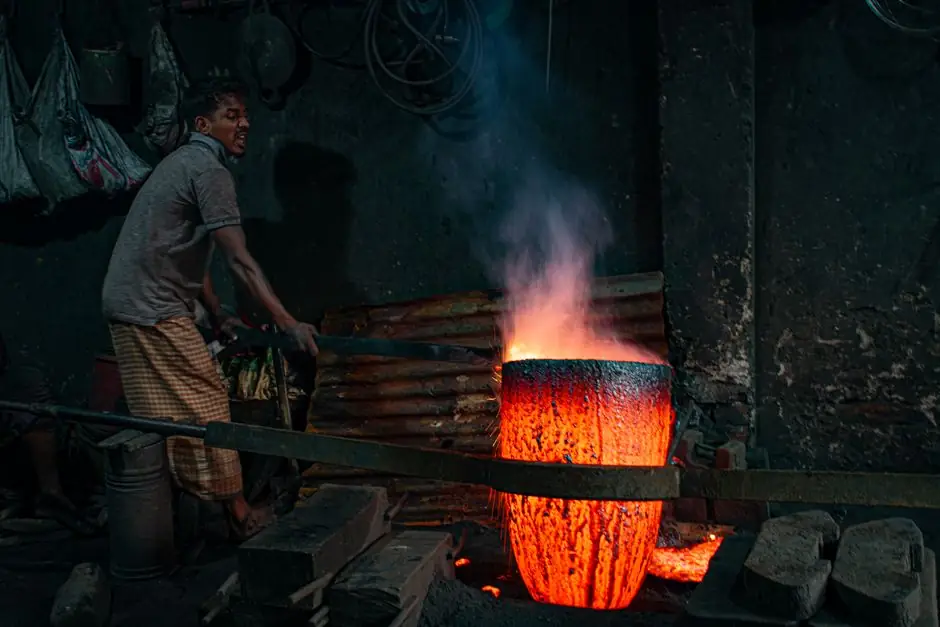
A380 and ADC12 are the two workhorse Al-Si-Cu die casting alloys in high-volume production, and they share enough compositional overlap that the same cold-chamber die casting machine platform can run both with parameter changes rather than mechanical retooling [S2][S4]. The chemistry envelopes line up tightly: A380 holds 7.5-9.5% Si and 3.0-4.0% Cu with Fe ≤ 1.3%, while ADC12 (the JIS equivalent, also called YL113 or A383 in U.S. cross-reference) sits at 10-13% Si and 1.5-3.5% Cu with the same Fe ceiling [S2][S3][S4]. The silicon jump is what drives the difference in injection pressure you actually set on the machine.
Real shop-floor intensification pressure for both alloys lands in a 60-120 MPa window, with the higher silicon content of ADC12 letting you fill thinner walls at slightly lower specific pressure [S3]. On the equipment side, the lock force formula used in Chinese process handbooks is straightforward: clamping force (kN) = projected area (cm²) × specific injection pressure (MPa) × 1.2-1.5 safety factor, which yields 4,800 kN for a 50×80 mm electronic shell at 80 MPa specific pressure and roughly 54,600 kN for a 300×200 mm automotive housing at 70 MPa [S3]. That math matters more than nominal tonnage when you are deciding whether to stay on your current aluminum die casting machine or step up.
Composition and Property Baseline: Why Pressure Targets Diverge
A380 (UNS A38000) is a hypoeutectic Al-Si-Cu casting alloy with as-cast tensile strength of 325 MPa and yield strength of 160 MPa, paired with 96 W/m·K thermal conductivity and roughly 23% IACS electrical conductivity, both of which are useful when the casting also functions as an EMI enclosure or heat spreader [S4]. The 3-5% elongation at break on a 50 mm gauge is enough to absorb thermal cycling without cracking thin-wall sections, and the 80 HB Brinell hardness is high enough to protect machined bearing surfaces inside gearbox cases [S4].
ADC12 (JIS H5302, equivalent to YL113 in the Chinese GB system and A383 in the U.S.) carries 10-13% Si, which raises fluidity at the cost of ductility, yielding roughly 228 MPa tensile strength, 1.0% elongation, and 80 HB, with five-star fluidity ratings on the Chinese selection chart [S2][S3]. That fluidity advantage is the entire reason you can hold the lower end of the intensification range on a small, intricate electronics enclosure without leaving short-shots at the gate. For a direct process-level read on machine class and clamp sizing, the die casting machine page covers how tonnage, shot sleeve diameter, and intensification pressure interact on cold-chamber cells.
Injection Pressure and Intensification: A380 vs ADC12 Side by Side
The process tables in the energy-storage enclosure reference pin ADC12/A380 intensification at 60-120 MPa with a 180-220 °C mold temperature window, while A356/6061 die-cast variants shift up to 220-250 °C mold temperature and similar specific pressure [S2]. The S3 beginner guide breaks out the same window by cast part: 80 MPa on a 50×80 mm electronic shell, 90 MPa on a 150×100 mm communications housing, 70 MPa on a 300×200 mm automotive shell, and 80 MPa on a 400×300 mm engine block [S3]. The textbook rule of thumb is 100-150 tonnes of clamp force per kilogram of cast weight, which is a quick sanity check before you trust the area-times-pressure calculation [S3].
The comparison matrix below is the short version a process engineer pastes next to the machine HMI:
Criterion: Specific intensification pressure. A380 typical = 70-90 MPa on thin-wall automotive shells, with the lower end of 60-70 MPa for large-area parts where clamp force becomes the limiting factor. ADC12 typical = 80-90 MPa for small electronics enclosures, with the higher 90-120 MPa end reserved for very thin walls (≤1.0 mm) and complex gate geometry. The reason ADC12 can run the lower bound is its higher Si content, which raises melt fluidity and lets the cavity fill at lower specific pressure.
Criterion: Two-stage shot profile. Both alloys run the same envelope: first-stage (slow) 0.2-0.5 m/s, second-stage (fast) 2-5 m/s with cavity fill in 30-80 ms, switchover at 70-85% of plunger stroke, and dwell pressure equal to the intensification setpoint [S3]. Criterion: Clamp sizing safety factor. ADC12 small electronic shells use 1.2; A380 large structural housings step up to 1.5 because the area is bigger and the flash risk is higher. Criterion: Surface and porosity. Both target Ra 1.6-6.3 µm as-cast, CT7-CT11 dimensional class (±0.1-0.3 mm/100 mm), and ≤2-5% porosity on X-ray for critical parts [S3]. For process engineers weighing hot-chamber against cold-chamber cells, the cold-chamber die casting machine reference page lays out the shot sleeve diameter, melt temperature, and intensification pump sizing that sit behind these numbers.
Process Parameters Around the Pressure Setpoint
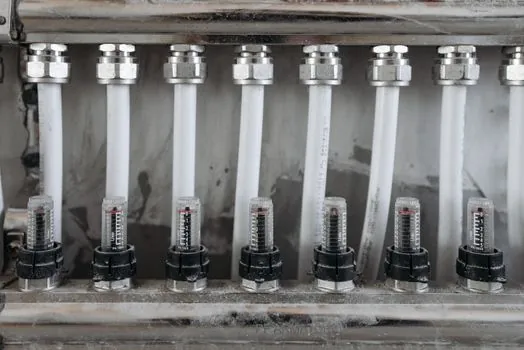
Melt and pour temperature for both alloys sits in a 680-730 °C window, with the A380 upper end (730 °C) 10 °C hotter than ADC12 to compensate for the lower Si content and the higher Cu content that raises viscosity slightly [S2][S3]. Degassing is identical: rotary jet argon or nitrogen to ≤0.1 ml/100g hydrogen, plus Al-Ti-B grain refiner to push grain size below 15 µm, which directly improves elongation and pressure tightness for both alloys [S2]. Holding time at temperature is capped at roughly 30 minutes before hydrogen pickup starts degrading cast quality [S3].
Iron control is the other shared pressure-related lever. ADC12 and A380 both cap Fe at ≤1.3% to keep the Fe-bearing intermetallic phases (the α-Fe and β-Fe platelets) from acting as crack initiators under high intensification pressure, while A356 in the same process window caps Fe at ≤0.2% because that alloy is being run for toughness rather than castability [S2]. Dwell (hold) time at intensification pressure scales with wall thickness, set at roughly 2 seconds per mm of wall thickness, with a working window of 3-15 seconds for the parts in this alloy class [S3]. If the part is being run on a vacuum die casting machine to push porosity below 2%, expect 10-15% longer fill time because the evacuation cycle steals from the second-stage window, and re-verify intensification pressure against the larger effective area once vacuum is engaged.
Where A380 Wins, Where ADC12 Wins
A380 is the right call when the part is a load-bearing structural housing, sees elevated temperature near 150 °C in service, or needs 260-325 MPa tensile strength to hold a press-fit insert or a bearing race [S2][S4]. The Cu content near 3-4% raises both tensile and yield strength noticeably over ADC12, and the hot-crack resistance of A380 is the reason Chinese process guides rate it four stars versus three for ADC12 on pressure tightness [S3]. The S4 reference puts A380 fatigue strength at 140 MPa after 5×10⁷ cycles, which is the relevant number for engine brackets, inverter housings, and gearbox cases that see sustained vibration [S4].
ADC12 is the right call when the part is a thin-wall electronics enclosure with complex geometry, when weld-repair risk is high (its five-star fluidity rating means fewer cold-shuts to repair), and when the cost-per-part pressure is the dominant commercial lever [S2][S3]. ADC12 fluidity and elongation behavior under injection also makes it the better fit for the gravity die casting machine crossover on prototype runs, though at the cost of the higher intensification pressure you would otherwise avoid on a true HPDC cell. A356 in T6 is what you switch to when airtightness and corrosion resistance dominate, and 6061-T6 (modified for die casting) is reserved for ultra-large housings that will be friction-stir welded after casting [S2].
Failure Modes and Common Pressure Setpoint Mistakes
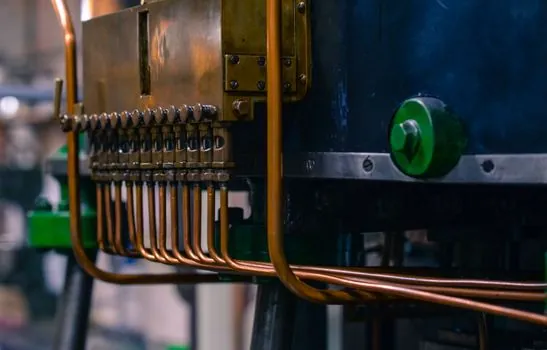
The most common mistake on ADC12 is setting intensification too high (above 100 MPa) on a small electronics shell, which over-packs the cavity, raises flash, and accelerates die wear without improving fill on a geometry that would have filled cleanly at 80 MPa [S3]. The second most common mistake is switching from first-stage to second-stage too early, before the melt front reaches the ingate, which causes air entrapment and porosity that no amount of dwell pressure can fix [S3]. For A380, the classic failure is under-sizing clamp force on a large thin-wall structural part: the area-times-pressure formula gives 54,600 kN for a 300×200 mm shell at 70 MPa, and dropping to a 1,600-tonne machine (roughly 16,000 kN) guarantees flash and unsafe platen deflection [S3].
Both alloys also share a die-life ceiling. With H13 tool steel at HRC 48-52 and standard heat treatment, ADC12 die life runs 100,000-200,000 shots, which is the long end of the aluminum-die-casting envelope and the main reason ADC12 is favored for high-volume electronics [S3]. Adding vacuum heat treatment plus a -80 °C × 2 h cryogenic step extends die life by roughly 30% on the same alloy pair, which is worth specifying on tools that will see more than 200,000 shots [S3]. For shops running magnesium-side conversions or mixed-alloy cells, the magnesium die casting machine page is the relevant reference for hot-chamber operation and the very different intensification pressure range that alloy class requires.
Standards, Sourcing, and What to Verify Before Quoting
A380 and ADC12 are covered by UNS A38000, JIS H5302 (ADC12), and the Chinese GB YL113 designation, with chemistry acceptance typically cross-referenced to ASTM, EN, and JIS specifications depending on the destination market [S1][S3]. For U.S. foundries, ingot supply is usually specified to ASTM B179 or the OEM's internal melt-practice sheet, with Fe, Cu, and Si ranges called out individually rather than relying on the UNS number alone [S1]. For European energy-storage and EV programs, EN 1706 AC-46500 (the closest European designation to A380) and EN 1706 AC-47100 (the closest to ADC12) are the cross-references to put on the drawing callout [S1].
Before locking a pressure setpoint on a new tool, verify three things on the actual heat: Si and Cu content by OES or XRF, Fe content under 1.3%, and hydrogen level under 0.1 ml/100g after degassing [S2][S3]. A shift of 0.5% in Si or 0.3% in Cu on the same pressure profile will change fill behavior enough to cause either short-shots or flash, and the only way to catch it before the first 1,000 parts scrap is to test the melt, not trust the alloy certificate alone. For shops standardizing on a single tonnage class for mixed A380/ADC12 production, the low-pressure die casting machine reference is worth reading even if the production route stays HPDC, because the low-pressure intensification envelope (typically 0.3-1.5 bar on the pressurization side, with the casting pressure topping out around 100-150 kPa on the metal) is the only other pressure regime you will be asked to quote against for structural castings.
Background reading: Alkaline Phenolic Sand Thermal Reclamation and Potassium Residue.
