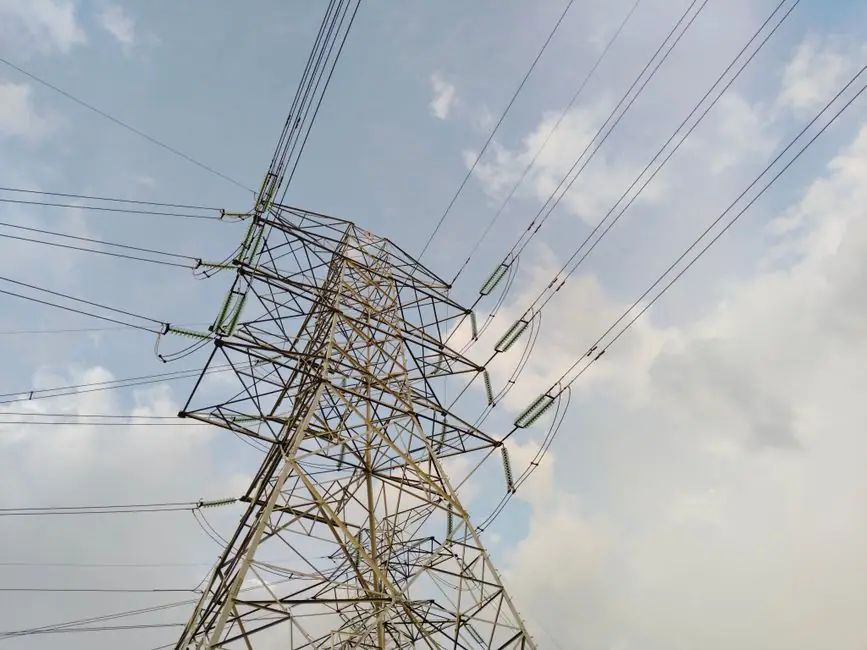
Hall-Héroult potlines consume roughly 13-15 kWh of direct current per kilogram of aluminum produced, and a single 500-600 kA potline of ~200,000 metric tons/year draws around 2.5-3 TWh annually, a baseload load profile that no grid operator can casually re-route during a shortage [S1].
That single physics fact is why power contracts, not ore supply, dominate the conversation about US primary aluminum availability. The Aluminum Association estimates that any new US smelter requires a minimum 20-year power contract priced at or below $40/MWh to clear investment hurdles, a benchmark set against competing data-center load at multiples of that figure [S5].
Why the potline is contract-bound, not market-bound
Once a potline is energized and current begins flowing through the cryolite bath, the cells must be kept at roughly 950-965 °C continuously. Cutting power in a controlled shutdown still costs the operator the frozen electrolyte and cathode relining expense; an uncontrolled outage can permanently damage the carbon lining and force a full potline rebuild that takes 12-18 months and hundreds of millions of dollars. The 2001 Pacific Northwest event, in which high electricity demand and limited hydroelectric supply pushed market power prices sharply higher, showed that aluminum smelters holding low-cost, fixed-price contracts could find it more economical to stop metal production and sell back power than to continue producing aluminum [S1].
US primary production in 2000 was 3,668 thousand metric tons; by 2001 it had dropped to 2,637 thousand metric tons, a one-year decline of 1,031 thousand metric tons, more than the entire 1993-2003 net decrease of 991 thousand metric tons, proving that the energy contract, not the resource base, is the binding constraint on US metal availability [S1]. A look at the underlying aluminum alloy market today shows the same dependency: rolling mills and extruders that depend on P1020A primary feed must price the risk of potline curtailment into every forward contract they sign.
The 2025-2026 demand squeeze: data centers versus potlines
Hyperscaler data-center buildout is now absorbing the same regional grids that historically served smelters, and the contract economics have flipped. Per the Aluminum Association benchmark, a new US greenfield smelter needs a 20-year power agreement at ≤$40/MWh; comparable data-center PPAs signed in 2024-2025 cleared at $50-$80/MWh for 15-year terms in the PJM and ERCOT footprints, so the same megawatt-hour that once anchored a smelter is now bid higher by a server hall [S5].
The structural mismatch is not subtle. US aluminum producers, who once enjoyed fixed-price hydro contracts in the Pacific Northwest and Bonneville Power Administration allocations, now compete with tech buyers willing to sign 15- to 20-year PPAs paired with renewable-energy certificates and grid-services payments. The Aluminum Association roadmap concludes that restarting four existing (curtailed) US smelters will require "long-term, competitively priced power contracts and significant capital investment" [S3]. A related news analysis of grid-wait versus equipment-lead times shows the same interconnection-queue pressure is delaying the supply side that smelters would need to negotiate against.
Contract structures that determine metal flow
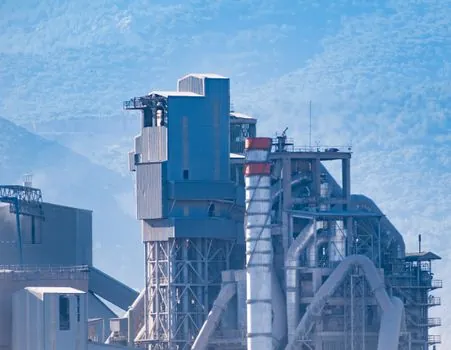
Four contract shapes dominate the smelter power-procurement landscape, and each maps directly to a different metal-availability outcome. First, fixed-price full-requirements tariffs (typical of legacy Bonneville-style hydro allocations) lock the smelter in at a known cost but expose it to curtailment risk during regional drought, exactly the 2001 mechanism that removed 1.03 million metric tons of US supply in 12 months [S1]. Second, tolling agreements where a utility supplies the megawatt-hours and takes the metal in lieu of cash payment insulate the smelter from energy price volatility but tie output to the utility's off-take decisions rather than market demand. Third, asset-backed PPAs with a dedicated wind or solar farm plus battery shaping give the smelter a contracted energy price plus renewable attributes that downstream EV and packaging buyers increasingly demand, but the 20-year tenor and the requirement that curtailment events be economically compensated are non-negotiable at the financing stage [S4]. Fourth, behind-the-meter generation with on-site reciprocating engines, gas turbines, or increasingly, fuel cells removes the smelter from grid contention entirely; capital cost is high, but the contract risk surface is the smallest. Each of these shapes interacts with the metal powder and billet supply chain differently, because secondary smelters running on scrap can tolerate 10-20 brief outages per year while primary potlines cannot tolerate even one.
The price-formation chain back to the fabricator
A $10/MWh swing in contract price therefore moves cash cost by about $140/metric ton, larger than typical labor or alumina cost variances for an integrated smelter. That sensitivity propagates directly into the Midwest premium and the LME cash settlement that extruders, rolling mills, and additive manufacturing material suppliers pay on every delivery. [S1]
Fabricators hedge by signing annual physical supply contracts with floating-price formulas tied to LME plus a regional premium, but they cannot hedge the volume risk: if a contracted smelter curtails because its utility triggered a curtailment clause, the fabricator must buy on the spot market at a penalty. The 2001 episode demonstrated this in real time, when even fabricators with multi-year supply contracts found their tonnage redirected or rescheduled [S1]. For 2026 planning, the practical threshold is that any new US primary tonnage must clear a 20-year power hurdle of roughly $40/MWh; anything that does not meet that bar will not add to domestic metal availability, regardless of how much recycled scrap enters the cast iron and aluminum streams.
What a power-curtailed smelter actually does
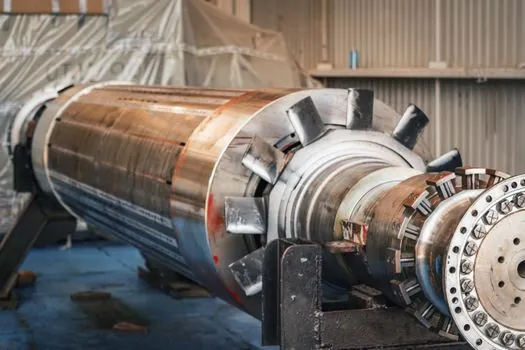
Operators facing a contract-driven shutdown have three levers, and none of them restore metal availability quickly. They can sell the power entitlement back to the grid (the 2001 move), they can run at reduced amperage across the line to lower load, or they can shut individual pots and accept the relining cost on restart.
A controlled full potline shutdown, in contrast, is the option of last resort because restarting requires re-melting the bath, re-anodizing cathodes, and ramping each pot back to target amperage over a 30- to 60-day envelope, during which metal output is zero. The restart announced on October 8, 2004, of a 110,000-metric-ton-per-year smelter at half capacity illustrates the typical scale and pace of recovery, and the very fact that this was news, not routine, tells you how rare event-driven restarts are [S1].
Trackable signals for the next 6-12 months
Two datapoints will indicate whether 2026 US primary aluminum availability is trending up or down. First, watch for any signed 20-year PPA at or below the $40/MWh threshold for a restarted or new US potline, the Aluminum Association's stated clearing price for a viable project [S5]. Second, monitor whether the PJM, MISO, and ERCOT interconnection queues release the >100 MW shaped-firm renewable blocks that smelters need for their asset-backed PPA structure; queue release in 2026 would clear the way for 2027 financial close, while further delays push new domestic tonnage out to 2030 or beyond. Until one or both signals turn positive, US primary metal availability remains a function of the existing curtailed fleet and the operator's confidence that a 20-year power contract will actually be honored through the next regional drought or grid emergency.