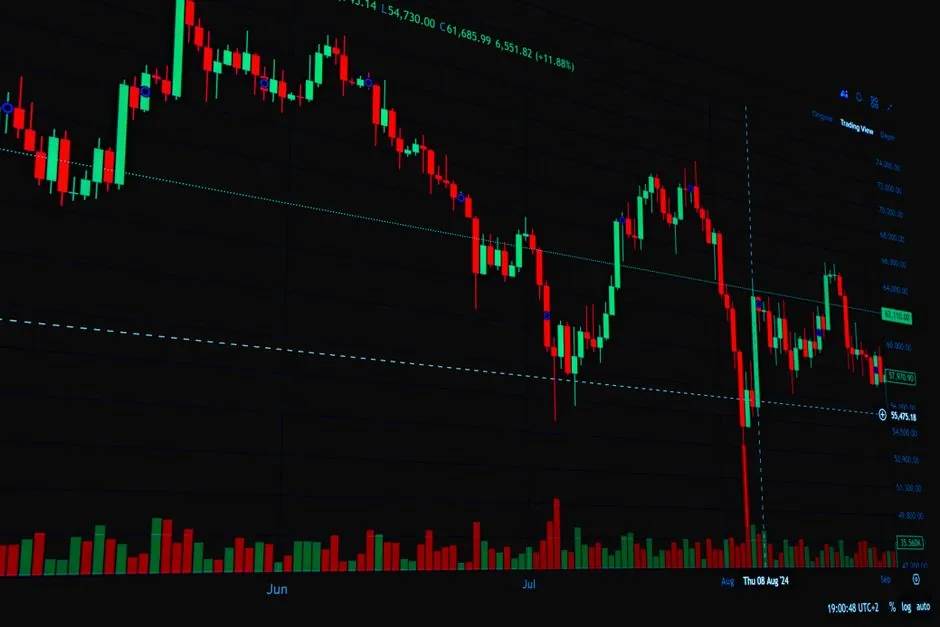
Battery cell buyers run a four-layer hedge against lithium price swings: CME Lithium Hydroxide CIF CJK Fastmarkets futures for financial price protection, index-linked offtake clauses for physical supply, vertical recycling loops for raw-material buffer, and dual-sourcing across chemistry and geography. Each layer covers a different failure mode, and none of them substitutes for the others.
The pressure is real and quantified: Benchmark Mineral Intelligence projects that by the end of the decade, BYD will spend over $2 billion annually on lithium alone, with Volkswagen and Tesla crossing the $1 billion threshold [S1]. A 130% year-over-year jump in lithium carbonate (CNY 181,500/t, or $26,000/t, on 26 January 2026) inside nine months demonstrates that the volatility is not a tail risk; it is the operating environment [S5]. For more on the upstream chemistry behind that spike, the fluorine chain feeding LiPF6 production is a useful adjacent read.
Layer 1: Exchange-Traded Lithium Futures as the Anchor
The CME Group Lithium Hydroxide CIF CJK (China-Japan-Korea) Fastmarkets futures contract is the only exchange-listed instrument tied directly to battery-grade lithium hydroxide delivered into the three principal Asian consumption hubs, and it is the cornerstone of any institutional hedging program [S2]. The contract lets a buyer or refiner offset the price of a forward physical sale by selling an equivalent number of futures, locking the net realised price regardless of spot movement between trade date and delivery.
Participants documented in the CME education material include producers, trading houses, battery makers, OEMs, car manufacturers, and financial investors, with execution available nearly 24 hours a day through the CME Direct front end, plus bank and broker channels [S2]. The CME contract is liquid enough for outright hedging but thin enough that a cell buyer representing 10% of global Li-ion demand cannot run a pure futures book without moving basis; that structural ceiling is why financial hedges almost always sit underneath contractual hedges, not on top of them. StoneX offers an institutional overlay for battery manufacturers needing multi-metal (lithium, cobalt, nickel) futures access, with execution, clearing, and consulting lines structured for recurring rolls [S3].
Layer 2: Index-Linked Offtake and Long-Term Contracts
More and more offtake agreements for battery-grade lithium, nickel, and cobalt have become indexed to spot prices, with price collars and floor/ceiling bands layered on top, per a Federation of American Scientists assessment published in July 2024 [S8]. Benchmark's 2025-11-21 reporting notes that a trusted futures contract is a prerequisite for any serious hedging strategy, because indexed offtakes without a liquid financial hedge leave both buyer and seller exposed to basis risk between the index publication and the settlement window [S1].
For a cell buyer, an offtake linked to Fastmarkets lithium hydroxide with a +/-10% collar does two things at once: it transfers the catastrophic-tail risk to the refiner, and it lets the cell maker run a smaller futures overlay sized only for the collar gap. Buyers running fully spot-priced cell contracts absorb every input spike directly, with no internal buffer, which is why vertically integrated leaders (CATL, BYD, EVE Energy) can ride out a 130% lithium jump while marginal cell makers cannot [S5]. The wider mechanics of contract indexation, including LFP versus NCM differentials, are covered in detail in SourceBySpec's lithium carbonate indexation pricing breakdown for 2026.
Layer 3: Recycling, Black Mass, and Vertical Buffer
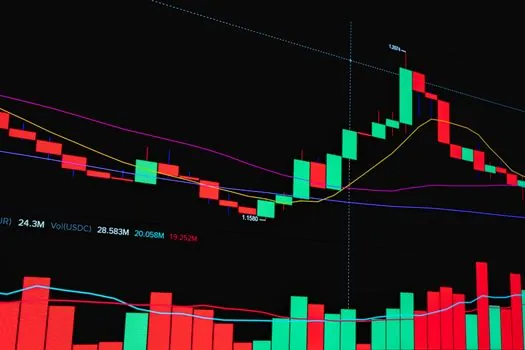
Closed-loop recycling and black-mass buyback contracts function as a physical hedge: they fix the recovery yield of lithium, nickel, and cobalt at end-of-first-life, monetising the price uplift when the input cost spike hits. The economic case tightened sharply through 2025, when LiPF6 electrolyte salt rose over 140% and vinylene carbonate over 50% between July and November 2025; a recycler recovering equivalent LiPF6 inputs from end-of-life cells captures that spread directly [S5].
For OEM-aligned cell buyers, the recycling loop also provides a second-order hedge against the IRA FEOC rules now driving battery material tracing and ITC eligibility, because domestically recovered feedstock counts as US/FTA-origin under the relevant Treasury guidance. The buffer scales with deployed fleet size, which is why Tesla, BYD, and the Volkswagen PowerCo ecosystem are willing to sign 10-year recycling offtakes that smaller cell buyers cannot economically justify.
Layer 4: Dual-Sourcing Across Chemistry and Geography
Dual-sourcing across LFP and NCM chemistries, and across Chinese versus non-Chinese refining hubs, is the structural hedge that runs in parallel with the financial instruments. LFP cells for EVs hit CNY 0.45/Wh (about $65/kWh) in late January 2026, roughly 29% month-over-month, while NCM prismatic cells reached CNY 0.53/Wh (~$76/kWh), up roughly 10% month-over-month; the LFP/NCM spread itself is now a tradable hedge ratio for cell buyers with flexible pack designs [S5]. The broader pattern is documented in EV battery pack localization analyses through 2032, which note that regional content rules force at least two parallel cell lines for any OEM selling into both the US and EU markets.
Geography is the second axis: Chinese BESS tenders hit lows of $63/kWh through 2025, while US and EU cell prices track higher input and logistics costs [S5]. A cell buyer with qualified lines in both regions can shift allocation quarter-to-quarter in response to indexed input prices, effectively arbitraging the regional price differential as a non-financial hedge. The trade-off is qualification cost: every dual-source requires parallel cell validation, BMS firmware, and pack-level safety certification, which is why dual-sourcing is concentrated at OEMs and Tier-1 integrators rather than smaller cell-only players.
Cost Drivers and Total Cost of Ownership
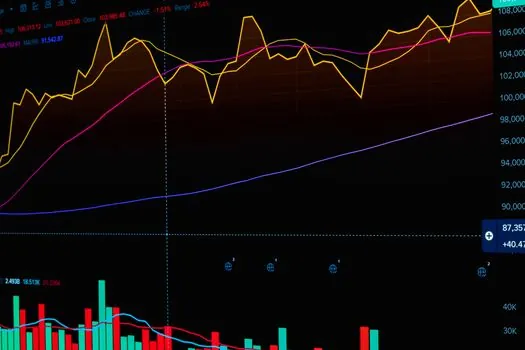
The four layers above are not free, and the cost of hedging differs by an order of magnitude. CME Lithium Hydroxide futures trade with margin requirements (typically a fraction of notional) plus broker fees of a few basis points per side per roll, making them the cheapest layer per dollar of price risk transferred [S2]. Index-linked offtakes carry a 2-5% premium over fixed-price supply because the refiner is bearing the residual basis risk; recycling loops require capex (collection logistics, hydrometallurgical or pyrometallurgical capacity) and only break even at scale above roughly 50 GWh of deployed fleet. Dual-sourcing adds a fixed qualification cost (~$5-20 million per chemistry-platform pair, based on the cell-level validation cycle and pack-level safety re-certification), independent of volume.
For a Tier-1 OEM, the optimal stack in 2026 conditions is roughly 30-50% volume under indexed long-term offtake, 10-20% covered by CME futures, 5-15% supplied by recycled black-mass feedstock, and the balance spot, with allocation shifted across LFP and NCM lines as the chemistry spread moves. Smaller cell buyers with less than 5 GWh annual demand are typically pushed into the spot market or short-term contracts and absorb every price spike directly, with no internal buffer, which structurally sorts winners from losers during volatility windows [S5]. The Oxford Institute for Energy Studies 2024 working paper on lithium price volatility concludes that lower lithium prices feed into lower cell costs, increasing aggregate demand, and that cyclical headwinds may drive demand deferral rather than demand destruction; the reverse applies during a 130% spike, when demand is throttled by cell-side margin compression [S6].
Limitations, Failure Modes, and the BESS Spread
The most common failure mode is basis collapse: the CME Lithium Hydroxide contract settles against Fastmarkets CIF CJK hydroxide, which diverges from the carbonate spot that most Chinese cell makers actually consume, leaving unhedged gap exposure of typically 5-15% during normal market conditions and wider during dislocation [S2][S7]. A second failure is liquidity-driven slippage: the CME lithium book is still maturing, and a buyer running a hedge larger than a few hundred tonnes per month will move the price against itself at the roll, eroding the protection.
There is also a separate price-risk layer on the downstream side: BESS (battery energy storage system) operators hedge revenue volatility, not input costs, because their risk is the day-ahead and ancillary-services market (FCR, aFRR, mFRR in Germany, or ERCOT ancillary in the US) rather than the cell procurement contract [S4]. The convergence point is the cell offtake itself: a BESS developer signing a 2026 cell contract at $63-70/kWh in China, or higher in the West, is implicitly making a lithium-price bet, and that bet is now the dominant variable in project IRR. A Rho Motion-tracked 315 GWh of BESS shipped in 2025 (a roughly 50% year-over-year increase) means the cell-procurement hedge stack now matters for storage developers as much as for EV OEMs, and 2026 additions are forecast above 450 GWh [S5].
Tracking Signals for the Next Six Months
Two verifiable nodes will indicate whether the 2026 hedging stack is holding. First, the restart date of CATL's Jianxiawo mine (shut since August 2025 after a key mining permit expired, with restart slipping past the 2026 Spring Festival window) and the fate of 27 mining permits in Jiangxi province, both of which set the lithium spot floor for Q2 2026 [S5]. Second, the China VAT export rebate schedule for batteries, which steps from 9% to 6% on 1 April 2026 and to zero on 1 January 2027, will force manufacturers to front-run orders through the cutover dates, distilling index-linked offtake volumes in the next two quarters [S5]. Watch the CME Lithium Hydroxide open interest and the Fastmarkets CIF CJK versus carbonate basis as the cleanest read on whether the financial-hedge layer is doing its job.