
Use tapered roller bearings when spindle stiffness and heavy axial-load capacity dominate, and use matched angular contact bearings when speed, low friction, and simpler axial-load handling dominate.
The comparison is not a simple winner: tapered roller bearings use line contact and offer higher stiffness, while angular contact bearings use point contact and support higher spindle speeds with less drag.
Spindle stiffness: contact geometry drives the result
Tapered roller bearings have a larger rolling contact area than angular contact ball bearings, which explains the higher stiffness observed when tapered roller bearings replace angular contact bearings in machine-tool main spindles [S4]. The same line-contact geometry also gives tapered roller bearings a high axial-load capacity, making them suitable for demanding thrust conditions [S3].
Angular contact ball bearings transmit load along a line set at a contact angle, typically 15°, 25°, 30°, or 40°, allowing them to carry combined radial and axial load in one direction. A smaller contact angle favors radial capacity and speed; a larger angle favors thrust capacity [S2].
The practical distinction is stiffness per unit of bearing envelope and operating speed. Tapered roller bearings favor rigid load paths and heavy thrust, while angular contact bearings favor compactness, lower rolling friction, and high rotational speed [S1][S2].
Side-by-side selection criteria
<table><thead><tr><th>Criterion</th><th>Tapered roller bearing</th><th>Angular contact ball bearing</th></tr></thead><tbody><tr><td>Contact geometry</td><td>Line contact with a larger contact area</td><td>Point contact between balls and raceways</td></tr><tr><td>Axial capacity</td><td>High, with a strong load path</td><td>High for the selected contact angle, normally arranged in pairs</td></tr><tr><td>Spindle stiffness</td><td>Potentially higher under comparable conditions</td><td>High with controlled preload, but generally lower than a comparable tapered arrangement</td></tr><tr><td>Speed capability</td><td>Lower than spindle angular contact bearings</td><td>Higher; preferred for high-speed spindles</td></tr><tr><td>Rolling friction and drag</td><td>Higher because of line contact</td><td>Lower because of point contact</td></tr><tr><td>Installation</td><td>Inner and outer members can be fitted separately</td><td>Matched pairs require correct orientation and axial clamping</td></tr><tr><td>Best fit</td><td>Heavy axial load and stiffness-first applications</td><td>High-speed machining with controlled preload</td></tr></tbody></table> [S2]
The decision should be based on load path, required speed, available envelope, and thermal condition rather than on the bearing family name alone. A tapered roller spindle can deliver greater stiffness, but a spindle designed around angular contact bearings may be constrained by lubrication, speed parameter, and heat generation before its static stiffness advantage becomes useful [S4].
High-speed spindle constraints on tapered roller designs
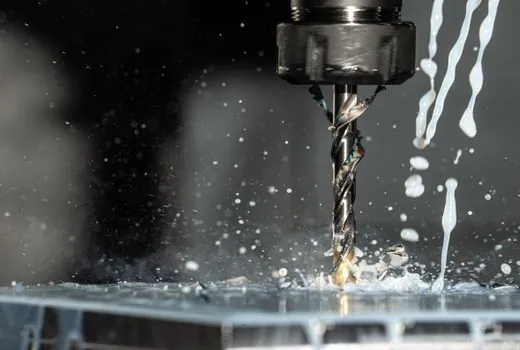
Tapered roller bearings have a lower speed parameter than angular contact spindle bearings, which makes high-speed spindle design the main limitation of the stiffness-first option [S4].
High-speed tapered roller designs have nevertheless demonstrated a speed parameter of 1.25 × 10^6 mm/min using ceramic rollers and a directly lubricated rib on the outer ring [S4].
These figures are design-specific, not universal catalog limits. They show that a tapered roller spindle is feasible only with suitable roller material, lubrication, cage design, rib control, and heat management [S4]. For an ordinary high-speed spindle without those features, angular contact bearings remain the lower-risk selection.
Axial arrangement and installation consequences
A single-row angular contact bearing carries axial load in one direction, so matched pairs are normally used for spindle duty [S2]. Back-to-back, or DB, arrangements provide high moment stiffness, face-to-face, or DF, arrangements tolerate more misalignment, and tandem, or DT, arrangements share thrust in one direction [S2].
Matched angular contact bearings can carry factory preload, but installation still requires positive retention of the outer rings and controlled clamping of the inner rings against the spindle shoulders. A spindle nut can tighten the inner rings together while a housing plate traps the outer rings [S5]. Incorrect installation can transmit press force through the rolling elements and damage the bearing [S5].
Tapered roller bearings offer a simpler separation of assembly forces because the inner and outer members can be installed separately [S5]. That separation can reduce installation damage risk, although the bearing set still requires correct internal clearance or preload, shimming, lubrication, and axial positioning. Tapered roller units also need space for the cup, cone, cage, and sealing arrangement, which can complicate the spindle envelope [S8].
Preload, friction, and thermal control

Preload is the main operating trade-off in both spindle systems. Angular contact preload removes internal clearance and raises stiffness and running accuracy, but excessive preload raises friction, heat, and fatigue-load demand [S2]. Tapered roller preload can eliminate play and support heavy thrust, yet line contact produces greater drag than point contact at comparable preload [S3].
Contact-angle selection changes this balance directly. A 15° angular contact bearing emphasizes speed and radial capacity, while a 40° arrangement emphasizes thrust; 25° and 30° positions occupy the middle of that range [S2]. The actual preload must be set from the selected bearing manufacturer’s catalog because contact-angle suffixes such as A, B, C, and E vary between manufacturers [S2].
For milling spindles, the bearing arrangement, lubrication method, thermal condition, and target material must be evaluated together. A stiffness calculation that ignores heat or ignores the required speed does not predict machining accuracy. The practical recommendation is to calculate spindle deflection under cutting load, verify lubricant flow at the actual speed, and confirm that preload and thermal growth remain within the machine builder’s limits.
Application-specific selection
Choose a tapered roller arrangement for a spindle dominated by heavy axial loading, large cutting forces, or a stiffness requirement that must be met within a restricted housing size. The 2024 spindle study identifies tapered roller bearings as a technically credible substitute for angular contact spindle bearings because of their enhanced stiffness behavior, while also documenting the lower speed parameter [S4].
Choose matched angular contact bearings for high-speed machining, grinding, or milling where rotational speed, reduced drag, compact construction, and established preload control dominate. Their common 15°, 25°, 30°, and 40° contact angles allow the load direction and operating character to be tuned [S2].
Do not select tapered roller bearings solely because they are stiffer. A tapered roller spindle that cannot sustain the required speed, lubrication flow, and temperature may produce less useful performance than a correctly preloaded angular contact spindle. The angular contact bearing selection guide provides the arrangement and preload framework for that decision.
Verification checklist before releasing a spindle design

Record the bearing type, contact angle, bore, precision grade, arrangement, preload method, speed target, radial load, axial load, and lubrication method in the spindle specification. Confirm dynamic and static capacity from the selected manufacturer’s catalog, rather than transferring a rating from a different diameter or precision class [S2][S3].
For tapered roller bearings, verify the calculated speed parameter against the selected geometry and lubrication design. For angular contact bearings, verify the DB, DF, or DT arrangement, bearing orientation, clamping method, and preload against the manufacturer’s installation instructions [S2][S5].
Track two test results before final acceptance: spindle deflection under the specified cutting load and temperature rise at the specified operating speed. A stiffness gain is useful only if the bearing retains its intended preload and does not create a thermal or lubrication failure mode [S4]. The comparison between tapered roller bearing and angular contact designs should therefore close with measured spindle performance, not a catalog stiffness number alone.