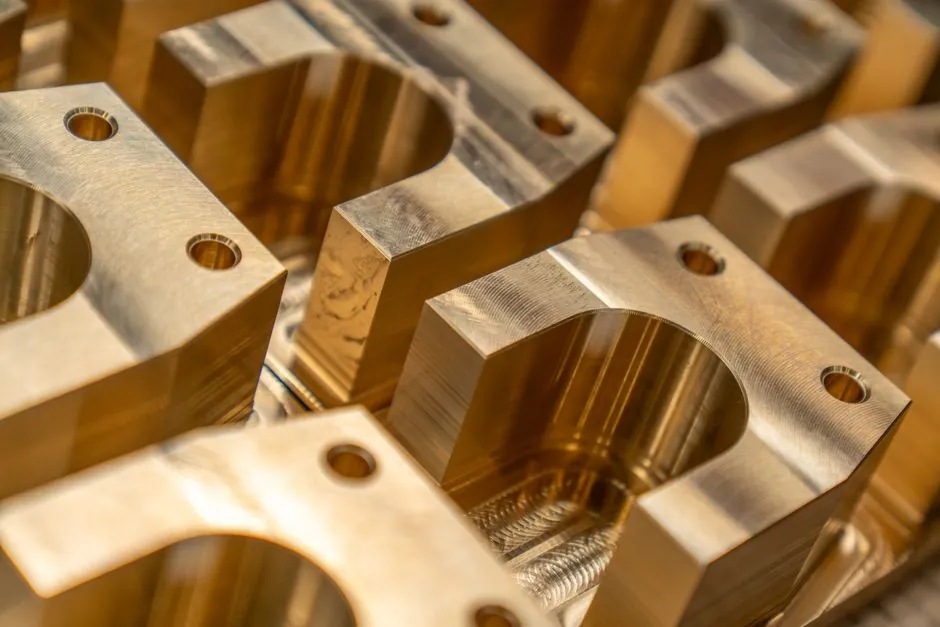
Anode cost is not a single line item; it is the sum of substrate, coating or alloy chemistry, forming process, and certification overhead, and these drivers move at very different scales depending on whether the anode is a titanium-based dimensionally stable anode (DSA) for water treatment, a graphite/silicon anode powder for lithium-ion cells, or a sacrificial Al/Zn/Mg anode for cathodic protection [S1][S2][S3].
The cleanest way to read a quote is therefore to split the bill into substrate, active layer, forming/assembly, and quality/qualification. Each block has its own unit economics, its own reject rate, and its own minimum order quantity (MOQ) floor that vendors will not cross without a tooling or setup surcharge [S7].
Substrate Cost: Titanium, Graphite, and Al/Zn/Mg Alloy Feedstock
DSA anodes for water treatment use Grade 1 titanium (ASTM B265) as the substrate, supplied in plate, mesh, rod, disc, or tube geometry with standard thicknesses 1.0–3.0 mm (0.04–0.12 in) [S1].
For Li-ion anodes, the substrate is the active material itself: low-impurity graphite feedstocks that are purified, spheroidized, and classified into narrow particle size distributions (PSD). Representative commercial grades carry D50 of 2–5 μm, tap density 1.0–1.25 g/cm³, specific surface area 4–8 m²/g, and moisture ≤0.5% [S2]. When silicon-carbon composite or lithium titanate (LTO) is specified, the unit substrate cost can multiply by a factor of several, because Si-C requires nano-silicon dispersion and LTO requires high-temperature solid-state synthesis [S4].
Sacrificial anodes for cathodic protection follow a different substrate logic. Streamlined Al stand-off anodes use GALVALUM III-class alloys with Zn 2.0–6.0% and controlled indium additions per DNV-RP-B401-2011 and GS EP COR 201 [S3]. Alloying elements (In, Hg, Cd-free activator packages) are a small mass fraction but a meaningful share of the melt cost; the rest is driven by casting yield and the energy cost of holding alloy chemistry inside a tight elemental window [S3].
Active Layer and Coating Chemistry
On titanium DSAs, the active layer is a mixed metal oxide (MMO) coating of ruthenium, iridium, tantalum, and platinum oxides, applied by thermal decomposition or electrochemical deposition [S1]. Ruthenium and iridium are the dominant coating cost drivers, and their loading is typically quoted in g/m²; doubling the precious-metal loading to extend service life from roughly 5 years to 10+ years in chlor-alkali or seawater service can more than double the finished anode price [S1].
For graphite anodes, the "coating" is surface modification: carbon coating, pitch impregnation, or interface engineering to stabilize the solid electrolyte interphase (SEI) and reduce irreversible capacity loss during formation [S2]. The cost here is process energy (graphitization furnaces running 2500–3000 °C) and the reject rate when ash, moisture, or specific surface area drift outside the 0.029–0.04% ash and ≤0.5% moisture bands common to premium grades [S4].
On sacrificial anodes, the active layer is the bulk alloy itself, so the entire piece dissolves. Backfill chemistry (gypsum/bentonite) and the cast-in steel core or insert add incremental cost but are dominated by the alloy melt and the casting yield per heat [S3].
Forming, Geometry, and Tolerance
For Li-ion anode powder, forming cost is dominated by classification (air-jet sieving), spheroidization, and de-magnetization to keep magnetic contaminants low, and by the particle size bands that cell makers will accept. Tight D10/D50/D90 windows (for example, D50 15.08–15.55 μm across XAG, XCG, and XAT families) are sold as premium SKUs and command a price premium of 10–25% over commodity graphite of the same nominal capacity [S4].
For DSAs, forming cost is dominated by cutting, welding, and bending the titanium substrate. Standard geometries (plate, mesh, rod, disc, tube) carry no NRE; custom shapes add tooling and sampling charges that are typically amortized over the first production batch [S1]. Thickness outside the 1.0–3.0 mm standard band, or tight flatness tolerances for interelectrode spacing in chlor-alkali cells, both add cost because they constrain roller leveling and fixturing [S1].
For sacrificial anodes, the relevant forming spec is Type I (cast) versus Type II (extruded rod or ribbon) per the standard specification framework that also covers backfill composition and inspection/test plans [S6]. Cast anodes carry a higher per-piece alloy and energy cost but enable more complex stand-off and cranked-insert geometries; extruded anodes are cheaper per kilogram but limited to constant cross-section profiles [S3][S6].
Certification, Testing, and Documentation
Certification overhead is a hidden but real line item. Sacrificial anodes for offshore or marine service routinely require ISO, NACE, and DNV compliance, with chemistry certified against DNV-RP-B401-2011 and electrochemical capacity verified by laboratory discharge tests [S3]. Each third-party witness test, full traceability dossier, and quality plan submission adds a fixed cost per shipment, which disproportionately inflates the unit price on small orders [S3][S5].
Li-ion anode powder carries its own compliance set: ISO 9001 for the manufacturing system, plus RoHS and REACH declarations, and on request an MSDS, with purity levels above 99.9% required for premium SKUs [S4]. DSAs sold into water-treatment and chlor-alkali plants typically require a coating-loading certificate, an accelerated-life test report, and a chemistry/elemental analysis, all of which are quoted as part of the per-batch documentation fee [S1].
The anode manufacturing plant itself is expected to maintain full material traceability from raw stock through forming, coating, and final inspection, with an Inspection and Test Plan that maps each step to a standard specification [S5]. Plants that cannot produce that documentation will be deselected at RFQ stage regardless of unit price, so certification is best treated as a gate rather than a discretionary add-on [S5].
Comparing the Three Main Anode Families on Cost Drivers
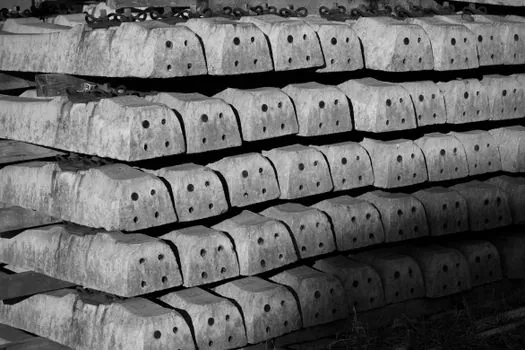
The three families do not compete on the same axis. DSAs (Ti + MMO) compete on precious-metal loading and titanium buy-to-fly; Li-ion anode powders compete on PSD narrowness, tap density, and capacity window (300–420 mAh/g, 0.9–1.2 g/cm³ tap density, 10–25 μm D50) [S1][S4]; sacrificial Al/Zn/Mg anodes compete on alloy chemistry conformity to DNV-RP-B401-2011 and on casting yield per heat [S3]. A buyer who prices all three on $/kg will systematically overpay for the one they do not actually need.
A practical comparison: for a seawater electrochlorination cell, a Ti/MMO plate anode at 1.0–3.0 mm thickness with a Ru-Ir-Ta coating will dominate the bill at small scale, while at large scale the coating loading (g/m²) is the swing variable. For a 280–324 Ah prismatic Li-ion cell, the bill is graphite D50 control and surface modification, not the substrate [S2]. For a marine stand-off cathodic protection system, the bill is alloy melt + insert + backfill, and the only meaningful optimization is keeping Fe below the spec ceiling to avoid passivation [S3]. The cost-driver map for the advanced material families used across these three applications is therefore different in every line item.
Total Cost of Ownership Beyond the Unit Price
Unit price hides the largest cost: service life. A DSA that runs at lower cell voltage reduces kWh/ton of product over its life, and "low voltage cost savings" is one of the named value props for engineered MMO coatings [S1]. A lithium-ion anode powder with higher first-cycle efficiency (94.2–94.4% on premium XAT grades such as XAT-8 and XAT-15, versus 92.5–93.0% on commodity XAS and XCG grades) reduces formation-cycle lithium loss, which is a quantifiable cell-level cost in GWh-scale production [S4].
A sacrificial anode that fails early because Fe exceeded the spec will under-protect the structure and force retrofit; conversely, an Al stand-off anode conforming to DNV-RP-B401-2011 chemistry is designed for predictable consumption rates and longer retrofit intervals [S3]. The chemical material supply chain behind the melt (In, Zn master alloy) is also a TCO lever, since indium spot price swings can move the alloy cost by 5–15% on a single order.
For DSAs, the relevant total cost is purchase price + coating-life-replacement cycles + energy saved at lower operating voltage. For Li-ion anodes, it is purchase price + formation-cycle losses + cycle-life degradation. For sacrificial anodes, it is purchase price + design-life retrofit interval + inspection cost. Process engineers who quote only line-item price on these three families consistently misallocate maintenance budgets.
Procurement Signals and What to Track Next
Two signals are worth tracking into Q4 2026: indium and iridium spot price, because both move the alloy and coating line items on sacrificial and DSA anodes respectively; and graphite PSD/tap density pricing, because cell makers are pushing D50 into the 10–15 μm window with tighter tap density control for 280–324 Ah prismatic cells [S2][S4]. Buyers building magnetic material and finishing material workflows around anode supply should also flag any tightening of DNV-RP-B401-2011 or GS EP COR 201 alloy limits, since chemistry drift is the most common cause of premature anode failure in marine service [S3].
This topic is covered further in Cathode Production Line Design: CAM vs Electrolytic Spec Map.