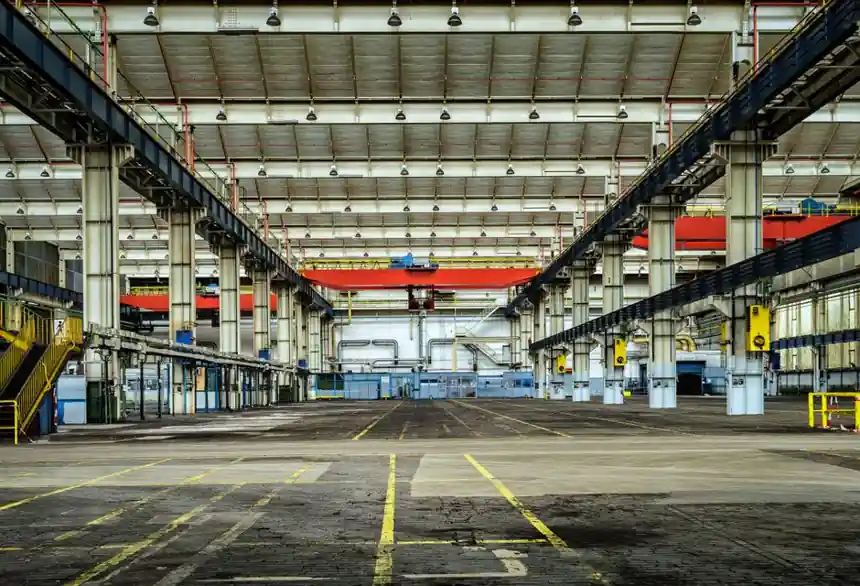
A cathode production line is not a single product category: in 2026, Chinese system integrators (ONGOAL, Boyee, ONEJOON) are delivering lithium-ion and sodium-ion Cathode Active Material (CAM) lines built around batching, sintering, jet-mill classification and wet coating, with secondary sintering and integrated big-bag packing [S3][S1].
At the same time, copper and graphite cathode lines (GuoGao Mine, Inrema) are a completely different machine class, built around electrolytic cells, automated stripping, CNC milling and palletisation, with copper-cathode purity specified at 99.99% via L-SX-EW electrowinning [S5][S2]. The two design families share almost no common equipment, so a buyer who conflates them will end up with the wrong RFQ.
Battery CAM Line Architecture: Batching, Sintering, Jet Mill, Wet Coat
ONGOAL's standardised ternary cathode process sequences seven stations: feeding, mixing, sintering, crushing, wet coating, second mixing, second sintering, then final-product treatment with integrated big-bag packing [S3]. Raw material is unpacked inside a temperature- and humidity-controlled zone, stored in bins with exhaust filters for dust capture, and dosed via loss-in-weight metering with a programmable automatic batching routine [S3].
Material transport between stations uses positive-pressure dense-phase pneumatic conveying, with a material-to-air ratio above 50:1 and minimum conveying velocity below 4 m/s, reducing line loss between sintering and the jet mill [S3]. After primary sintering and coarse crushing, ONGOAL's flow splits: air jet mill or mechanical mill, then secondary iron-removal and screening before the wet-coat kettle dryer runs at low-stirrer speed to protect the as-formed coating layer [S3]. Boyee covers the parallel sodium poly-anion track (NFPP, sodium iron sulfate, NVPF) with high-precision batching, all-ceramic nanoscale wet grinding, and a high-temperature continuous sintering kiln system [S1].
Electrolytic Metal-Cathode Lines: Cells, Stripping, Hot Washing
GuoGao Mine's 10,000 TPA L-SX-EW copper-cathode line runs ROM ore 0–600 mm through jaw crushing, cone crushing plus screen, then agitated leach, CCD washing, lime neutralisation, solvent extraction and permanent-cathode electrowinning, finishing with hot washing at 70 °C and an automatic stripping machine that uses robotic flexing plus pneumatic knives to separate both copper sheets per cell [S5]. Purity lands at 99.99% Cu regardless of upstream extraction route, with LME Grade A cathode as the target [S5]. The electrolytic refining path documented in the legacy pyrometallurgical line uses a reverberatory furnace, 14-die disk pouring machine, silicon rectifier, titanium heating elements, and an electrolytic cycle of roughly seven days to reach CU-CATH-2 (GB/T 467-1997) [S4].
For graphite cathodes, Inrema's CNC line machines the raw block through all six faces, slots, pockets and grooves using high-speed milling, with a contact-gauge head that measures tool wear and compensates axis correction on the fly [S2]. Maximum envelope is 800 × 600 mm with lengths up to 4300 mm; minimum is 360 × 360 mm from 2500 mm; no setup change is needed between cathode models because CNC parameters absorb the geometry [S2].
Equipment Selection Criteria: Chemistry, Throughput, Traceability
For CAM lines, the three dominant selection criteria are (a) chemistry compatibility (LFP/LMFP vs ternary NCM vs sodium poly-anion), (b) sintering atmosphere and peak temperature window, and (c) particle-size target d50/d90 driven by air jet mill vs mechanical mill choice [S3][S1]. Conveying mode is a hidden fourth criterion: dense-phase pneumatic at ≥50:1 material-to-air reduces attrition and metal-foreign-particle contamination versus dilute-phase vacuum conveying [S3].
For electrolytic lines, the criteria are (a) cell current density and rectifier sizing, (b) cathode plate geometry envelope, and (c) stripping automation level (manual edge-knife versus robotic flexing plus pneumatic knife) [S5][S4]. A side-by-side read of the two design families: CAM lines run continuous solid-state processing at 0.5–30 t/h per module with bagged powder output, while electrolytic lines run batch electrowinning on a roughly 7-day cycle with sheet output and a stripping bottleneck that dictates upstream cell count [S3][S4].
Who a CAM Line Is For vs Who Needs an Electrolytic Line
A CAM line is the right answer for cell makers, anode/cathode material startups, and EPC contractors building LFP, LMFP, NCM or sodium-ion poly-anion capacity, especially where integrated batching through big-bag packing under one SCADA stack is required [S1][S3]. A buyer needing copper, zinc or graphite cathode plate output should not buy CAM equipment at all; the right RFQ targets electrolytic cells, hot-wash units, stripping machines and (for graphite) high-speed CNC machining centres [S5][S2].
Cross-chemistry buyers (e.g. a sodium-ion NVPF line that also wants LFP) need to verify that the sintering kiln, dust-collection bin venting and batching recipe engine can hold two recipes in parallel without cross-contamination, since both ONGOAL and Boyee market their lines as recipe-driven but typically validate one chemistry at FAT [S3][S1]. For process-control and PAT instrumentation mapping on a co-precipitation front end, see this LFP quality standards breakdown.
Constraints, Failure Modes, and Standards Discipline
For CAM lines, the most common commissioning failure is iron-foreign-particle carryover from jet-mill or mechanical-mill wear, which is why ONGOAL specifies iron-removal plus screening both before and after crushing, paired with ultrasonic vibrating screens and electromagnetic separators at final-product treatment [S3]. Wet-coat dryer stirring speed is a second failure point: high RPM collapses the coating layer and inflates fine-powder rejects, so kettle-dryer low-speed mode is engineered in, not optional [S3].
For electrolytic lines, the dominant failure mode is acid-loop imbalance: lean-electrolyte recycle, raffinate return and barren-organic return must be kept inside their respective closed loops, or current efficiency collapses and cathode sheet edges roughen [S5]. For copper cathodes, GB/T 467-1997 CU-CATH-2 is the published grade reference, with seven-day cell residency as the typical cycle on legacy pyrometallurgical feed [S4]. Buyers comparing line throughput and 5 TWh pipeline dynamics at the cell level should also read the cathode material capacity planning map and the co-precipitation instrumentation spec before locking the upstream scope. The battery material CAM thermal side (kiln atmosphere, oxygen recycling) is covered in ONEJOON's CAM equipment literature and is the natural place to specify whether the line runs under air, oxygen-enriched, or inert purge [S6].
Trackable Signals for the Next Six Months
Two signals worth watching into 2026 Q4: (1) sodium poly-anion FAT deliveries out of Chinese system integrators, since Boyee's NFPP/NVPF line is one of the few commercial references and any new cell-maker acceptance will redefine the recipe-engineering benchmark [S1]; (2) electrolytic-line stripping throughput, because GuoGao's robotic flexing plus pneumatic-knife stripper is a recent substitution for legacy manual edge-knife stations, and adoption data will determine whether manual labour gets phased out at large tank-houses [S5]. Copper-cathode L-SX-EW at 10,000 TPA remains the throughput reference, with 99.99% Cu and LME Grade A as the grade targets that any new line must meet or beat [S5].
For component-level specifications, see molding line, automatic molding line, and conveyor sorting line.