
Combining fall-arrest PPE with anti-static control is a two-track problem, not one. A worker on an aerial work platform handling solvent drums needs the OSHA 1926 four-foot trigger height, a sub-six-foot free-fall limit, and a continuous grounding path through conductive gloves, clothing, and boots at the same time [S4][S6].
Falls rank as the second leading cause of US workplace deaths and the leading cause inside construction, per BLS data cited on 2026-04-14, and static discharge remains a top ignition source in flammable-vapor zones [S4]. Treating these as separate purchase orders is the most common spec failure on EPC projects.
Spec Gates: Where Height and Static Requirements Intersect
OSHA mandates fall protection at a height change of four feet or more in general industry, while the maximum allowable free fall in fall-arrest mode is 6 ft and in fall-positioning mode is 1 ft [S4]. The same anchor, harness, and SRL that satisfy the height side must also accommodate a worker wearing conductive gloves and arc-rated clothing without breaking the dissipative path.
Engineered Systems' guidance issued 2026-04-14 splits fall protection into fall restraint, fall positioning, and fall arrest (PFAS), with PFAS relying on three components: anchorage rated for the required load, a full-body harness distributing arrest forces, and a connecting device with shock-absorbing features [S4]. On a static-sensitive site, the harness D-ring and carabiner must be specified in stainless or non-sparking alloy, since standard zinc-plated steel snaps can throw a spark on impact.
Anti-static PPE adds a parallel chain: conductive clothing, gloves, and boots are the three items most often specified for maintaining an uninterrupted ground path, per TUBALL guidance dated 2024-09-01 [S6]. A single fabric panel with surface resistivity above the dissipative window (commonly cited at 10^5 to 10^11 ohm) breaks the chain and re-creates the ignition risk the harness was meant to live alongside.
Comparison Table: Height-Safety Options Against Static Requirements
Four equipment families cover most at-height, static-sensitive tasks. The matrix below scores each on the two decision axes that actually drive the purchase, fall-arrest compliance and grounding integrity, plus two practical axes (mobility, cost band) so a buyer can extract a structured comparison. [S1]
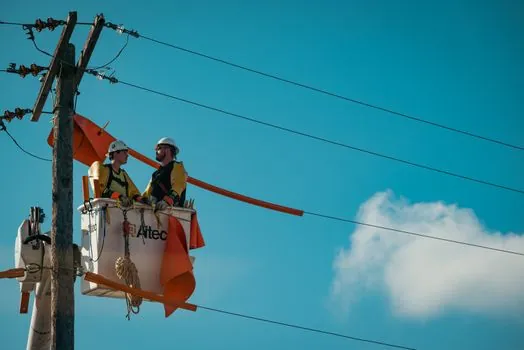
Guardrail systems (Kee Guard non-penetrating, parapet-mounted, metal-roof variants) score highest on passive safety because they require no active worker judgement, but they do nothing for static, so an operator working inside a rail still needs a separate grounded floor or footwear [S3][S5]. MEWPs and aerial work trucks provide mobility on bad ground and over obstructions and remain preferable to tower scaffolds where stability permits, per WorkSafe NZ's Best Practice Guidelines [S3].
PFAS kits (anchor + harness + SRL or shock-absorbing lanyard) and rope-grab lifelines sit at the bottom of the passive-active hierarchy and depend on training and inspection to function [S3][S7]. They pair with anti-static PPE the easiest, because the worker already wears gloves, sleeves, and conductive boots, and the kit adds the fall side without forcing a second grounding scheme. Cost ranges from roughly $200 for a basic PFAS kit to $1,500+ for a horizontal lifeline engineered for a specific rooftop, exclusive of the conductive clothing layer.
Grounding Path and Dissipative Material Logic
Anti-static PPE works only when the chain skin → garment → glove → boot → floor is continuous; any non-conductive glove or boot insert in the path breaks it [S6]. This is why conductive clothing, gloves, and boots are specified as a set rather than as independent line items on the BOM.
Surface resistivity targets differ sharply by zone. ESD-safe workbenches and floors are commonly specified at 10^6 to 10^9 ohm for handling components, while flammable-atmosphere zones often require a tighter dissipative window, with conductive footwear and grounded wrist or heel straps added for personnel. Anti-static floor tiles, one of the most common engineering controls, are designed to bleed charge to ground without becoming a live conductor themselves [S2]. For outdoor at-height work the analog is a grounded platform mat on the MEWP deck plus verified-resistance conductive overshoes.
A typical verification test is a wrist-strap or footwear resistance check at roughly 1 megohm upper limit on the personnel side, and a worksurface test at the same order of magnitude. Anything above that and the operator is effectively isolated, which on a solvent-loading or powder-handling platform re-creates the original ignition risk even with the correct anti-static equipment installed.
Who This Spec Is For, and Who Should Skip It
The combined height-plus-static spec fits tank-farm inspectors, solvent blenders, paint-line maintenance crews, and any operator on an aerial work platform inside a Zone 1 or Zone 2 area. It also covers powder-handling lines where a static-bound worker climbing a ladder can accumulate enough charge to ignite dust on dismount. [S1]
It does not fit general rooftop HVAC work on a dry building with no flammable inventory, where a guardrail and conventional harness are enough. It is also overkill for ground-level electronics assembly, which falls under standard ESD workbench practice and is not a fall-hazard scenario. Specifying conductive boots in a cleanroom with no ignition source creates contamination and discomfort without buying any safety.
Buyers should also avoid mixing zones: a fall-arrest lanyard with a built-in shock pack that is specified for arc-flash but not for solvent exposure, or vice versa, is a common line-item error. Cross-check both the height and the atmosphere use cases before locking the part number.
Inspection, Rescue, and Maintenance Constraints

WorkSafe NZ makes one operational point that frequently gets dropped on paper: if evacuation from a deployed fall-arrest system is going to be difficult, choose other work equipment, for example a MEWP [S3]. This is a hard constraint on the choice of access platform, not on the PPE list, and it interacts directly with the static spec because rescue in a flammable zone is itself a high-static maneuver.
OSHA-style checklists for using working-at-height equipment require confirmation of worker training, equipment condition, anchor capacity, and rescue plan before each shift [S3]. For the anti-static side, the equivalent pre-shift check is a wrist-strap or heel-strap test plus a visual on the conductive boot sole, which wears faster than the upper. Skipping the daily check is the most common cause of "the equipment is right but the spark still happened" incidents.
For an at-height electronics-adjacent line, a turnover box selection spec for electronics handling often references the same conductive-ESD discipline, and pairing the two specs during procurement avoids mismatched resistance windows on the same work cell.
Common Selection Mistakes and Sourcing Standards
The two errors that surface in nearly every post-incident review are: (1) specifying a standard PFAS kit without a static-rated D-ring or carabiner, and (2) specifying anti-static gloves that contain a non-conductive palm coating for grip, which breaks the ground chain exactly at the hand contact point [S6]. The first is fixed by switching the connector to stainless or aluminium bronze; the second is fixed by sourcing a glove with a continuous conductive liner rather than a dipped palm.
On standards, US buyers reference OSHA 1910 (general industry) and 1926 (construction) for fall triggers, ANSI Z359 for fall-arrest components, and NFPA 77 for static-electricity practice. UK and EU sites follow the Work at Height Regulations 2005 hierarchy, and New Zealand and Australia align with the WorkSafe NZ Best Practice Guidelines for Working at Height [S1][S3]. Buyers should pin the exact clause (e.g. OSHA 1926.501, ANSI/ASSE Z359.11) on the purchase order rather than the umbrella name.
Two signals worth tracking through 2026 Q4: any revision to the ANSI Z359 series that tightens D-ring material requirements for flammable atmospheres, and the steady migration of static-dissipative coatings from workbench surfaces to MEWP deck plates, which would fold the anti-static equipment spec into the platform BOM rather than the PPE BOM.