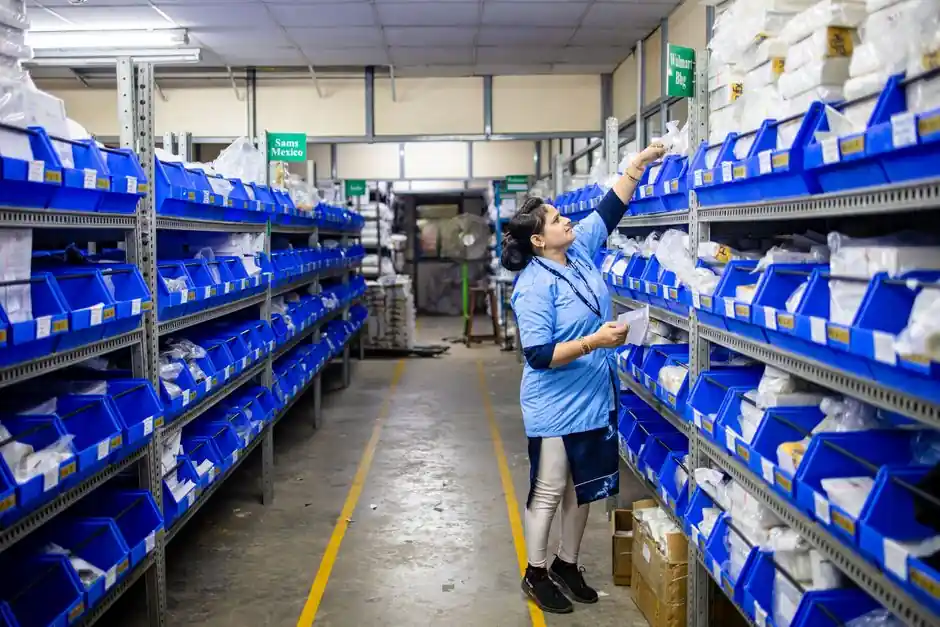
A warehouse electrical program should standardize on insulated hand tools individually tested to 10,000 V AC for a 1,000 V user-rated rating, the 10:1 safety margin required by UL and the working voltage carried by IEC 60900 [S4][S1].
Scope covers pliers, screwdrivers, nut drivers, cable cutters, open-end and socket wrenches, and ratchets used in 480 V three-phase distribution panels, motor control centers, EV charging bays, and solar combiner boxes common to modern warehouses, with each tool marked to the standard and to its working voltage rather than relying on handle color [S1][S2].
Voltage rating and the 10:1 test margin
Tools marketed as "1,000 V insulated" must survive a 10,000 V dielectric test to earn a UL classification, a 10-to-1 ratio that defines the working-voltage envelope and rejects visual fakes that look insulated but carry no certification [S4]. The same family is commonly rated 1,000 V AC and 1,500 V DC, with IEC 60900 cited as the most frequently referenced manufacturing and test standard [S1].
OSHA 29 CFR 1910.335(a)(2)(i) requires insulated tools or handling equipment when contact with exposed, energized conductors is possible, and NFPA 70E reinforces this inside the restricted approach boundary for qualified electrical workers [S4]. A bright handle is not evidence of rating: dipped vinyl, comfort grips, and plastic-coated shanks improve control but are not automatically dielectric insulation [S1].
Injection-molded versus dipped insulation
Two processes dominate: injection-molded insulation lays a uniform, single-color plastic skin over the tool, while dip-coating applies a dielectric layer that is usually a dual-layer covering whose contrasting colors (orange over yellow) make a breach visible during pre-use inspection [S4].
Most manufacturers have moved from dipped vinyl to injection-molded insulation because liquid-vinyl dip cures unevenly and produces thick and thin areas of hardened resin, whereas molding yields consistent dielectric thickness across the handle and shank [S4]. For warehouse fleets, the practical difference is inspection speed: a scuff that exposes yellow under orange is an immediate fail, while a single-color molded tool requires a closer dielectric check or removal from service after any visible damage [S1][S4].
Build the kit around the work, not the catalog

A complete insulated hand tools kit should mirror the equipment the warehouse services: 480 V distribution panels, MCC buckets, lighting contactors, VFD cabinets, EVSE dispensers, rooftop solar combiners, and battery storage BMS panels, and should never be assembled ad hoc from truck leftovers [S1][S3]. Standardization on documented ratings and category coverage simplifies supervisor inspection, kit replenishment, and training against a known baseline rather than a mixed inventory of unknown provenance [S1].
Selection still comes down to the fastener and access geometry. An insulated combination plier grips and lightly cuts but is not a substitute for an insulated cable cutter, an insulated socket fits a confined connection, and an insulated open-end wrench may provide better access on a crowded terminal [S1]. The wider construction tools category also includes torque-rated and socket-drive insulated variants that warehouse maintenance teams need for terminations and bus-bar work. Where a torque value matters, the tool should carry a calibrated torque rating independent of its dielectric rating [S1].
Inspection, retest, and storage discipline
Pre-use inspection is the difference between rated and reliable. Check the insulation for cuts, cracks, punctures, melting, chemical attack, and any color-layer breach, and remove the tool from service if the marking is illegible or the dielectric skin is compromised [S1][S3].
Storage matters as much as purchase. Tools should live in a clean, dry, dedicated insulated-tool roll or foam-cut case, segregated from non-insulated tools, away from solvents, UV, and temperature swings that age polymers, with periodic dielectric retest per the manufacturer's cycle and any site procedure [S3]. Standardizing on the same branded kit across shifts also reduces the chance a damaged tool slips in unnoticed, a control that pairs naturally with broader insulated tools program governance [S1][S3].
How the main options compare

Across the categories a warehouse team will actually buy, the decision criteria are dielectric rating, process (molded vs dipped), inspection visibility, and torque or drive compatibility. The table lines up the trade-offs engineers should weigh when approving a standard SKU list. [S1]
Injection-molded screwdrivers and nut drivers (e.g., 1,000 V rated, single-color) offer uniform dielectric thickness, longer service life under heavy shop use, but a single-color skin that hides shallow damage and demands closer inspection. Dip-coated dual-layer pliers and cutters (orange over yellow) trade thickness uniformity for instant visible breach detection, and the common plier geometries (combination, needle-nose, diagonal) cover most wire-prep tasks. Insulated sockets and ratchets (1,000 V, molded) are mandatory for confined MCC and EVSE work but add bulk and limit access in deep recessed terminals, so an open-end wrench set is still required as a fallback [S1][S4].
Limits, failure modes, and what these tools cannot do
Insulated tools are one control in a stack. They do not authorize live work, do not replace lockout/tagout, do not substitute for absence-of-voltage verification, and do not protect against arc-flash energy on their own; arc-rated PPE, insulated gloves, mats, and face protection remain required inputs alongside the tool [S2][S3][S6].
Failure modes are predictable: insulation breach at the shank-to-handle transition from prying, chemical attack from battery acid or solvents, UV embrittlement in outdoor combiner boxes, and thermal damage from nearby soldering or welding. A 1,000 V rating addresses electric shock, not arc-flash incident energy, and an operator wearing only dielectric gloves and an insulated driver is still under-protected if the calculated incident energy at the bus demands ATPV-rated clothing [S3][S4].
Sourcing, standards, and training
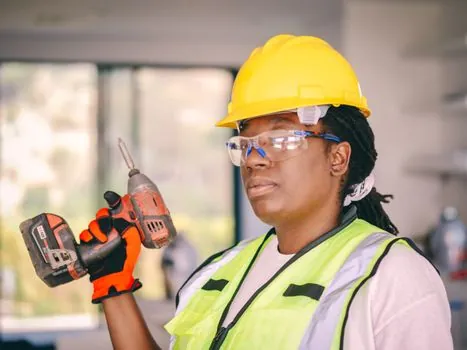
For procurement, anchor the spec to IEC 60900 for the tool standard, OSHA 29 CFR 1910.335 for use rules, NFPA 70E for approach boundaries, and the 10 kV dielectric test as the working-voltage proof point, with each tool individually marked and traceable [S1][S4]. The wider regulatory stack (NFPA 70E, local electrical codes) layers on top, and qualified electrical worker status with current certification is the human-side prerequisite for using the kit at all [S4][S6].
Beyond the standards, source from manufacturers that publish lot testing and a retest interval, keep tool rolls segregated by shift, and tie the inspection log to the same CMMS record used for ladders and lifting gear. Engineering teams that already run a disciplined spec-first process for adjacent categories, similar to the approach used in turnover box selection for electronics handling or arc welder specs for HVAC installation, will find insulated hand tools fit the same gate-by-gate template. Trackable next signals: the 2026 NFPA 70E update cycle, the published retest intervals from each shortlisted brand, and the move toward injection-molded metric and custom tooling for solar, wind, and EV service work that Russo flagged as the new growth front [S4].