An arc flash-rated full-body fall arrest harness is a Class III personal protective equipment (PPE) system that must remain structurally intact after an arc exposure, per ASTM F887, the consensus standard for arc-rated harnesses [S2][S6].
Utility line workers, substation electricians, and tower climbers are the primary users, because OSHA 1910.269 and NFPA 70E require both fall protection and arc-rated PPE whenever employees work at height on or near exposed energized parts [S6][S7].
ASTM F887 test profile: 40 cal/cm² exposure plus post-arc drop test
ASTM F887, the U.S. standard for arc-rated full-body harnesses, subjects the harness to a 40 cal/cm² arc exposure and then requires the harness to pass a drop test without showing melting, dripping, or ignition [S3][S6]. The 40 cal/cm² level is also the figure cited by MSA Safety for its EVOTECH and Workman Arc Flash lines, and by the e-Hazard utility-training write-up covering OSHA 1910.269 / NFPA 70E [S3][S6]. In practice this means the harness webbing, stitching, and metal/plastic hardware must continue to bear a 5,000 lb (22.2 kN) arrest load after the thermal event, which is the same arrest load that ANSI Z359.11 imposes on a non-arc-rated Class III harness [S2].
The reason the post-arc drop test exists is straightforward: a harness that drips molten polymer onto a worker mid-fall is worse than no harness, because the worker is already exposed to the thermal insult and must rely on the harness to hold [S6]. For that reason, the dominant webbing and thread materials in this category are aramids, typically Kevlar, blended with Nomex, both registered DuPont fibers with limiting oxygen index values that resist ignition and burn-through far better than standard nylon or polyester [S4][S9].
Materials of construction: Kevlar/Nomex webbing, coated or leather-isolated hardware
Across the major product lines, the webbing and load-bearing stitching are built from aramid fiber (Kevlar) often blended with Nomex, with hardware (D-rings, buckles, mating buckles) wrapped, coated, or otherwise electrically isolated from the worker [S1][S4][S7].
Specific construction choices vary by vendor: 3M DBI-SALA ExoFit Nex Arc Flash harnesses use PVC-coated hardware to insulate the metal from incidental contact, with U.S. list prices on the 22-SKU dealer page ranging from $537.35 (ExoFit Xp cross-over, dorsal/front web loops) to $1,448.43 (ExoFit Nex Arc Flash tower-climbing harness) [S1]. Guardian Fall Protection uses leather insulator pads behind every piece of hardware on its entry-level Series-chassis Arc Flash Harness, and a Kevlar/Nomex blend webbing on the B7-Comfort Arc Flash Harness, which retains the same DiaLock adjusters and Adjustable Waist Pad as the standard B7 [S4]. MSA's V-FIT Arc Flash Harness uses ASTM F887-certified construction, while MSA's broader arc flash program covers EVOTECH and Workman platforms at the 40 cal/cm² level [S3][S7].
For a broader view, distribution data shows that arc-rated harness list prices on the J Harlen catalog start at $125.90 for an entry arc-rated harness and reach $727.90 for a higher-end arc-rated harness, which lines up with the typical utility-procurement price band for this category [S5].
System view: harnesses are part of a matched arc-rated fall protection package
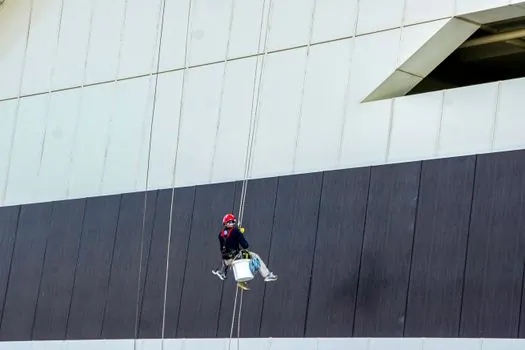
Specifying a harness without matching the connector is the most common error in this category, because the lanyard or self-retracting lifeline (SRL) is also exposed to the arc and must be built from the same aramid webbing or rope [S2][S4].
FallTech's catalog organizes the system into three matched layers: arc flash full-body harnesses (FT-Arc, FT-Arc Fit, Carbon FT-Arc Tower), arc flash and welding energy-absorbing lanyards, and arc flash SRLs (FT-R Arc Flash Technora Rope, Arc Flash Mini Pro, FT-X EdgeCore Arc Flash, FT-X EdgeCore Arc Flash Tie-Back) [S2]. Guardian's matching kit adds an Arc Flash Shock Absorbing Stretch Lanyard, a CR5 9 ft Class 1 Web Arc Flash Personal SRL, and an Arc Flash rated Tool Tether, billed as the first ASTM F887 Arc Flash-rated bungee-style tool tether on the market, intended to keep a dropped wrench or hot stick from falling onto a worker below [S4].
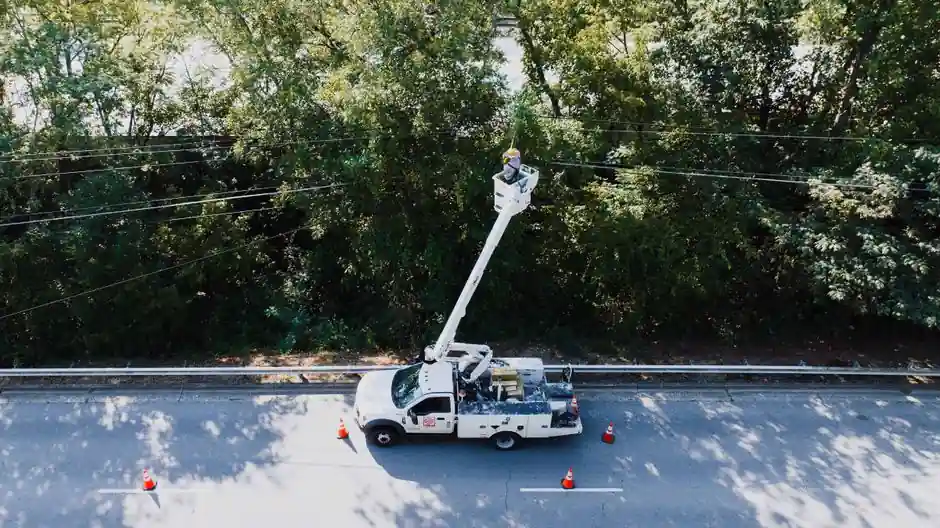
For the typical utility application, that means the specifier should not treat the harness as a standalone purchase. The anchor, lanyard or SRL, carabiners, and any tool tethers must all sit inside the same ASTM F887 envelope, or one weak link in the chain will fail the post-arc drop test in real conditions [S2][S4][S7]. On the tower side, the ExoFit Nex Arc Flash Tower Climbing Harness explicitly adds a seat/saddle element for prolonged work positioning, a configuration that shows up in the aerial work platform and bucket-truck use cases where the worker transitions between climbing, positioning, and free fall arrest [S1][S2].
Selection criteria: hazard category, work positioning, and worker fit
Three decision criteria drive the model choice: arc rating, work-positioning style, and fit/sizing [S1][S2][S7].
Arc rating is set by the incident energy at the work location, in cal/cm², which is calculated using IEEE 1584 and bounded by the site-specific arc flash study required by NFPA 70E [S6][S7]. For most 40 cal/cm²-evaluated harnesses, the harness itself sits inside a Category 4 (HRC 4) program, which also requires a 40 cal/cm² arc-rated suit, hood, and gloves; a higher-rated harness does not substitute for the suit [S6][S7]. Work-positioning style separates the models into three buckets: construction/positioning harnesses with side D-rings (e.g., ExoFit Nex Arc Flash Construction/Positioning at $964.47), tower-climbing harnesses with a seat (ExoFit Nex Arc Flash Tower Climbing at $1,448.43), and dedicated fall-arrest harnesses with a single dorsal D-ring (ExoFit Xp Arc Flash at $678.94) [S1].
Sizing and fit matter for the same reason they do on any Z359.11 harness, but the heat-resistant webbing is stiffer than standard nylon, so a proper fit trial is more important than usual; the FT-Arc Fit platform and B7-Comfort Arc Flash are the women-specific or adjustable-waist variants that address this [S2][S4]. In a structured comparison:
Harness A (entry arc flash, e.g., Guardian Series-chassis): Kevlar webbing, leather-isolated hardware, dorsal D-ring only, lowest price, suitable for fall arrest in a sub-station where no work positioning is required [S4][S5]. Harness B (mid-tier construction/positioning): PVC-coated hardware, side D-rings for work positioning, dorsal D-ring, mid-band pricing, suited to utility line work where the worker needs both positioning and fall arrest [S1]. Harness C (tower-climbing): adds a seat/saddle and sometimes a higher chest ascender attachment, top-band pricing, used for transmission and telecom tower work where the worker is suspended for long periods [S1][S2].
Applicable rules: OSHA 1910.269, NFPA 70E, and ASTM F887
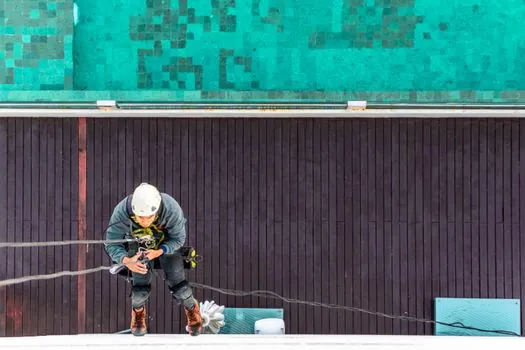
OSHA 1910.269 covers electric power generation, transmission, and distribution work, and explicitly requires fall protection for employees working at height on poles, towers, or similar structures, while NFPA 70E covers the arc flash PPE side for energized electrical work [S6].
ASTM F887-13 (or its current revision) is the equipment-side standard that defines the arc-rated harness test method, including the 40 cal/cm² exposure and the post-exposure drop test [S2][S3][S6]. A harness that is only labeled to ANSI Z359.11 (the general full-body harness standard) is not arc-rated and must not be used where an arc flash hazard has been identified, because the standard polyester or nylon webbing will melt and drip under incident energy [S9]. For procurement, the ASTM F887 label and the matching 40 cal/cm² rating are the two fields to verify on the harness label and the manufacturer's certificate of conformance, and the same rule applies to any connecting subsystem, lanyard, SRL, or tool tether that will be exposed to the same thermal event [S2][S4][S7]. The e-Hazard training note covering OSHA 1910.269 and NFPA 70E is the cleanest single-page summary of how the two rules overlap, and the arc welder reference is a useful adjacent resource for understanding the thermal and ignition properties of aramid PPE, even though it covers a different process [S6].
Limitations and failure modes
Arc flash-rated harnesses have three real failure modes that the specifier should plan around, not ignore: webbing abrasion, chemical contamination, and out-of-spec anchor geometry. [S3]
First, the Kevlar/Nomex webbing is more abrasion-sensitive than standard nylon, so the harness must be inspected before each shift for fraying, broken stitches, and heat damage, the same inspection cadence required by ANSI Z359.11 but with the addition of looking for thermal damage on every webbing segment, including under the hardware pads [S2][S4]. Second, common jobsite chemicals, especially hydrocarbon solvents, battery acid, and certain degreasers, degrade aramid fibers; a harness that has been wetted with a hydrocarbon must be removed from service per the manufacturer's user instructions, which is the same rule that applies to standard harnesses but with a lower contamination threshold [S2][S9]. Third, the anchor point and aerial work truck boom geometry must be validated for the same incident energy, because an arc event at the worker does not stop at the harness, the lanyard, the SRL, and the anchor all see the same thermal flux and must all be inside the arc-rated system envelope [S4][S7].
Trackable signals and near-term procurement checks
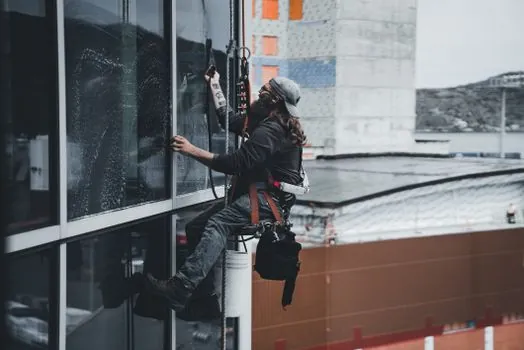
Two signals are worth tracking over the next procurement cycle. First, confirm that any arc flash harness on order is labeled to ASTM F887 and carries an arc rating of 40 cal/cm² or higher, which is the figure that lines up with NFPA 70E Category 4 work and the figure cited by MSA, FallTech, and Guardian for their current production harnesses [S2][S3][S4]. Second, audit the matching connector, lanyard or SRL, and tool-tether subsystems on the same purchase order, because a single non-arc-rated link in the system will defeat the harness, and the matched-system approach is the one explicitly called out in the FallTech and Guardian catalogs and in the MSA hot-work PPE write-up from 2025-04-28 [S2][S4][S7].
Background reading: PVC-U Pipe Selection for Warehouses: Schedule, Pressure, and Service Mapping.