
ASTM E94/E94M-22 is the current revision of Committee E07's film-based radiographic examination guide, priced at $96 on the ANSI Webstore listing, and it is the document procurement and QA engineers should cite for new film-radiography procedures [S3]. The guide covers X-ray and gamma-ray examination applied to industrial radiographic film recording, and it explicitly directs digital radiography users away from E94 toward the digital detector array (DDA) and computed radiography (CR) practice standards [S3].
Compared with the older E94-04(2010) reapproval, the 2022 revision retains the same film-recording scope but updates cross-references to current E07 practices, including E999, E1025, E1030/E1030M, and E1032 for film-related techniques, and E2597, E2698, E2736, E2737 (DDA) and E2007, E2033, E2445/E2445M, E2446 (CR) for digital workflows [S3]. ASTM E2033/E2033M-24 is the natural companion if a project is migrating from film to CR storage phosphor plates.
Scope: What E94/E94M-22 Actually Covers
Section 1.1 of E94/E94M-22 defines the guide as covering "satisfactory X-ray and gamma-ray radiographic examination as applied to industrial radiographic film recording," and notes that it states preferred practice without discussing the technical background that justifies the preference [S3]. Section 1.2 enumerates the in-scope subject matter: types of materials to be examined, radiographic examination techniques and production methods, radiographic film selection, processing, viewing, and storage, maintenance of inspection records, and a list of available reference radiograph documents [S3].
Section 1.3 is the most important boundary clause for new projects: "The use of digital radiography has expanded and follows many of the same general principles of film based radiography but with many important differences. The user is referred to standards for digital radiography" before listing the E07 digital suite [S3]. For pressure-vessel, pipeline, and structural-welding code work, ASME Section V Article 2 radiographic examination sets the mandatory variables (IQI sensitivity, source-to-film distance, geometric unsharpness) that E94 then guides the practitioner to satisfy on a film workflow.
Revision History and the Film-vs-Digital Split
ASTM's record shows four accessible editions: E94-00 (updated 2017-08-16), E94-04 (updated 2010-12-31), E94-04(2010) reapproval (updated 2017-08-01), E94/E94M-17 (updated 2022-12-26), and E94/E94M-22 [S1][S2][S4][S5]. The shift from a single-letter designation (E94) to a dual-unit designation (E94/E94M) beginning with the 2017 edition tracks ASTM's wider move to combine inch-pound and SI documents in a single publication, a structural change that also shows up in E1030/E1030M and E2445/E2445M [S1][S3].
What changed in 2022 versus 2017 is the explicit digital pointer: E94/E94M-22 Section 1.3 names E2597, E2698, E2736, and E2737 for DDA radiography, and E2007, E2033, E2445/E2445M, and E2446 for computed radiography, eight standards that did not all exist as approved E07 practices when E94-04(2010) was the current edition [S3]. Interpretation and acceptance criteria remain out of scope for E94; the standard explicitly states acceptance standards are not covered, and points users to other documents for that determination [S3].
Who Should Cite E94/E94M-22 and Who Should Not
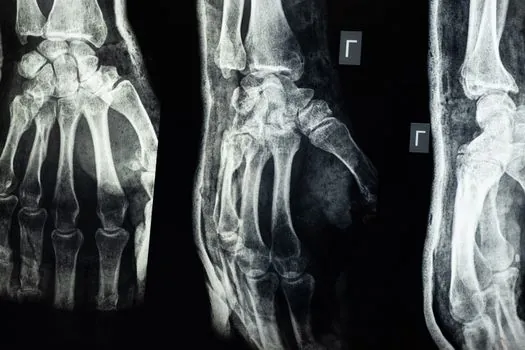
E94/E94M-22 is the right reference for QA programs, procedure-writing, and training specifications built around silver-halide film workflows, including weld radiography on carbon and low-alloy steel, castings, and forged components where the acceptance standard (for example ASME Section V Article 2 or API 1104) still requires film or permits film as an equivalent record [S3]. It is the wrong reference for a CR or DDA workflow, where the controlling practice is one of the eight digital standards listed in Section 1.3, and for any work where the acceptance criteria, not the technique, drive the specification [S3].
Procurement language that simply says "radiographic examination per ASTM E94" without naming an edition or an acceptance standard is a frequent contract defect: the 2010, 2017, and 2022 editions all have different cross-references, and the document does not, by itself, define pass/fail thresholds for welds or castings [S3][S4]. Tying the citation to a specific year and a paired acceptance document is the only way to make the reference enforceable on a job walk.
Companion Standards: Building a Compliant Film Procedure
For a workable film-based procedure, E94/E94M-22 points users to four companion E07 documents by name: Guide E999, Practice E1025, Practice E1030/E1030M, and Practice E1032 [S3]. E1025 governs design and manufacture of wire and hole image quality indicators (IQIs), also called penetrameters, the small metal plaques placed on the part to verify contrast and sensitivity. E1030/E1030M governs the radiographic examination of metallic castings, and E1032 governs radiography of welds by film, which is the document most specifiers actually need for fabrication-shop weld inspection.
For flat-plate sensitivity work, ASTM E592-20(2026), "Standard Guide to Obtainable ASTM Equivalent Penetrameter Sensitivity for Film Radiography of Steel Plates 1/4 to 2 in. (6 to 51 mm) Thick with X-Rays and 1 to 6 in. (25 to 152 mm) Thick with Cobalt-60," sets near-optimum 1T and 2T hole visibility values for a defined thickness range and is sold alongside eight reference radiograph adjuncts [S3]. The thickness split is deliberate: X-ray coverage runs 6 to 51 mm, while cobalt-60 gamma coverage starts at 25 mm and runs to 152 mm, matching the energy-thickness pairing most shops encounter on heavy-wall pressure equipment and thick pipeline girth welds.
Film vs Digital: How the Two Workflows Diverge
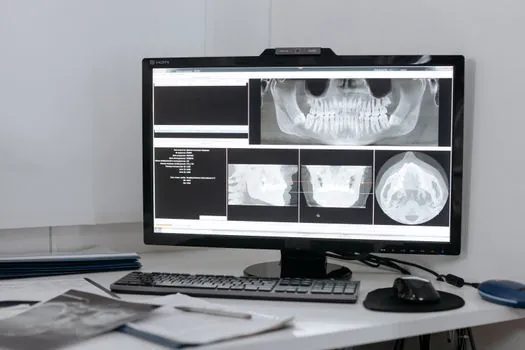
E94/E94M-22's position is that film radiography and digital radiography share general principles but differ in many important details, and the standard does not attempt to bridge them inside a single procedure [S3]. On a film workflow, the variables that drive IQI visibility are source-to-film distance, geometric unsharpness, kV or gamma isotope selection, film class, and processing chemistry; on a DDA or CR workflow, the controlling variables shift to pixel pitch, signal-to-noise ratio, scatter correction, and detector calibration, none of which E94 was written to govern [S3].
This is why procurement language matters. A 2022 specification that still says "radiography per ASTM E94" on a DDA-equipped shop floor will either be rejected by the inspector or force a fallback to film, both expensive outcomes. The robust pattern is to write the film procedure to E94/E94M-22 plus E1032 (for welds) or E1030/E1030M (for castings), and to write the digital procedure to E2597/E2698/E2736/E2737 (DDA) or E2007/E2033/E2445/E2446 (CR), as the application dictates [S3].
Common Misreads and Procurement Pitfalls
The three failure modes I see most often on incoming specifications: citing E94 without an edition year, citing E94 as an acceptance standard, and treating E94 as covering CR or DDA when it explicitly does not [S3]. A workable specification should name E94/E94M-22, name the acceptance standard separately (ASME Section V, API 1104, AWS D1.1, or a customer-specific reference radiograph set), and name the IQI standard (E1025) and the technique practice (E1032 for welds) so the inspector has a closed triangle of documents to enforce.
Another frequent miss is assuming that a reapproval, such as E94-04(2010), is the same as a revision; ASTM reapprovals reissue the existing technical content without committee balloting changes, so a 2010 reapproval is technically the 2004 text. For new work in 2026, the 2022 revision is the only edition that carries the current digital cross-references, and that is the version a careful specifier should anchor on [S3][S4].
Trackable next signal: watch ASTM Committee E07 (Nondestructive Testing) ballots for any future move to fold the digital suite into a single umbrella guide, which would change how E94 is cited in mixed-film-and-digital shops. For now, E94/E94M-22 plus E1032 (welds) or E1030/E1030M (castings) remains the film-side anchor, and the eight-practice digital suite is the digital-side anchor, with no overlap [S3].
Spec-level background on the components involved: linear guide, crossed roller guide, and pressure transmitter.