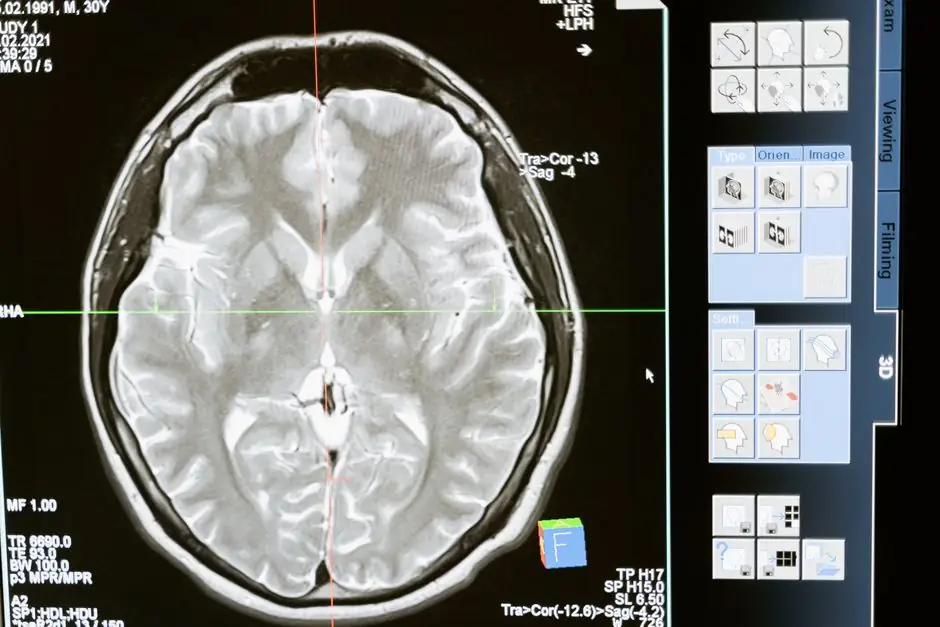
ASTM E2033/E2033M-24 establishes the minimum requirements for computed radiographic (CR) examination of metallic and nonmetallic materials using X-ray or gamma radiation, and is maintained by ASTM Committee E07 on Nondestructive Testing [S1][S5]. The practice, which supersedes E2033-17 and the older E2033-99 reapprovals (E2033-99R06 and E2033-99R13), is the U.S. counterpart widely cited alongside ISO 17636-2 for non-film NDE in weld and casting work [S1][S4].
The scope is explicit: the document controls the quality of the CR examination, not the acceptance criteria of the part, and it is written so it can be called out on the engineering drawing, specification, or contract [S1]. For a NDE engineer selecting an NDT method, E2033 is the rulebook for how to run a CR system, not whether the part passes.
Document Lineage and What Changed in the 2024 Revision
ASTM first issued E2033-99 as a photostimulable-luminescence (PSL) practice, then reapproved it in 2006 and 2013 before the 2017 rewrite that broadened the title to "Radiographic Examination Using Computed Radiography" and added the M (metric) suffix [S1][S2][S3][S4]. The E2033/E2033M-24 edition, listed by MADCAD under designation 382794, carries the dual English/metric formatting and remains in Book of Standards Vol. 03.03 [S5].
Practically, the move from E2033-99R13 to E2033-17 added explicit cross-references to Practice E1032 (weld RT), ISO 17636-2 (weld CR), Practice E1030 (casting RT), and Practice E1161 (electronic components), turning a one-method document into an integrated reference set [S1]. The 2024 redline edition preserves that structure while updating the normative references and language around system qualification and long-term stability monitoring [S5].
Mandatory Companion Standards: E2445, E2446, and the E-Series Cluster
E2033 is not a standalone document. Section 1.3 (Basis of Application) requires that E2033, E2445, and E2446 be used together: E2445 supplies the baseline performance evaluation and long-term stability (process control) test procedures for the CR system, while E2446 defines the CR performance levels recommended in Table 1 [S1].
Selection of the right CR performance level is a contractual decision driven by the acceptance criteria of the part: the written procedure must address the minimum effective pixel coverage appropriate to those acceptance criteria and to the radiographic image quality level (IQI) requirements of Table 1 [S1]. A shop running Class A welds per AWS D1.1 will not specify the same pixel size, scanning resolution, or spatial frequency (lp/mm) targets as a shop inspecting investment-cast turbine blades per ASTM E1030.
Personnel Qualification: Five Accepted Schemes
Section 5.6 of E2033 lists the accepted qualification bases for CR operators and Level 3 reviewers: ISO 9712, NAS 410, EN 4179, ANSI/ASNT CP 189, or SNT-TC-1A, with the applicable revision being the latest unless the contract specifies otherwise [S1]. The Cognizant Radiographic Level 3 must approve the part-specific examination technique (PSET) before any production hardware is exposed [S1].
For a quality manager, the practical effect is that an E2033-24 program can be staffed under any of the five schemes, but mixing schemes on a single part-family procedure is not allowed without contract language. Employers must also maintain employer or agency certification, and any equivalent qualification document has to be named on the contract or purchase order, not silently substituted [S1].
System Qualification, Process Control, and Environmental Envelope
All CR systems shall be qualified for their intended use per subsection 7.1, and long-term stability (process control) is mandatory under 7.1.4 [S1]. Preventative maintenance is captured in 6.2 and covers both the CR scanner and the X-ray generator, because a stable tube output is a prerequisite for repeatable PSL exposures [S1].
Environmental conditions are a frequent audit finding: CR systems should run inside the manufacturer's stated temperature and humidity envelope, and if the scanner is operated outside that envelope, the system must be re-qualified under 7.1 for the new conditions [S1]. For a pressure transmitter production line or a similar instrument cell where a CR cabinet sits next to a paint booth or a wash bay, this clause is the lever that forces a humidity-controlled enclosure.
CR vs Film RT vs DR: Where E2033 Fits the Stack
Three options compete for new NDT work: conventional film radiography (ASTM E1032/E1815 for welds), computed radiography under E2033, and digital radiography (DR) using flat-panel detectors (ASTM E2698/E2738 for the DDA workflow). The decision criteria are throughput, dynamic range, archival format, and the part-mix that drives IQI sensitivity. [S1]
CR under E2033 wins where a lab is converting an existing film workflow to digital without replacing every X-ray source, where the part-mix includes a wide thickness range (PSL plates have a wide dynamic range, typically 10,000:1, but DDA panels offer faster cycle time), and where DICONDE / ASTM E2339 archival is acceptable. DR is the better fit for high-volume automated cells because the cycle time drops to seconds versus minutes for a PSL scan; film remains the lowest-capex fallback when the part count cannot justify a CR or DR capital line. The E2033 written procedure must state which pixel pitch and which lp/mm target is being qualified, because that is the parameter the Level 3 signs against, not the marketing sheet of the scanner vendor.
Limitations, Failure Modes, and What E2033 Does Not Cover
E2033 explicitly states that the practice is not intended to establish acceptance criteria for parts or materials [S1]. A shop that buys E2033 thinking it gets a pass/fail rule for porosity or lack of fusion has bought the wrong book; acceptance comes from the product standard (ASME Section V Article 2, AWS D1.1, API 1104, etc.).
Known failure modes the practice tries to control: PSL plate fatigue and erasure artifacts if the same imaging plate is over-used, scanner light-leak artifacts that masquerade as real indications, and environmental drift (temperature, humidity) that shifts the calibration curve. Periodic maintenance per 6.2, process-control monitoring per 7.1.4, and operation inside the manufacturer's environmental envelope are the three documented controls [S1]. The practice also defers electronic-component radiography to E1161, so a printed-circuit-board or pressure sensor inspection program must layer that document on top of E2033.
Practical Specification Language and Sourcing Notes
A specifier calling out CR on a drawing should reference "ASTM E2033/E2033M-24, in conjunction with E2445 and E2446, with CR performance level per E2446 Table 1 as approved by the Cognizant Radiographic Level 3," and name the qualification scheme (ISO 9712, NAS 410, EN 4179, ANSI/ASNT CP 189, or SNT-TC-1A) by revision [S1]. The PSET under 7.5 must be on file before production exposures, and any work done outside the manufacturer's environmental envelope triggers a re-qualification under 7.1 [S1].
For a procurement or QA engineer tracking the next signal: watch for ASTM Committee E07 ballot activity on the E2033/E2445/E2446 cluster in 2026, because revisions to the pixel-coverage and basic-spatial-resolution tables tend to move together, and any change to Table 1 in E2446 ripples directly into every E2033 written procedure. A second trackable signal is ISO 17636-2 maintenance, since E2033 Section 5.2 names it as the cross-reference for weld CR; divergence between the two documents is the leading indicator of an audit finding on a multi-national supply chain. Related reading on spec discipline appears in the comparison of similar material-spec standards such as ASTM C578 Type VII vs Type V XPS, where the same part-numbering-and-revision hygiene applies.
Component reference pages worth checking: flow meter.