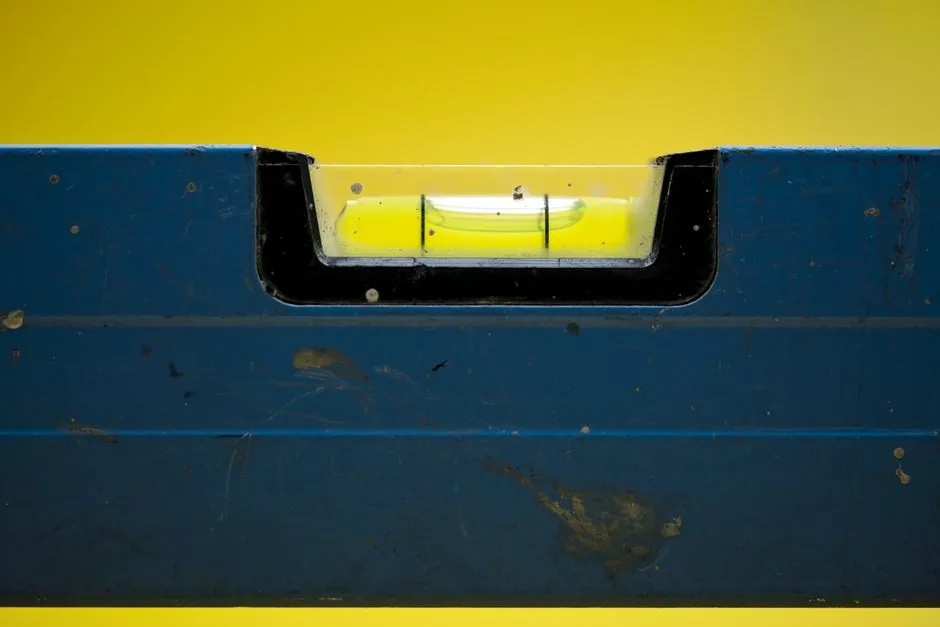
An automatic level on a wet site needs at least IP65 ingress protection to survive rain, splashing, and brief wet handling, and IP66/67 when hose-down or shallow immersion is expected, per the IEC 60529 rating framework the instrument datasheets cite [S1]. Wet Job - Part 1 in Escape from Tarkov, a Peacekeeper task that requires eliminating 10 Scavs on Shoreline with an M4A1, M16, ADAR, or TX-15, is unrelated to that standard but shares the "wet" tag in its title [S3].
This piece covers the IP code as it actually applies to surveying instruments, the housing choices that move an automatic level from IP54 to IP67, the failure modes a field tech will see when those choices are wrong, and the accessory and storage decisions that decide whether the spec holds for the next three years. The two numbers that govern buying behaviour on a rainy site are the IP code second digit and the operating-temperature window; everything else on the data sheet is secondary [S2].
IP Code Decoded: What the Second Digit Actually Means for an Automatic Level
The IEC 60529 IP code rates enclosures against solid objects (first digit, 0-6) and liquids (second digit, 0-9), and the second digit is the one that matters on a wet site because water is the dominant threat to the compensator and the horizontal circle. IPx4 protects against splashing from any direction, IPx5 protects against low-pressure water jets (around 12.5 l/min at 30 kPa), IPx6 protects against powerful jets (around 100 l/min at 100 kPa), and IPx7 protects against temporary immersion to 1 m for 30 minutes [S1].
For most construction surveying, an IP54 enclosure keeps out dust and splashing water but does not survive a pressure wash, which is why it is the floor for indoor use and not for outdoor pours. IP65 keeps out dust completely and resists low-pressure jets, the practical minimum for outdoor foundation work and bridge-deck surveys. IP66 adds resistance to powerful jets, the right call for marine piers, storm drainage, and washdown areas. IP67 adds temporary immersion protection, useful when a tripod leg sinks into a flooded box culvert or the instrument is dropped in shallow standing water [S2].
The operating-temperature window of -20 to +50 °C that dominates 2025-2026 automatic-level catalogs is independent of the IP code, but the two together define the worst-case wet environment an instrument can survive without condensation damaging the compensator or the encoder strip [S1].
Housing Choices: O-Rings, Gaskets, and Sealed Eyepieces That Move You From IP54 to IP67
The IP rating on a datasheet is only as good as the gasket stack inside the housing, and on automatic levels the main leak paths are the eyepiece, the objective lens, the focusing knob shaft, the tribrach, the compensator access cover, the horizontal circle drive, and the battery compartment. Factory-sealed nitrogen-purged optics on mid-tier models from 2025-2026 reduce internal condensation between the lenses and prevent the fungus growth that destroys reticle contrast over five to ten years of wet use [S1].
Rubber O-rings around the eyepiece, the objective, and the compensator access cover are the most common failure points: a single missing O-ring drops the housing from IP66 to IP54 in the time it takes to wipe the lens. Replacement O-ring kits cost a fraction of the instrument and should be on every wet-site truck. The battery compartment on a Ni-MH or Li-ion automatic level is the second most common failure point because users open it in the rain; look for a twist-lock or latch design with a captive seal, not a sliding cover held by a single detent [S2].
For a frame of reference on how enclosure ratings affect field instruments in adjacent categories, the IP23 minimum for outdoor arc welding is a comparable decision point, and the spec logic for damp-site OCV and welding-set selection follows the same idea of matching the rating to the worst expected water exposure [S1].
Criteria Comparison: IP54, IP65, IP66, IP67 for Wet Job-Site Automatic Levels
IP54 (dust-protected, splash-resistant from any direction) suits indoor concrete slabs and covered foundations, costs the least, and tolerates accidental rain only if the instrument is wiped down within minutes. IP65 (dust-tight, low-pressure jet-resistant at 12.5 l/min) is the practical minimum for outdoor pours, bridge-deck work, and most civil-surveying wet sites, and it is the rating where most professional users stop spending [S1].
IP66 (dust-tight, powerful jet-resistant at 100 l/min) is the right call for marine piers, dam spillways, storm drainage, and washdown areas, and it costs 10-20 percent more than IP65 in the same model range. IP67 (dust-tight, temporary immersion to 1 m for 30 minutes) covers flooded box culverts, drop-into-puddle events, and heavy-monsoon pours, but the added sealing weight and the more aggressive gasket stack raise the unit cost further and reduce the focus-knob smoothness on some models [S2].
For a structured decision: water-jet pressure 0 vs 30 kPa (IP65) vs 100 kPa (IP66), immersion tolerance 0 (IP65) vs 1 m / 30 min (IP67), and price premium roughly 1.0x (IP54) to 1.3-1.5x (IP67) on the same model range. The reading I would trust a junior tech to make: buy IP65 as the floor, IP66 if the site has hose-down or pump-fed washwater, IP67 only if the instrument will sit in standing water or be used in a monsoon climate [S1].
Compensator Failure Modes on a Wet Site
The compensator is the part that actually fails when an automatic level gets wet, not the telescope or the horizontal circle. A magnetic-damped compensator uses a moving element suspended in a magnetic field, and a drop of water on the suspension changes the damping constant enough to throw the standard error per double-run kilometer from 1.5 mm to 3 mm or worse on a 2025-2026 mid-tier model [S2].
An air-damped compensator uses a sealed air cell and is more tolerant of wet handling than a magnetic damper, but both lose accuracy when the housing seal is broken. The sign of a dying compensator on a wet site is a slow oscillation or a sticky settle on a 30-m sight, and the fix is almost always a service-shop dry-out, not a field repair. For a closer look at the underlying technology, the comparison of magnetic vs air-damped compensators lays out the failure thresholds and the field-reality differences that decide which design survives a wetter job [S1].
Standard-error drift on a wet compensator is the silent killer: the instrument still reads, the collimation still looks fine on a quick check, but the closed-level run that used to close at 1 mm over 1 km now closes at 4 mm, and the concrete pour built on that level is off by 3 mm before anyone notices. Wet-site users should run a two-peg test at the start of every shift, not weekly, and re-run it after any rain event that wets the housing [S2].
Accessories, Storage, and Field Handling That Decide Whether the Rating Holds
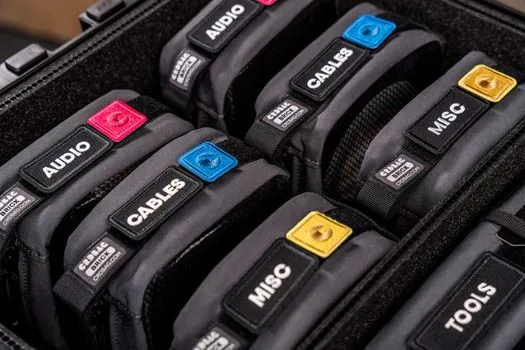
An IP65 housing with an unsealed rain cover is no better than an IP54 housing without one, so the spec on paper is only one part of the wet-site story. A fitted vinyl or canvas rain cover sized to the specific model is the cheapest insurance on the market and costs less than one service-bench dry-out. A sealed hard case with desiccant packs between shifts keeps the internal humidity below the dew point long enough to prevent condensation damage when the instrument is brought back into a warm truck cab [S1].
Lens caps that stay attached to the housing, tethered objective and eyepiece caps, and a tripod setup that keeps the tribrach above standing water are the three accessory decisions that decide whether the IP rating is real. A tripod plate that sits in a puddle for 20 minutes will wick water up the central spindle and into the horizontal circle, and no housing rating covers that leak path. The take-home: the IP code is a benchmark for a stationary instrument, not a wet-and-muddy tripod, and the field protocol has to close the gap [S2].
Storage humidity matters more than storage temperature: a sealed dry cabinet at 30-40 percent relative humidity is the right home between shifts, and a silica-gel canister inside the hard case is the minimum. Pull the instrument out of the truck cab and let it acclimatise for 15-20 minutes before wiping condensation off the optics; wiping a cold lens with a dry cloth on a warm day scratches the coating and is the most common preventable damage on a wet site [S1].
Selection Checklist: What to Confirm Before Buying an Automatic Level for a Wet Site
Confirm the IP code second digit on the datasheet, not the marketing brochure, and check whether the rating covers the instrument alone or the instrument plus the battery compartment closed. Confirm the operating-temperature window: -20 to +50 °C is the 2025-2026 norm, and anything narrower is a red flag for a winter-pour site. Confirm whether the optics are nitrogen-purged and whether replacement O-rings for the eyepiece, objective, and battery door are available as a service part, not a factory-only part [S2].
Confirm the compensator type, magnetic-damped vs air-damped, and the published standard error per double-run kilometer at 1 km. A magnetic damper costs less and is fine for a covered site, but an air damper is the better wet-site bet. Confirm the focusing-knob seal and the horizontal-circle drive seal, the two moving parts most likely to leak after two years of wet use [S1].
Confirm the warranty wording on water damage: some manufacturers exclude "immersion beyond the rated depth" or "submersion longer than 30 minutes", and that clause is the difference between a covered repair and a write-off after a flooded-box-culvert drop. The single most expensive spec on a wet-site datasheet is the one in the warranty exclusion, and the second most expensive is the IP code printed in marketing material that the service shop will not honour [S2].
Track the next two signals: any 2026-2027 model-line refresh that moves the IP code second digit on mid-tier automatic levels from IP65 to IP66 at the same price, and any IEC 60529 amendment that revises the IPx6 jet pressure from 100 kPa to a higher test value, which would change which existing instruments still meet the spec.