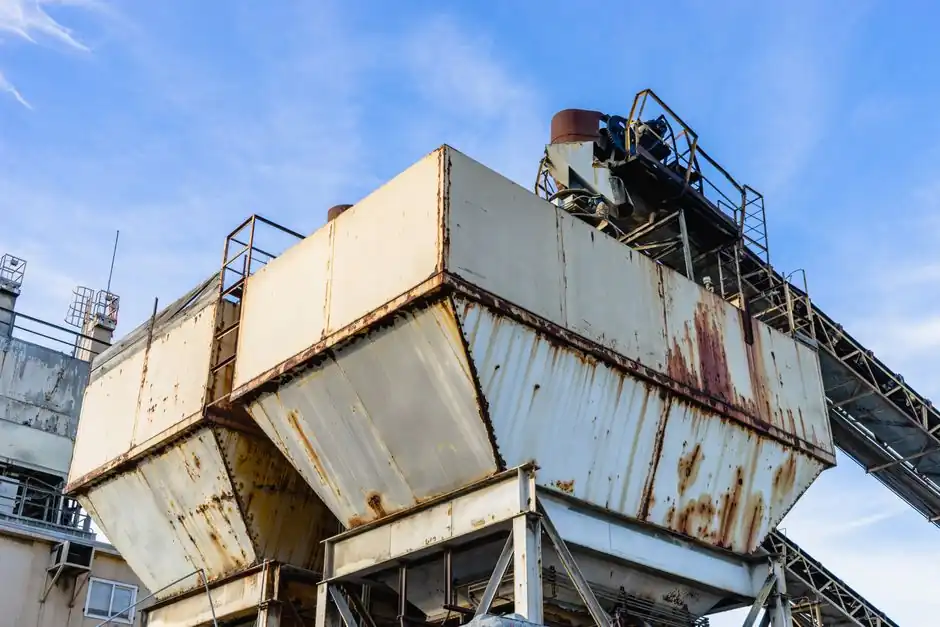
An industrial bag filter is sized by three numbers working together: the micron rating of the media, the standard bag size that fits the housing basket, and, for dust collectors, the air-to-cloth ratio against the actual process airflow. Get any one of the three wrong and you pay for it in pressure drop, bypass, or premature change-outs, not in the bag itself.
For liquid service the practical working range is 1–200 µm, with #2 size bags (667 L/min, ~176 GPM nominal) handling most mid-flow process lines, and dust collectors generally specified at 3–5 cfm/ft² face velocity for general industrial dust. Below 1 µm you are in cartridge or membrane territory; above 200 µm you are straining, not filtering.
Micron rating: nominal felt vs absolute NMO
A 50 µm rating on a polypropylene felt bag is a nominal rating, capturing roughly 60–90% of particles at that size via depth filtration through the fibre matrix; the felt gives high dirt-holding capacity but a soft cut-point [S1]. A 50 µm rating on a nylon monofilament (NMO) bag is an absolute rating, with every mesh opening the same diameter, so the bag stops 99%+ of particles at the rated size with a sharp, predictable cut-point [S1]. That distinction is the single most common source of under- or over-spec in bag selection.
Selection bands run from 0.5–1 µm ultra-fine polishing (pharmaceutical water, electronics rinse), through 5–10 µm fine filtration (drinking water pre-treatment, metalworking coolant, ink and paint), 25–50 µm standard process control, 100–200 µm coarse pre-filtration, up to 500–1500 µm coarse mesh for flakes, fibres and visible debris [S4]. Going finer than the process needs raises pressure drop and shortens service life; going coarser lets particles through that downstream equipment (RO membranes, nozzles, instrumentation) cannot tolerate.
A practical sanity-check table for liquid service:
Band, typical use, sensible pick. 1 µm, final polishing, PP or polyester felt, expect 2–5 psid clean drop. 5–10 µm, coolant / plating, PP felt, 1–3 psid clean. 25–50 µm, general process, PP or NMO depending on cut-point need. 100–200 µm, pre-filter, NMO for sharp cut. 500+ µm, coarse strain, NMO mesh.
Bag size and housing fit: #1 to #4 are not interchangeable
Standardised liquid filter bag sizes are numbered #1 through #4, and the number is keyed to the housing basket, not the flow rate alone [S2]. Nominal water flow per bag drops out at roughly 333 L/min (#1, ~88 GPM), 667 L/min (#2, ~176 GPM), 100 L/min (#3, ~26 GPM, compact), and 200 L/min (#4, ~53 GPM, compact) [S4]. Higher flow applications typically use larger #2 bags or multi-bag housings, not multiple small bags in a single-basket housing [S2].
Mismatched sizing causes poor sealing, filter bypass from improper seating inside the restrainer basket, and reduced filtration efficiency [S2]. The restrainer basket is not optional; it supports the bag against differential pressure and without it the bag ruptures almost immediately under flow [S5]. Ring style (snap-ring, collar, flange-top) must also match the housing groove, or liquid bypasses the seal regardless of how good the media is.
For dust-side service on pneumatic conveying, the bag number is replaced by total filter area, and the controlling parameter is the air-to-cloth ratio. Standard ranges are 1–3 cfm/ft² for bin vent or low-concentration service, 3–5 cfm/ft² for general industrial dust, 5–8 cfm/ft² for heavy dust loads, and 0.5–1.5 cfm/ft² for fume collection [S3]. A worked example: 100 cfm at 4 cfm/ft² needs 25 ft² of filter area; the same 100 cfm at the 5 cfm/ft² high end needs only 20 ft² [S3].
Air-to-cloth ratio: catching the over-spec trap
An oversized dust collector is more common than an undersized one, and it costs money. In one limestone silo example, 11.17 cfm of conveying air against a 215 ft² filter gives an air-to-cloth ratio of about 0.16 cfm/ft², well below the 3–5 cfm/ft² industrial baseline, indicating the filter is over-sized, not under-sized [S3]. Over-sizing wastes capital and leaves dust caked on bags that never see enough velocity to pulse clean; under-sizing blinds the media and chokes the process.
For bin-vent filters the second check is settling velocity. For 35 µm limestone (density ~2,700 kg/m³), Stokes' Law gives a settling velocity of about 0.126 m/s, or 24.8 ft/min, and the upward air velocity inside the housing must stay below that figure to keep pulsed-off dust from re-entraining [S3]. Skipping this check is how pulse-cleaned bin vents end up discharging visible dust downstream.
Material selection: when chemistry beats geometry
Micron rating and bag geometry get you 80% of the way; the last 20% is media chemistry. Common dust-side materials are polyester, PPS, aramid (Nomex), P84, PTFE, and fiberglass, each with a different temperature ceiling and chemical resistance profile [S7]. Hydrolysis, acid attack, and dust abrasion are the three field killers, and the material has to be matched to the gas stream, not the particle size.
On the liquid side, PP felt is the default for water and many chemicals, polyester felt handles higher temperatures, and NMO mesh is chosen when absolute ratings and cleanability outweigh dirt-holding capacity [S1]. PP vs nylon is not a free choice either: nylon absorbs water and changes dimensions, which matters in batch processes with hot CIP cycles; PP is dimensionally stable but tops out lower in temperature. The full bag filter decision tree interlocks housing, micron, media and flow.
Who should NOT pick the mainstream option

A standard 5 µm PP felt #2 bag at 3–5 cfm/ft² is the safe default for a general industrial water or dust stream, but it is the wrong pick when: the process requires a sharp cut-point (use NMO absolute, not felt nominal) [S1]; the gas stream carries acid mist or high moisture (move to PTFE membrane or PPS, not standard polyester) [S7]; the duty is continuous 24/7 with no shutdown window (move to duplex housings or a self-cleaning filter instead of single-bag simplex); or the fluid carries high viscosity or oil, which collapses the nominal flow figures (size the housing one or two bags up) [S4]. A simplex housing on an unmissable process line is a maintenance accident waiting to happen.
Operating limits and failure modes that spec sheets gloss over
Clean pressure drop across a new bag and housing should sit between 2 and 5 psid; rising differential pressure is the standard change-out trigger, and ignoring it forces fluid bypass around a blinded bag [S5]. Maximum operating velocity through the media is set to prevent particle extrusion and media deformation, and the restrainer basket is the structural component that makes the velocity tolerable.
For bag filters used as bulk bag unload-station dust receivers, two sizing errors dominate: oversized filters that fail to pulse clean (dust cake stays put), and undersized filters that exceed 8 cfm/ft² and blind within minutes on heavy loads [S3]. Both look like "the bags are bad" in the maintenance log; neither is a bag problem.
Sourcing and standard reference points
Published vendor sizing guides in 2026 converge on the same numbers: 1–200 µm working range for liquid bag filtration, #1–#4 bag sizing keyed to housing basket, and 3–5 cfm/ft² air-to-cloth for general industrial dust [S1][S2][S3][S4]. A short verifiable quotation: "A 1 µm bag filters finer than a 100 µm bag," and the corollary that finer bags create higher pressure drop and shorter service life [S4]. For dust streams, the corollary is "the filter area required equals airflow divided by the air-to-cloth ratio" [S3].
Track three signals on the next spec review: the air-to-cloth ratio actually being run on existing dust collectors (most plants run lower than the design point), the absolute-vs-nominal micron convention in the current purchase spec, and the housing basket-to-bag ring style match for every size in inventory. Two of those three usually fail a fresh audit.
Spec-level background on the components involved: linear guide.