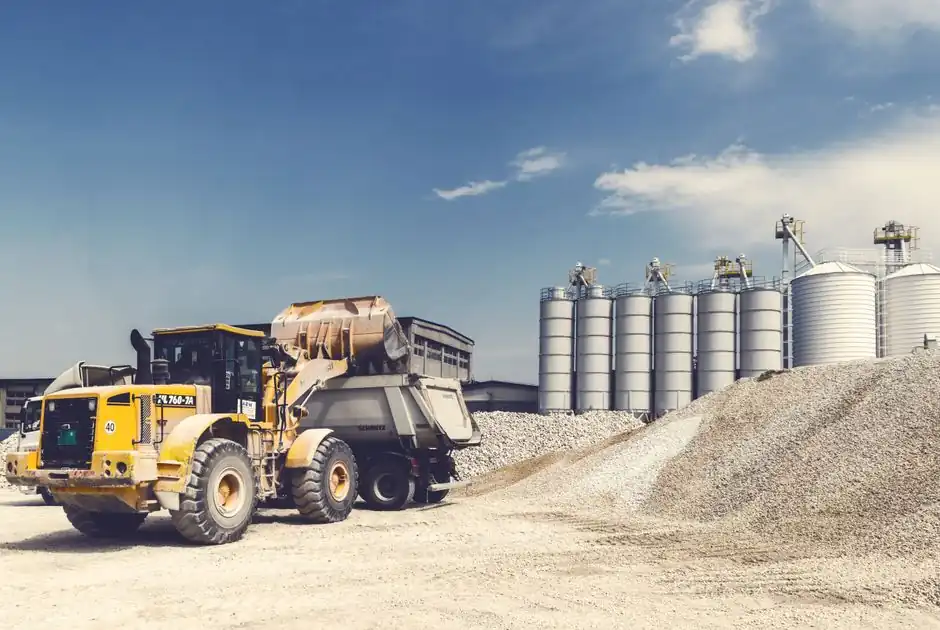
Pulse-jet bag filters led the global bag filter market with 63.9% share in 2025, and that share is forecast to grow at a 9.5% CAGR through 2031, with mining and cement cited as core demand drivers [S1].
Mining duty is defined by abrasive ore dust, intermittent moisture, and gas temperatures that often sit between 120°C and 200°C at the baghouse inlet, which is why the engineering question is rarely "bag filter or cartridge filter" but "which media, what air-to-cloth ratio, and what cleaning regime" [S2][S5].
Why Pulse-Jet Dominates Mining Duty
Pulse-jet bag filters clean their bags with short compressed-air pulses while the unit stays on-stream, so the plant never stops filtering during cleaning, a structural advantage over shaker and reverse-air designs in continuous mining and concentrator service [S2]. Modern pulse-jet collectors integrate differential-pressure sensors that trigger cleaning only when the pressure drop crosses a setpoint, which cuts compressed-air consumption and extends bag life on highly abrasive streams [S4]. Pulse-jet collectors also capture respirable particulate down to roughly 2 µm, which is the range that matters for silica-, coal-, and metal-ore dust compliance [S4]. For these reasons pulse-jet has displaced reverse-air and shaker collectors in most greenfield mining baghouses since the early 2010s, and the segment now exceeds two-thirds of new mining installations [S1].
Bag Filter vs Cartridge Filter: Where Each Wins
Bag filters hold the edge on heavy, abrasive, high-volume dust streams; cartridge filters win on fine particulate below 1 µm, on footprint, and on swap-out speed [S5]. The decision criteria line up as follows: filtration efficiency favours cartridges below 1 µm, while bags handle 2-3 µm and above more economically; air-to-cloth ratio is 2-4 ft/min for bags versus 4-6 ft/min for cartridges, which means a baghouse needs more housing volume for the same airflow; bag life routinely runs 6-24 months in mining service, while cartridges are easier to replace but typically shorter-lived in heavy-dust environments [S5]. Mining plants processing ore, cement, or coal almost always end up on bag filtration because the dust is coarse enough, the volume large enough, and the gas stream dirty enough that the cartridge pleat pack would blind too quickly [S5].
Filter Media Selection by Mining Service
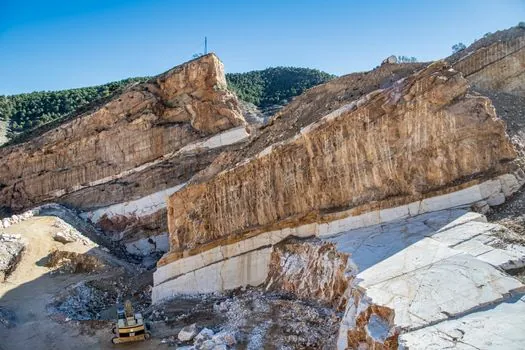
Media choice is driven by continuous operating temperature, peak excursion, acid-gas exposure, and abrasion, and the wrong pick is the single most common cause of premature bag failure in mining baghouses [S3]. Polyester is the workhorse below 130°C on dry, low-acid streams and is favoured for its abrasion resistance and antistatic behaviour on light dust loads [S4]. PPS (polyphenylene sulphide) covers 160°C continuous and 190°C peak, and is the default for coal-fired boiler flue and high-moisture biomass streams where acid dewpoint is a concern [S3]. Nomex (aramid) handles 204°C continuous and 240°C peak, making it a fit for cement kilns, hot-mix asphalt, and metallurgical baghouses [S3]. PTFE membrane media at 240°C continuous and 260°C peak covers the aggressive envelope: chemical incineration, waste-to-energy, coal-power flue, and high-acid gas streams [S3]. P84 (polyimide) at 240°C continuous and 260°C peak is specified for waste incinerators, cement kilns, smelting blast furnaces, and asphalt batching exhaust [S3]. Fiberglass at 260°C continuous and 280°C peak is the ceiling for dry, high-temperature flue gas and non-ferrous smelting baghouses [S3].
Air-to-Cloth Ratio and Can Velocity: The Two Numbers That Decide Performance
The two numbers that make or break a mining baghouse are the air-to-cloth ratio and the can (interstitial) velocity, and getting either wrong is the usual cause of bags that fail stack tests or wear out inside eight months [S2]. For pulse-jet service on abrasive ore dust, the air-to-cloth ratio typically lands between 2.0 and 3.5 ft/min, dropping toward 2.0 ft/min when the dust is hygroscopic, sticky, or carries a high fines fraction [S5]. Can velocity is generally held below 200 ft/min to keep re-entrainment off already-cleaned bags and to keep differential pressure stable across the cleaning cycle [S2]. Tri-Mer's new industrial bag filter line, rated for gas volumes up to 880,000 acfm, is engineered to stay within these envelopes at full-load operation [S1].
What Bag Filters Are, and What They Are Not, the Right Answer For
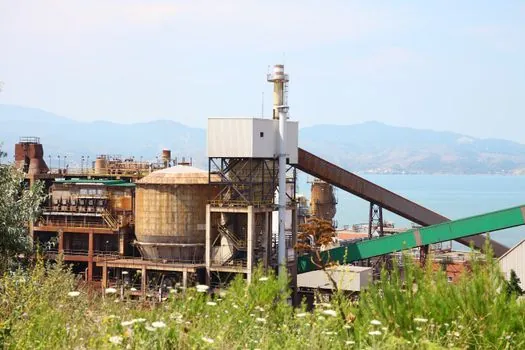
Bag filters are the right answer for crushing, screening, milling, conveying, and transfer-point dust in hard-rock mining; for coal-handling and prep-plant dust; for concentrate drying and pelletizing; and for cement and lime plants co-located with mining operations [S2][S3]. They are the wrong answer for pharmaceutical-grade or food-grade dust where a cartridge's pleated surface area and easy sanitisation pay back the higher media cost; for ultra-fine sub-micron fume where HEPA-grade cartridge media is required; and for any duty where the gas temperature excursion exceeds the media's peak rating, since a single over-temperature event can glaze a polyester or PPS bag [S3][S5]. The structural reference for sizing and selection is the bag filter system itself, including the cage, tube sheet, and hopper geometry that constrain bag diameter and length. A correctly sized filter element is the part of the system that actually does the particulate work, and its specification must match the housing, not the other way round.
Standards, Compliance, and the 2026 Regulatory Push
China enforces sub-30 mg/Nm³ particulate limits for new coal plants and India mandates sub-50 mg/Nm³ for cement kilns, which makes fabric filtration compulsory rather than optional for any new or retrofit mining-adjacent stack [S1]. The European Union's Industrial Emissions Directive revision tightens permitted dust thresholds, driving retrofits across metals and waste-to-energy sites that share filtration technology with mining baghouses [S1]. Illinois banned PTFE textiles effective January 2025, and the U.S. EPA requires PFAS usage disclosure, which is pushing suppliers toward plasma-treated polyester and other fluorine-free finishes for North American stacks [S1]. This regulatory pressure is the structural reason aftermarket revenue now accounts for over 80% of supplier turnover: existing baghouses are being re-rated and re-bagged faster than new units are being built [S1].
Sourcing, Lead Time, and Supplier Selection
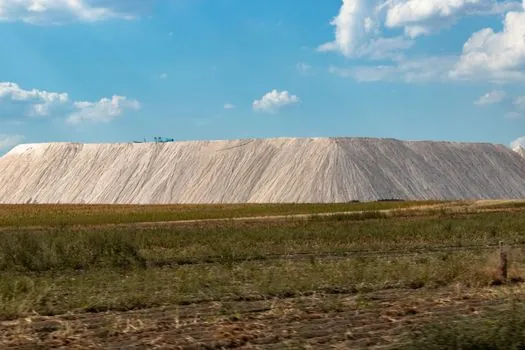
Specifying a mining bag filter is an engineering decision, not a purchasing decision: the supplier's ability to size air-to-cloth ratio, select media, and set cleaning cycle is what keeps emissions compliant and bags lasting for years [S2]. Eaton filter bags paired with housings are widely used as an economical drop-in for standard industrial filtration duty [S6]. For Indian mining and cement operators, suppliers with in-house design, pan-India manufacturing, and application-specific engineering since 1979 tend to outperform catalogue vendors on abrasive-dust service [S2]. The same logic applies to the broader industrial filter category, where vendor application experience routinely matters more than headline price [S2].
Two trackable signals to watch into late 2026 and 2027: the rollout of PFAS-free PTFE replacements in North American stacks (plasma-treated polyester and aramid blends), and the spread of predictive-maintenance differential-pressure and acoustic-emission sensors on pulse-jet baghouses, both flagged as the next wave of specification drivers for mining and cement service [S1]. For engineers sizing a new mining baghouse, the rule of thumb has not changed: pick the media to the gas, not to the budget, and pick the supplier to the engineering, not to the catalogue.
See also our earlier report, Silicone Rubber Selection for Energy Equipment: 2026 Spec Map.