A CNC feed-axis ball screw should be selected from the required axial load, feed rate, duty cycle, travel, positioning accuracy, and support arrangement, then checked for critical speed, buckling, and service limits.
For a typical machine-tool axis, shaft diameter and lead are the starting pair: a 20 mm screw with 40 mm lead or a 30 mm screw with 60 mm lead are example selections for defined operating conditions [S7].
Ball Screw Duty: Diameter, Lead, and Feed Rate
A ball screw converts servo or stepper rotation into linear travel through recirculating steel balls, replacing sliding contact with rolling contact. The screw diameter controls available load capacity and stiffness, while lead defines linear travel per revolution and therefore the motor-speed, thrust, and accuracy trade-off [S5].
For a machine-tool feed axis, calculate the required motor speed from the commanded linear velocity and the selected lead. A smaller lead produces greater axial thrust per revolution and finer displacement per motor revolution, but requires more shaft speed for the same feed rate. A larger lead raises linear travel per revolution, but each revolution produces a larger pitch-related positioning increment and does not improve positional accuracy by itself.
Typical examples include a 20 mm diameter screw with 40 mm lead, and a 30 mm diameter screw with 60 mm lead [S7]. Do not transfer these examples to another axis without checking the actual thrust, speed, accuracy, and support conditions. For resolution-focused selection, the relationship between lead and control resolution is developed in Ball Screw Lead Selection for 1 Micron Resolution.
Accuracy Class, Backlash, and Preload
MISUMI India's range covers rolled ball screws suitable for general automation and material handling and precision ball screws for CNC, robotics, and high-accuracy positioning [S5]. The C3 class is the higher-precision option in that comparison, whereas C10 is the looser end of the rolled range.
Backlash under load reversal is controlled by the nut, not by the screw shaft grade alone. A preloaded nut removes internal clearance and improves reversibility, but the preload must remain compatible with the axis load, lubrication, temperature, and support arrangement. Excess preload raises heat generation and can shorten service life, while insufficient preload allows reversal error.
Accuracy selection should be tied to the finished-part requirement, not to a generic CNC label. The feed system also contributes positioning error through structural deflection, thermal growth, servo compliance, and support-bearing play. For the elimination of reversal error, see Set CNC Ball Screw Backlash by Accuracy Class.
Critical Speed, Support Bearings, and Axis Rigidity

A ball screw is not limited only by rated load. Its permissible rotational speed depends on the screw length, end-support arrangement, diameter, and the distance between bearings. As stroke and unsupported length increase, critical speed and buckling resistance fall, so the screw must be checked against the maximum commanded motor speed [S2].
Do not select the screw diameter from axial load alone. A larger diameter can provide additional dynamic load capacity and resistance to buckling, but it also changes inertia, mounting envelope, and cost. Verify that the selected support arrangement can carry both axial and radial reactions and that the motor-side arrangement does not unintentionally over-constrain the screw.
Rolled Versus Precision Ground for CNC
Rolled screws use thread rolling and are normally specified in C7 or C10 classes, while precision-ground screws use thread grinding and are offered in C3, C5, or C7 classes in the cited range.
The decision comparison is straightforward. A C3 ground screw gives the highest positional precision in the cited range, but it carries a higher purchase cost. MISUMI India's rolled ball screws are suitable for general automation and material handling, and economy-series variants are available [S5]. Neither class determines load rating by itself; shaft diameter and manufacturer catalog data remain necessary.
Machine-tool builders should also compare lead accuracy, return-system design, lubrication provisions, seal arrangement, and available stock length, not simply use the labels “rolled” and “precision.” The selection method for matching screw diameter to lead and rigidity is detailed in Ball Screw Diameter-to-Lead Ratio for Rigidity.
Ball Screw or Rack and Pinion

A ball screw is the stronger fit for a short-to-moderate feed stroke where fine positioning, compact installation, high thrust, and reversible accuracy are priorities. Rack and pinion is generally more practical for multi-meter axes because the rack remains fixed to the machine structure while the pinion travels, avoiding a long rotating shaft whose speed is constrained by critical-speed limits [S2].
Across four criteria, the comparison is direct. Ball screws offer fine positioning and high axial thrust in compact packages, but their speed becomes less attractive as stroke grows. Rack and pinion scales across several metres and avoids the full-length rotating screw, yet installation depends heavily on rack alignment and joint accuracy. Ball-screw systems require attention to bearing support, axial alignment, critical speed, and buckling; rack systems require attention to rack joints, pinion preload, and structural alignment [S2].
Ball screw is not the right mainstream choice for an axis defined by very long travel, unrestricted high traverse speed, and easy rack-section expansion. Rack and pinion is also not automatically preferable where the machine requires a compact drive package, very high axial thrust, or the finest reversibility around the home position. Apply the ball screw only after the axis geometry confirms that critical speed, buckling, and bearing life remain acceptable.
Failure Modes, Lubrication, and Service Life
The dominant mechanical risks are wear, lubrication starvation, excessive preload, critical-speed resonance, screw buckling, support-bearing failure, and thermal growth. A correctly sized screw can still lose accuracy if its lubrication method is unsuitable for the selected speed, temperature, and contamination environment. Recirculating ball screws typically achieve mechanical efficiency above 90%, compared with roughly 30–50% for sliding lead screws [S5].
Chip ingress, failed seals, inadequate grease quantity, and operation beyond the rated speed can produce roughness, rising drive torque, and premature fatigue damage. The machine design must include a defined lubrication method, inspection access, and a contamination-control strategy. Service life should be checked against rated dynamic load, actual axial load, speed, and operating time rather than inferred from screw diameter alone.
For high-speed service, lubricant selection requires attention to viscosity at operating temperature, base-oil behavior, additives, and the manufacturer’s permitted lubrication interval. A broad comparison of grease and oil service is available in Ball Screw Grease vs Oil for High-Speed Service. Do not specify lubricants solely by color or generic “high-speed” description.
Procurement Specification and Acceptance Checks
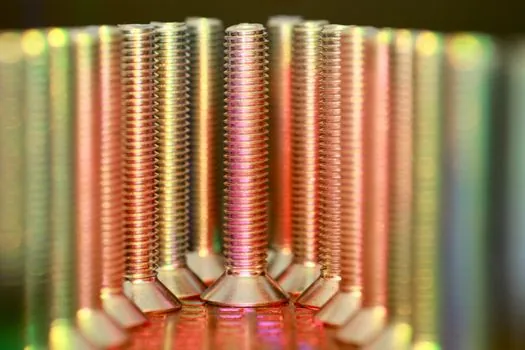
A purchase specification should state screw diameter, lead, assembled or unassembled configuration, accuracy class, lead accuracy, preload method, allowable axial and radial loads, maximum rotational speed, support arrangement, lubrication method, seals, stroke, and mounting interfaces. The cited ground and rolled ranges show why a generic “precision ball screw” line is insufficient: 8–50 mm diameters and 2–25 mm-plus leads can cross several accuracy classes and applications [S5].
Request the manufacturer’s life calculation using the actual cycle, including moving load, shock, radial load, speed, and target service interval. Require confirmation of the critical-speed calculation for the selected support and actual screw length. At incoming inspection, verify diameter, lead, overall length, support components, preload specification, seals, lubricant quantity, and certificate traceability against the purchase specification.
Before final release, verify the system at operating temperature and commanded speed. Check for screw deflection, abnormal noise, vibration near the predicted critical-speed region, nut temperature, backlash under load reversal, and positioning repeatability. The shortlist logic is straightforward: choose a C3, C5, or C7 precision-ground screw for CNC positioning, use C7 or C10 rolled construction for general automation, reject any candidate that fails speed, buckling, load, or thermal checks, and move to rack and pinion when multi-metre travel dominates the design.