
A ball-screw actuator generally supports faster, more efficient motion than a lead-screw actuator because rolling contact creates less friction than the sliding contact of a lead screw [S3].
Acme screws trade efficiency and precision for lower cost and stronger resistance to back-driving; this makes the two drives suitable for different loads, duty cycles, and hold requirements [S1][S4].
Core mechanical differences
A ball screw converts rotary motor motion into linear travel through recirculating balls running between the screw and nut. The rolling interface produces less friction than the sliding contact used in an Acme screw, permitting faster operation with less heat and improving efficiency [S2][S3][S7].
An Acme screw uses matching threaded surfaces, commonly with a self-lubricating polymer nut such as Delrin. Its greater sliding friction creates a braking effect after motor power is removed and provides greater back-drive resistance, which helps maintain position under some loads [S1][S3].
Ball screws have limited back-drive resistance compared with lead screws, which typically have a higher back-drive force and a braking effect when motor power is removed [S3].
Selection criteria and direct comparison
Ball screws are stronger candidates when an application combines a high duty cycle with demanding speed, load, accuracy, or side-load requirements, while Acme screws are stronger candidates when purchase cost and power-off holding behavior dominate the design [S1][S3][S4].
On efficiency, a ball screw normally wins because rolling contact replaces the sliding friction of an Acme screw. On speed, the lower friction supports higher actuator speed and reduced heat generation [S2][S3].
Lead screws are suitable for applications that require the actuator to hold its position under some load and where product cost is a consideration [S3]. On back-drive resistance, the ranking reverses: an Acme screw is normally easier to hold, while a ball screw usually offers little or no back-drive force and may require a brake [S3].
On initial price and integration effort, the Acme actuator is typically less expensive and simpler to justify for straightforward positioning. The ball screw option requires more attention to preload, lubrication, cleanliness, support arrangement, and possibly braking, although the exact actuator package and motor selection still determine the installed cost [S1][S2][S5].
Application fit and intended users
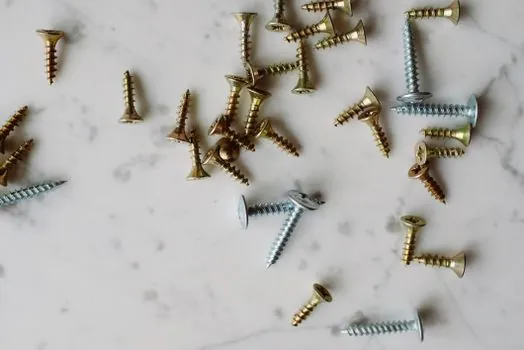
Ball-screw drives fit CNC machinery, robotics, precision machining, packaging equipment, and other mechanisms where motion accuracy, repeatability, speed, or continuous operating duty is important [S2][S6].
Acme-screw drives fit lower-cost positioning, adjustment, lifting, and general automation applications where the load is moderate, speed is limited, and the actuator must resist drifting after power removal [S1][S3][S4]. Lead screws are a practical choice for applications that require braking or load-holding behavior and where product cost is a consideration [S3].
A ball screw actuator is not automatically the better choice for a high-speed application if the cycle has long dwell periods, the load is light, and the mechanical design must resist back-driving. In that case, the friction and holding characteristics of an Acme screw can outweigh the efficiency advantage of rolling contact [S1][S3].
Failure modes and operating constraints
Ball-screw failures are commonly associated with lubrication condition, contamination, preload or clearance selection, and inadequate support of radial or side loads.
Both designs require the screw and nut to remain aligned and the motor to be sized against the required thrust, speed, duty cycle, and duty cycle.
Sizing and procurement checks
The comparison must be made at the complete actuator level, not at the motor shaft alone.
Use a linear actuator as the system boundary, then compare the internal ball screw or lead screw against those fields. The motor nameplate alone cannot establish application suitability because nut friction, screw diameter, lead, support, gearbox, and brake arrangement all influence the delivered thrust and holding behavior [S3][S4].
Before releasing a purchase specification, request manufacturer load-speed-duty curves, positional repeatability or accuracy data, back-drive or holding-force data, lubrication instructions, mounting constraints, and the applicable screw accuracy class. Record the exact screw diameter, lead, nut designation, and actuator model in the datasheet so the selected drive can be traceable during commissioning [S1][S2][S8].