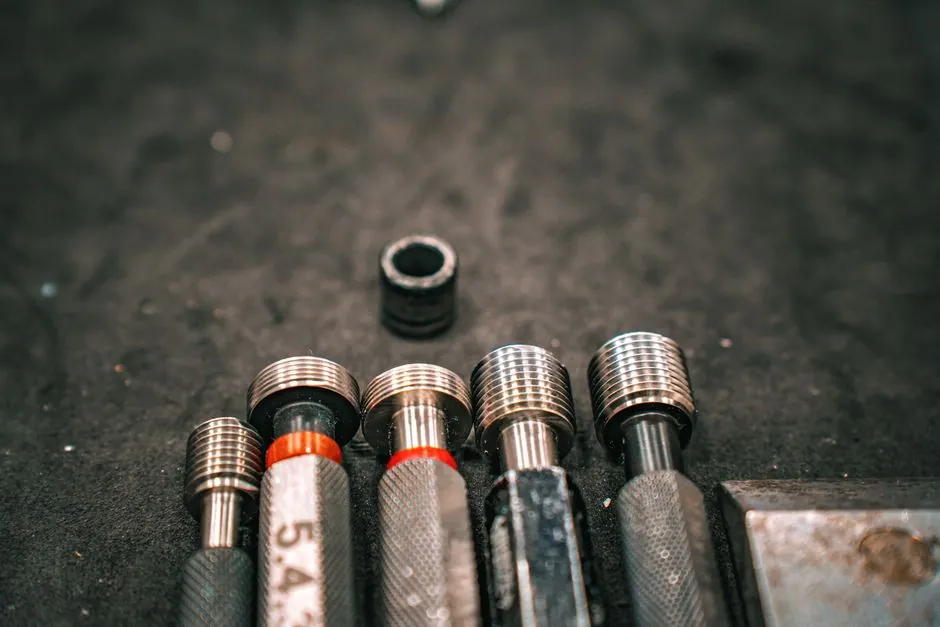
Ball spline preload is not a single setting, it is a catalog option with 2 to 3 standardized classes per manufacturer, and the class you choose changes angular backlash, drag torque, and fatigue life in measurable ways [S2][S4].
Across THK, NB, NTN-SNR, and Hiwin, the available classes are broadly Z0 (no/light preload), Z1 (low/light preload), and Z2 (medium preload), with a heavy or matched-only ZB tier on some profiled linear guide product lines [S2][S4][S5]. Selection is governed by torque reversibility, vibration, accuracy target, and acceptable friction, not by a single marketing number.
Why a ball spline has preload at all
A ball spline is a rolling-element ball spline that transmits torque while allowing linear travel, so it has two clearances to manage: axial/radial play along the stroke and angular play around the shaft [S1][S2]. The preload target is the angular backlash, the small rotation between shaft and nut before the driven side follows the driving side under torque reversal [S2].
Without preload, the balls in the nut sit with a controlled gap in the shaft groove; the nut will start to rotate before the shaft does under reversing torque, which directly costs rotational stiffness and rotational positioning accuracy [S2]. Preload is created by upsizing the ball diameter inside the nut so the groove geometry is forced into a known contact state, removing the wiggle room [S6][S8]. Light preload typically lands near 2% of the spline nut's basic static load rating, and the published preload classes are just stepped values of that percentage [S2].
How manufacturers label the classes
THK uses the convention "normal, light (CL), medium (CM)" on its ball spline series, with a rotation-angle vs. torque curve that visibly flattens as preload increases [S2]. NTN-SNR labels the same idea as Z0 (no preload), Z1 (low preload), and Z2 (medium preload) embedded directly in the BSP type code as field 9 [S4].
Hiwin uses Z0, ZA, and ZB on its profiled linear guides and ball spline offerings, where ZA is medium and ZB (heavy) is only available on matched rail-to-bearing sets, not off the shelf [S5]. NB markets "adjustable preloads" on the SSP/SSPM series, configured for higher rigidity and positioning accuracy or for high-speed motion depending on the option [S3][S7].
SNR's BSP datasheet makes the gap numerical: for size BSP 04, Z0 gives -2 to +1 µm of radial clearance, Z1 gives -6 to -2 µm (light preload), and Z2 is not listed at that size but is offered on larger sizes [S4]. The negative numbers are the giveaway: clearance has gone from a positive gap to a negative gap, meaning the balls are already pressing the raceway before any external load is applied.
Class comparison on the criteria that matter

The four criteria that actually drive the class choice are angular backlash, drag torque, heat generation, and life. Laid out against the SNR/THK class scheme, the trade-off reads: Z0 gives the lowest friction and the longest calculated life but lets angular backlash exist; Z1 cuts backlash to single-digit microns at a small friction penalty; Z2 further stiffens the rotational response but adds heat and shortens fatigue life in the same envelope [S2][S4][S8].
The 2%-of-C0 rule for "light" preload is the practical anchor: if a spline nut has a C0 of 5 kN, light preload sits near 100 N of internal force, medium preload roughly doubles that, and heavy (where offered) roughly triples it, with all three numbers scaling linearly with basic static load rating [S2]. That is why "just specify the highest class" is wrong: each step up costs you drag torque and a slice of L10 life, and the gain in stiffness flattens out fast [S2][S8].
When each class is the right answer
Z0 (no preload) is correct when the spline only carries a one-direction torque, the load is steady, and the machine's accuracy budget tolerates a few arc-minutes of rotational wind-up, which covers most conveyor-axis and simple pick-and-place uses [S2][S4]. Z1 (low/light) is the default for CNC rotary axes, semiconductor handlers, and any application with frequent direction reversal where angular backlash would show up as a mark on the workpiece [S2][S4].
Z2 (medium) and equivalents are specified for machining centers, heavy turret indexing, and measurement stages, where the operator can see chatter or contouring error directly from rotational play [S5]. The 2023 Avid Pro thread is a useful sanity check: the user chased chatter on an aluminum-cutting CNC, but the Avid HG20 blocks were confirmed Z0, and a Hiwin ZA replacement was considered, illustrating the typical real-world jump from Z0 to ZA when chatter appears [S5].
When preload is selected, the recommendation is explicit: apply it when the spline shaft will see vibration or oscillating loads, because unloaded oscillation is the most common cause of premature groove wear and brinelling on ball splines [S2]. NB's catalog goes further, requiring that preload be properly adjusted at the factory for matched ball-screw nut, spline nut, and angular-contact bearing stacks, and instructing buyers to contact the factory for the exact spec rather than guess [S7].
Geometry dictates which classes are even available
Gothic arch groove geometry gives 4 contact points between ball and raceway and is used on larger-diameter splines, where the higher differential slip is acceptable in exchange for much higher load capacity and inherent rigidity [S2]. Circular arc geometry gives 2 contact points and is used on smaller-diameter splines, where the lower differential slip means lower friction and smoother running, but it cannot reach the same stiffness without help from preload [S2].
This is why NTN-SNR publishes Z0, Z1, and Z2 only on certain BSP sizes and not others: the geometry has to support the negative-clearance state without overstressing the balls, and on very small sizes the preload window collapses to a near-zero band [S2][S4]. Buyers comparing product lines should look at which groove profile the series uses before assuming the Z0/Z1/Z2 labels mean the same thing across brands.
Preload is not a substitute for bearing selection
Higher preload classes do not raise the basic dynamic or static load rating of the ball bearing circuit; they only remove internal clearance and raise stiffness [S8]. If the application is torque-limited, the right move is sometimes a larger ball diameter grade inside the same nut, which raises C and C0 in parallel, rather than stepping up from Z1 to Z2 on the same geometry [S8].
For high-speed rotary indexing, the practical ceiling is heat, not stiffness, and a 2x or 3x increase in preload class can push the operating temperature past the grease limit well before the catalog speed rating is reached [S2]. For pure linear-stroke applications where torque transmission is secondary, Z0 paired with a separate linear bearing support is usually the lower-friction, longer-life combination, and a ball screw carries the thrust load separately from the spline.
Failure modes tied to wrong class selection

Under-preloading shows up as position error at reversal, audible clunking at direction change, and accelerated wear on the loaded side of each groove because the contact patch is hopping rather than rolling [S2][S6]. Over-preloading shows up as elevated continuous torque drag, grease breakdown, and reduced L10 life, with the failure often initiating at the ball-to-groove contact rather than the rolling surface [S2][S8].
For matched stacks (ball screw nut + spline nut + angular-contact bearing set), preload must be specified as a system: under-preload on one element and over-preload on another is the most common cause of premature failure in stacked rotary axes [S7]. The factory-preload note in NB's catalog is not a courtesy, it is a hard requirement for warranty on stacked configurations [S7].
The next trackable signal is the 2026 catalog releases from THK, NB, and NTN-SNR for rotary ball spline lines, where any new preload class or matched-set option will show up as a type-code field addition similar to SNR's field 9 Z0/Z1/Z2. Engineers sizing new axes should request the latest type-code sheet and a rotation-angle vs. torque curve for the candidate size, not just the basic load ratings.
See also our earlier report, HP Bearing Pile vs W-Shape: Spec-Based Selection for Driven Foundations.