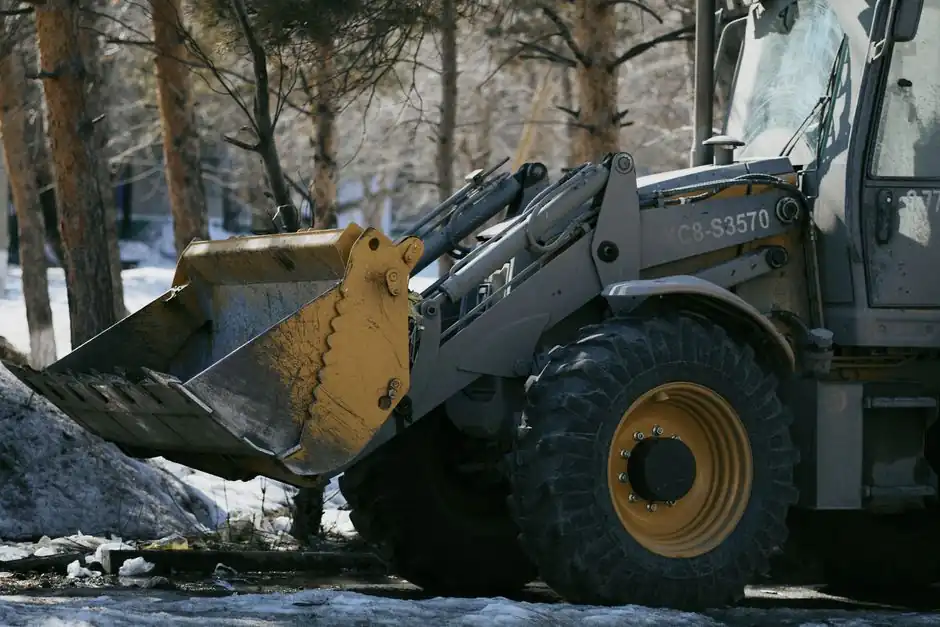
On horizontal static load, a PBC Linear plain linear bearing is rated 100,500 lb (447,046 N), versus 2,165 lb (9,630 N) for the same maker's round-shaft linear ball bearing, a ratio of about 46.4 to 1 in the plain bearing's favor [S3]. The trade is in friction and speed: the ball bearing runs at 590 SFM (3 m/s) with a 0.05 average coefficient of friction, while the plain bearing tops out at 300 SFM (1.52 m/s) un-lubricated, 825 SFM (4.19 m/s) lubricated, with a 0.125 coefficient of friction [S3].
The gap reflects a basic mechanical split. Recirculating ball bearings roll, so steel-on-steel contact is point contact under an elastohydrodynamic film; linear plain bearings slide, so the same load is carried across the projected area of a bronze or PTFE liner. Bronze happens to be the strongest of the three plain-bearing material families (metal, plastic, composite) according to PBC Linear's Mark Huebner, while remaining corrosion-resistant [S2].
Static load: where bronze plain bearings dominate
For a same-class 1.5 in. round-shaft offering, the horizontal static load rating spread is roughly 46x: 100,500 lb (447,046 N) for the plain linear bearing versus 2,165 lb (9,630 N) for the recirculating ball bearing [S3]. Lee Linear's separately published self-lubricating PTFE-lined plain linear bearings are rated up to 100,000 lb (444 kN) static, confirming the same order of magnitude from a different manufacturer and material [S8].
The mechanical reason is contact patch area, not material strength. A recirculating ball line carries load through Hertzian point contact on each ball; a plain sleeve carries it across the projected area of its bore. Even when the bronze alloy is softer than the through-hardened bearing steel, the much larger contact patch wins on static capacity, especially under shock and vibration, which PIB Sales lists as the primary reason to choose a powdered-metal SAE 841 bronze bushing over a radial ball bearing [S4].
Speed, friction, and the cost of sliding
Friction is where the ball bearing reclaims the win. Recirculating steel balls typically run at a coefficient of friction between 0.001 and 0.01, while lubricated bronze or PTFE sleeve bearings sit at 0.05 to 0.1 and dry metal-on-metal contact can climb to 0.1 to 0.25, roughly 5x to an order of magnitude higher than the ball type [S1]. PBC Linear's own spec table pegs the plain bearing at 0.125 versus an average 0.05 for the ball bearing, a 2.5x delta on the same shaft size [S3].
Top speed tracks the same way. The PBC ball bearing is rated to 590 SFM (3 m/s) with continuous lubrication; the plain bearing is rated 300 SFM (1.52 m/s) dry, 825 SFM (4.19 m/s) lubricated [S3]. PIB Sales quantifies the bronze-bushing PV ceiling at max Pv 50,000, P-Load 2,000, V-SFM 1,200, useful when an engineer needs a hard ceiling for a lubricated design [S4].
Temperature, environment, and contamination
Plain linear bearings win the temperature band. PBC rates the plain sleeve from -400 F to +400 F, versus -4 F to +176 F for the ball bearing, a roughly 2x wider span on both ends [S3]. The bronze grade handles washdown, dust, and vibration because there is no rolling element to brinell or contaminate, which is why PBC introduced its self-lubricating Simplicity plain bearing in 1983 specifically for harsh environments [S3].
The catch is lubrication. Bronze-on-steel is metal-to-metal, so without a continuous oil or grease feed the bushing will gall, and PBC's plain bearing is rated to 300 SFM dry only because the test conditions assume a boundary film [S3]. PIB Sales' SAE 841 powdered-metal bronze gets around this by vacuum-impregnating roughly 19% by volume of SAE 30 oil into interconnected pores, so the bushing is self-lubricating as long as the oil is replenished over time [S4]. PTFE-lined composites (aluminum-backed with a bonded PTFE skin) eliminate the metal-to-metal pair entirely, but pay for it with reduced speed and poor cantilevered-load handling [S2].
Selection criteria: load, speed, precision, environment
The decision reduces to four variables. Ball bearings win on speed, drive torque, and positioning precision (preload can virtually eliminate play), but they need a clean environment, hardened shafting, and continuous lubrication [S3][S7]. Plain bronze bushings win on static load, shock absorption, contamination tolerance, and cost per unit, but pay with higher friction, lower top speed, and a precision class set by the bore tolerance rather than by preload [S3][S4].
A practical rule from Tech Briefs: specify a bronze bushing where loads are high and smooth motion is acceptable, and neither speed nor accuracy is critical; specify a ball or roller bearing where the application needs precise positioning, high cycling, or low friction [S5]. PBC's 2:1 bearing ratio rule, maximum moment-arm distance to bearing length, applies only to plain linear bearings under cantilevered load, not to ball bearings [S3].
Materials compared: bronze, plastic, PTFE composite
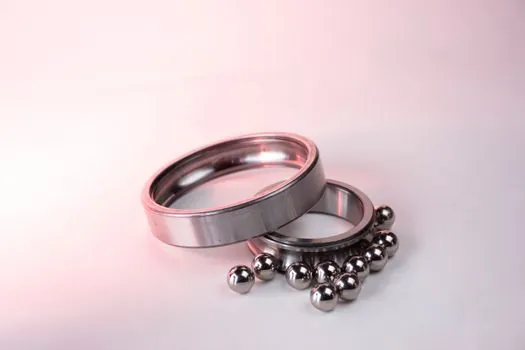
Within the plain-bearing family the same load-vs-friction trade repeats at smaller scale. Bronze has the highest load capacity of the three, is corrosion-resistant, but introduces metal-to-metal contact and needs external lubrication [S2]. Plastic (iglide-type) bearings are self-lubricating, immune to corrosion, run on softer (cheaper) shafts, and tolerate edge and shock loads better than metal, but they insulate heat and can swell with moisture [S2]. Aluminum-backed PTFE composites (PBC's Simplicity line, originally introduced in 1983) sit in the middle: self-lubricating, no metal-to-metal contact, with metal backing to dissipate heat, but limited speed and weak on cantilevered loads [S2][S3].
Limits and failure modes engineers should plan for
Plain linear bearings fail through galling when lubrication is lost, through PV overshoot when pressure or speed exceed the rated envelope, and through binding when the moment-arm to bearing-length ratio exceeds 2:1 [S3][S4]. PIB Sales' bronze bushing is effective only between +10 F and +175 F with standard oil, so high-temperature deployments need either a different alloy, a PTFE composite, or external cooling [S4].
Ball linear bearings fail through brinelling under shock load, through contamination of the recirculation path, through lubrication starvation, and through shaft hardness dropping below the case-hardened minimum, which is why manufacturers insist on hardened and ground shafting [S1][S7]. For long-stroke outdoor or washdown service, an IP66-rated actuator with a sealed bearing path is often the cleaner spec, as detailed in this IP66 linear actuator spec scope reference. For stroke lengths around 1,000 mm, the 1,000 mm linear actuator sizing and drive-limits guide covers the same trade on a longer envelope.
Comparable alternatives and where each fits
Linear roller bearings (instead of balls) lift load capacity per size, which is a separate trade from the ball-vs-plain comparison covered here [S1]. Spherical plain bearings carry oscillating or angular motion on a sliding contact, useful on hydraulic cylinders and excavator linkages where misalignment is part of the duty cycle, and are covered in the spherical plain bearing reference. For high-cycle automated material handling, the AGV payload capacity selection guide ties the bearing choice back to the vehicle-level load envelope.
Trackable signals to watch in late 2026: any PBC Linear or Lee Linear catalog update that re-issues static load ratings for the 1.5 in. round-shaft family, and any iglide material data sheet that extends the plastic plain-bearing PV ceiling above the current 50,000 psi-fpm bronze reference [S4].