
Basket strainers in the 150–250 micron range, built in SS316L wedge-wire and rated to 100 psi system pressure, are now the default FWS facility-water inlet position for Coolant Distribution Units aligned to the OCP Liquid-to-Liquid CDU guideline [S4].
Hyperscale data center builds have shifted primary-loop solids capture from cartridge-only stacks to a basket strainer + pleated secondary combination, because the basket element is fully washable and reusable across a 10+ year CDU service life [S4].
Filtration Position Map: FWS Inlet, TCS Main Loop, Side-Stream Bypass
The OCP Liquid-to-Liquid CDU guideline requires filtration at two mandatory positions: a primary strainer on the facility water (FWS) inlet at 200 micron maximum, and a secondary filter on the TCS loop at 25–50 micron, with a 0.2–5 micron side-stream polishing bypass as best practice [S4].
The FWS position is the natural home for a basket strainer, because facility water carries the highest debris load (silt, scale, biological film) and needs high dirt-holding capacity to keep cleaning intervals realistic [S3][S4]. Industrial basket strainers have a larger dirt-holding volume than Y-type or small cartridge screens, and the basket geometry is what keeps pressure drop low at the high flow rates typical of a single 40–80 liter per second CDU rack manifold [S3]. A properly sized simplex basket strainer at the FWS inlet can run a full quarter between basket pulls on a typical municipal feed, where a comparable Y-strainer at the same mesh count would clog in days [S3].
Why SS316L Wedge-Wire, and Why 150–250 Micron
SS316L is the spec baseline for wetted CDU components because it tolerates both propylene-glycol and water-based coolants and resists pitting corrosion in chlorinated facility water; the wedge-wire element adds mechanical strength at the high differential pressures that occur when a basket is left in service past its ΔP limit [S4].
The 150–250 micron range is the engineering sweet spot: fine enough to protect the plate heat exchanger from fouling, coarse enough to keep the inlet pressure drop below the 0.3–0.5 bar budget that CDU hydraulics are designed around [S4]. Going finer (50–100 micron) at the FWS position forces cleaning intervals down to a weekly cadence on most sites, which defeats the purpose of putting a high-capacity basket there in the first place. The differential-pressure rule from S3 still applies: if the basket is clogging more than once per month at the data center, the micron rating, not the strainer type, is the wrong choice.
Simplex vs Duplex: Continuous-Flow vs Tolerable-Shutdown Sites
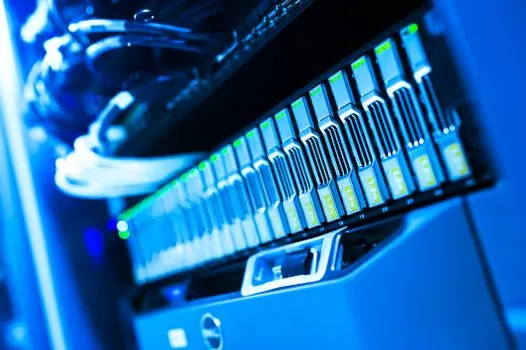
A duplex basket strainer (two parallel chambers with isolation valves) is the correct answer for a hyperscale AI training hall where any CDU loop shutdown triggers a thermal alarm; a simplex unit is acceptable at edge sites and small colocation rooms with N+1 CDU redundancy built into the mechanical design [S3].
The duplex architecture is the single biggest reason basket strainers win over Y-strainers on data center work: a Y-strainer has no parallel chamber option, so its basket or screen can only be cleaned during a planned depressurization, and Y-strainers also carry a higher pressure drop per square inch of screen area [S3]. For a Y-strainer at the FWS inlet on a hyperscale build, you would be specifying a maintenance pattern that contradicts the OCP continuous-operation intent embedded in the L-L CDU guideline [S3][S4].
Selection Criteria Checklist for Data Center Specifiers
Four numbers and one material call drive the buy: wetted material SS316L, FWS inlet rating 150–250 micron, system pressure 100 psi (690 kPa) with ASME hydrostatic test evidence, connection type Victaulic or flanged to match the CDU skid, and service life 10+ years with documented wash-and-reuse cycles [S4].
Beyond those, a useful sanity test is to compare basket strainer versus industrial valve and flow meter isolation upstream, because the basket is the most frequently serviced element in the loop and it needs full-port butterfly or ball isolation on both sides. The Eaton Model 72 simplex basket strainer is one of the few products that is publicly positioned for fast-track data center construction with deployment timeline reductions of up to two years, primarily because it is an industry-standard footprint with stocked spares [S2]. For SaniMatic-style hygienic builds, the Angle-Line Basket (ALB) strainer shares its body with the angle-line variant and adds a patent-pending easy-flush end cap, which shortens basket-pull time on the cleaning cycle [S1].
Cross-Reference: Basket vs Y-Strainer Decision Matrix
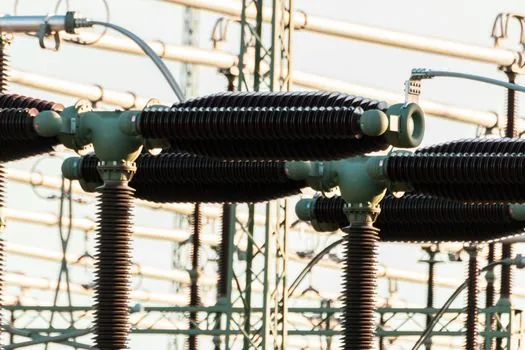
Basket strainers handle up to roughly 1500 psi with low pressure drop and high dirt capacity, but require a horizontal-only installation footprint; Y-strainers handle up to roughly 6000 psi in a compact body, but with higher pressure drop and more frequent cleaning [S3].
For data center CDU work the comparison resolves cleanly: facility water at 100 psi is well inside the basket strainer envelope, the high flow rates and dirty feed favor a high-capacity basket, and the horizontal-only constraint is easy to meet in a CDU skid layout [S3][S4]. A useful related comparison is the Y-Strainer Selection criteria which lines up mesh, OAR, material, and pressure class for the cases where a Y-strainer is still the right call (for example, a small-diameter sample line or a chemical-dosing leg). For a deeper spec-to-cost view, the Y-Strainer Price and Cost Guide 2026 provides a useful counterpoint to confirm that on FWS inlet duty, the basket strainer total cost of ownership wins on cleaning labor, not on purchase price. The basket vs filter element question, addressed in the Filter Element vs Bag Filter 2026 comparison, is downstream of this decision: the FWS basket catches gross solids, and a pleated filter element or bag is the secondary 25–50 micron defense in front of the cold plates [S4].
Limits, Failure Modes, and What Basket Strainers Will Not Catch
A basket strainer is a coarse-solids device and will not stop sub-100 micron fines, biological growth, or dissolved ions; that work is delegated to the secondary pleated filter and the side-stream polisher in the OCP three-position architecture [S4].
The dominant failure mode in field service is not basket rupture but operator-induced ΔP neglect: leaving a loaded basket in service past its differential-pressure limit drives higher pump energy cost and can shed captured debris back into the flow during a pressure transient. Specifying the strainer with an integrated ΔP monitoring port on the secondary position, as the Brother TCS pleated housing does, is the cleanest way to keep that failure mode visible to the building management system [S4].
The next trackable signals to watch are ASME B16.34 valve-and-strainer compatibility for higher-pressure CDU builds above 100 psi, and any revision to the OCP Liquid-to-Liquid CDU guideline on primary micron rating, both of which would shift the 150–250 micron FWS basket envelope that data center specifiers are building to today [S4].