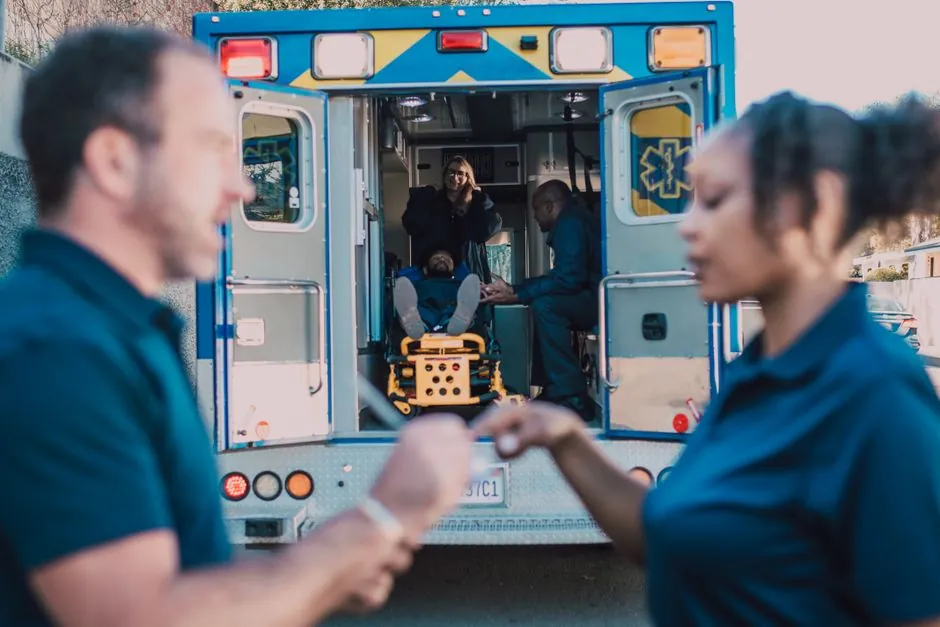
A basket stretcher provides a rigid or semi-rigid casualty platform for demanding terrain, vessel transfer and technical rescue, while a flexible stretcher is deployed where access is tight and rapid movement matters [S1][S3].
The decision follows the rescue route: casualty condition, route dimensions, terrain, contamination, lifting method and the required restraint system determine which design is safer [S1][S3].
Decision criteria mapped to the rescue route
Map the complete casualty-to-handover route before selecting equipment, including the access point, packaging position, each transfer and the final transport method [S1]. A standard basket is commonly 24 inches wide, so passage through a companionway, hatch or narrow corridor must be verified rather than assumed [S7].
Rescue method is a hard filter. Horizontal carrying does not establish suitability for rope suspension, davit transfer, crane lifting or helicopter winching, and a stretcher intended for one orientation may require a different load path and attachment arrangement [S1][S3].
Patient status is another hard filter. Suspected spinal trauma, altered consciousness, hypothermia, entrapment or multiple injuries favor a device with stronger support, reliable restraint and monitoring access [S1]. Flexible stretchers remain useful for restricted access, but their spinal-immobilization performance is more limited than that of rigid devices [S5].
Structural comparison for the two main options
A basket stretcher uses a rigid frame and encircling structure to support and secure the casualty; its open geometry permits operation from several directions and supports outdoor or technical rescue, with some models configured for aerial or maritime lifting [S3]. Its 24-inch reference width provides a practical basis for access checks, but individual model dimensions must govern procurement [S7].
A flexible stretcher consists of several rigid flat rods embedded in a sheet of plastic or similar material. Typical construction uses rods about 7 feet long and spaced about 4 to 6 inches apart, with multiple handling points so personnel can lift from different positions [S5].
Where a basket stretcher earns its place
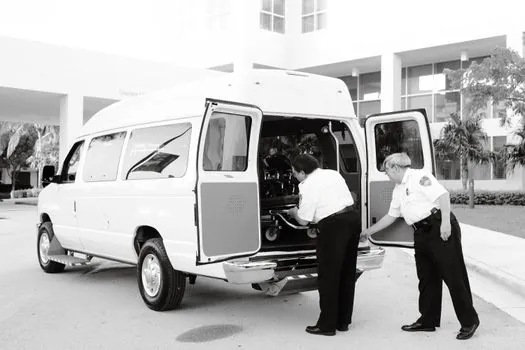
Select a basket stretcher when the patient must cross uneven ground, pass around structures, move through exposed marine conditions or receive a controlled transfer into a vessel [S1]. Its rigid or semi-rigid shell supports secure restraint during lifting and offers better casualty protection than a soft stretcher [S1].
Technical rescue also justifies the basket format. The open structure allows rescuers to work around the casualty, while the frame provides a defined platform for body support and fixation during vertical or aerial recovery [S3]. Different rescue stretchers have distinct characteristics, so selection should be based on the specific rescue environment and transportation method [S3].
Marine and industrial conditions require an added materials review. Saltwater, spray, rain, hydrocarbons, chemicals, mud, dust and hot surfaces can affect the stretcher and its fittings, so cleaning compatibility and corrosion resistance must match the site [S1].
Where a flexible stretcher is the stronger option
Choose a flexible stretcher when the decisive constraint is restricted access, short storage time or rapid deployment [S1][S5]. Its rollable, sheet-like construction can be carried into a confined space and positioned under a casualty who cannot be extracted with a long rigid device [S5].
The flexible format does not provide equal spinal support. It generally requires log-rolling during placement, and the construction limits its ability to immobilize the spine compared with rigid equipment [S5]. Placement involves rolling the stretcher toward the low side of the casualty, rolling the casualty toward the opposite side and then unrolling the stretcher beneath the body [S5].
Contraindications are material. Flexible stretcher use should be reconsidered when another extraction method is available, when the patient has claustrophobia, or when torso injury could be worsened by compression, including flail chest, chest-wall instability or crepitus [S5]. Trained personnel should handle the device [S5].
Access, packaging and casualty-handling constraints
Measure the narrowest point instead of estimating from a catalogue image. The standard basket reference is 24 inches wide, while flexible stretchers can be rolled for storage and carried into narrow passages [S5][S7]. Turning radius, vertical clearance, hatch dimensions and the number of rescuers available can eliminate one option before patient condition is considered [S1].
Approach direction also matters. A conventional stretcher can usually be moved beside a patient in an open area, but a restricted entrance may require responders to carry the device in and reposition it inside the space [S3]. Flexible construction is therefore often the practical choice for interior extraction, not necessarily the safer choice for every part of the route [S3].
Package the casualty for the selected method. A patient with suspected spinal or pelvic injury may be better handled with a split-frame scoop stretcher because it can be assembled around the casualty and reduces unnecessary rolling [S1][S3]. A basket may remain the correct final transport platform, so one stretcher type need not solve every stage of the rescue.
Loading, lifting and equipment specifications
Specify lifting capability separately from general carriage. Rescue stretchers used for raising and lowering need appropriate lifting points and matching fixation equipment, while the intended orientation determines how those points are loaded [S3]. Do not infer vertical-lifting approval from a stretcher’s strength, shape or use during horizontal carrying [S1][S8].
Core specification fields include rated load, external dimensions, mass, patient-restraint arrangement, lifting connections, material grade, corrosion resistance and storage method [S3]. Compare these fields across the full route, including the receiving trolley, davit, crane, vessel or aircraft interface rather than treating the stretcher as an isolated product [S1].
One comparison example illustrates the specification discipline: a listed stainless-steel tubular basket has a 2,500 lb capacity, whereas flexible-stretcher dimensions depend on the rod and sheet construction described above [S2][S5]. These figures do not establish a universal rating for either category. They show why the purchase specification should cite the exact model and its rated capacity rather than the generic stretcher name.
Water, confined spaces and high-angle operations
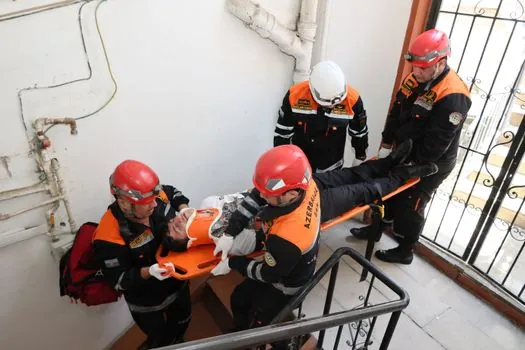
Water-rescue logistics favor a basket when the package must be secured for movement through exposed marine conditions or transferred to a vessel [S1]. Its enclosure and rigid support reduce the chance of the patient shifting during handling, provided the restraints and attachment points are used as intended [S1][S3].
High-angle terrain changes the rescue method. Low-angle terrain is described as a slope below 40 degrees, while high-angle rescue applies to slopes of 50 degrees or higher and depends on ropes for access and egress [S5]. A basket may secure and protect the casualty during rope-assisted movement, but its compatibility with the rope system still requires a documented load path and approved connection arrangement [S1][S5].
Confined-space operations reverse the usual emphasis. Protection, structural rigidity and storage become less useful if the device cannot pass the opening or be maneuvered around obstructions. Flexible stretchers address that access problem, while their weaker spinal support makes casualty selection and alternative extraction methods decisive [S1][S5].
Operational controls before equipment approval
Approve the stretcher only after completing a route trial with the actual team. A published selection guide requires assessment of inspection, storage, training and replacement parts over the equipment lifecycle, not just purchase price [S1]. Confirm whether the equipment must survive saltwater, rain, spray, hydrocarbons, chemicals, mud, dust or hot-surface exposure [S1].
Training must match the selected packaging method. Basket users need to operate the lifting connections and restraint system, while flexible-stretcher users need competency in log-rolling, unrolling and multi-point lifting [S3][S5]. The listed flexible design provides multiple handles so an adequate number of personnel can lift from several positions, but the number of responders required should be established before deployment [S5].
The final selection is straightforward: specify a basket for protection, terrain performance and engineered lifting where its width fits; specify a flexible stretcher for compact access and quick deployment where spinal support is adequate and the packaging method is safe [S1][S3][S5].