
Batch OEE reaches 75.0% when availability is 87.5%, performance is 90%, and quality is 95.24%, showing why cleaning loss must be classified separately from output performance [S4].
Recipe-based manufacturing requires phase-level measurement that compares actual batch times with expected times, captures interruptions, and exposes recurring overruns across products and campaigns [S2][S3].
Batch OEE definition and measurement scope
Batch OEE applies the standard relationship of availability multiplied by performance multiplied by quality to recipe-controlled production rather than treating a batch as one uninterrupted machine cycle [S3][S4]. Availability is operating time divided by planned production time, performance compares ideal rate with actual output, and quality is good output divided by total output [S4].
In one worked case, a batch line had 480 minutes of planned production time, lost 60 minutes to unplanned downtime, operated for 420 minutes, produced 840 units at an ideal rate of 0.45 minute per unit, and yielded 800 good units. Those inputs produced 87.5% availability, 90% performance, 95.24% quality, and 75.0% OEE [S4].
That calculation matters because cleaning, material waiting, recipe overruns, equipment faults, and rejected material create different engineering problems. A single plant-level percentage cannot show which loss deserves attention [S2][S4]. The batch record should retain the three component results and the reason codes behind each loss.
Build the calculation around recipe phases
Batch OEE compares actual phase durations with expected phase durations, records downtime during the batch, and supports review of recurring overruns and repeated losses [S2]. A phase model can therefore capture mixing, heating, cooling, transfer, reaction, washing, drying, inspection, and discharge as distinct steps, although the applicable phase names must follow the actual recipe and equipment configuration.
Every phase needs three time values: planned duration, standard or ideal duration, and actual duration. In batch OEE, Availability is Operating Time divided by Planned Production Time, Performance uses ideal cycle time, total output, and operating time, and Quality is good output divided by total output.
Equipment data can be aggregated and analyzed across batches, while operators monitor multiple stations to help ensure that sequences proceed according to standard operating procedures. Operator monitoring of multiple stations helps ensure that sequences in complex batch-production lines proceed properly, because deviations from standard operating procedures affect the process and product consistency.
Classify cleaning time before judging availability

Scheduled cleaning should be separated from unplanned equipment interruption according to the plant's OEE rules, because approved cleaning consumes planned time but is not equivalent to an unexpected loss of equipment capability [S4]. Cleaning within the planned production window can remain inside the availability denominator; if cleaning is scheduled outside that window, the denominator and calendar logic must remain consistent.
CIP rinse steps, chemical circulation, drain verification, equipment inspection, and manual intervention can have different causes and different corrective owners.
The correct treatment depends on the plant's approved loss hierarchy. Batch availability calculations should distinguish planned events such as scheduled cleaning and approved changeovers from unplanned equipment interruptions according to the organization's OEE rules.
Compare measurement options by purpose and data quality
The choice is not between good OEE and bad OEE; it is between manual batch logging, automatic controller capture, and a hybrid architecture. The practical comparison is below. [S6]
Automatic capture supports consistent comparison of phase and batch times, while manual entries preserve events that the controller does not know about [S2][S6].
Match the architecture to the process
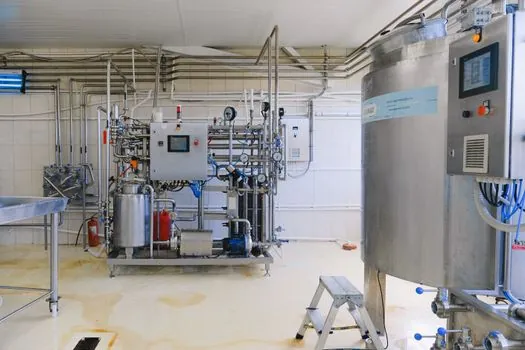
Batch control architecture determines where the cleanest timing boundary sits.
Use the metric for operational decisions
Batch OEE is for teams that need production scheduling, maintenance prioritization, and batch-size decisions supported by measured losses [S4]. A low availability result points toward downtime and scheduling, lower performance toward slower processing or extended cycles, and lower quality toward rejected or reworked output [S4].
The comparison is valid only when measurement standards remain consistent across products and campaigns [S4]. A 72% result for one recipe is not directly comparable with a 72% result for another recipe if planned cleaning, ideal rates, or quality classifications differ. Equipment lines and recipes should therefore be segmented before targets are assigned.
OEE should not be reduced to an operator-efficiency score. Pharmaceutical batch sequences depend on operator intervention across multiple stations, and deviations from standard procedures can affect product consistency and delivery [S5]. The practical output is a ranked loss list with an accountable owner, not a single number for a dashboard.
Connect quality, materials, and maintenance records

Quality losses can include rejected batches, off-specification material, and rework, so the good-output count must follow the plant's approved quality classifications [S4]. Linking OEE events to deviations, holds, and rework records can distinguish a phase that ran slowly from a phase that ran for the planned duration but produced unacceptable output.
Material readiness can also reduce utilization before equipment begins its scheduled work. Connecting production records with purchasing, receipt, inventory, and batch-picking data helps teams distinguish equipment-related losses from procurement or material delays [S4]. Maintenance work requests should then be linked to repeated equipment interruptions rather than to every process deviation.
The wider KPI structure is covered in Build a KPI Tree That Connects OEE to Plant Profit. OEE remains an operational effectiveness measure, while capacity, cost, and financial consequences require separate linked measures.
Rollout controls that survive batch variation
A defensible implementation starts by defining the planned production window, approved cleaning categories, recipe-specific ideal rates, quality outcomes, and downtime reason codes. It then imports historical batches and checks whether calculated phase losses reconcile with operator and maintenance records. Teams can use How Much More Accurate Is Automated OEE Data? to assess how automation changes event capture and data completeness. [S4]
The next control is ownership. Production owns phase and recipe standards, operations owns event classification, maintenance owns equipment-failure work, and quality owns yield classification. Each recurring cleaning overrun should receive a reason code and a corrective action. OEE trends then provide a measurable sequence: define the loss, identify the responsible function, execute the correction, and verify whether the same phase improves on the next comparable batch.
For an initial audit, calculate batch OEE for at least 1 recipe and 3 comparable batches, then reconcile planned time, actual time, output, good output, cleaning duration, and downtime reason codes for every phase. Track 2 signals from the first review: the share of elapsed time assigned to cleaning and the number of recurring phase exceptions without a linked corrective action. Both can be audited without changing the production formula.