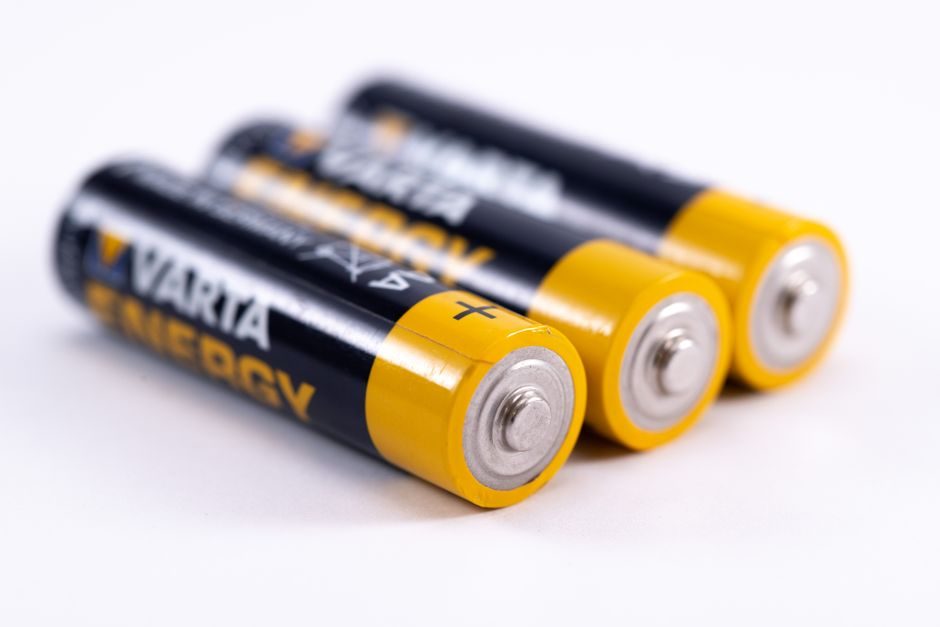
The 2026 secondary-battery market report covers product types (Lead Acid, Li-Ion, Ni-MH, Ni-Cd, Others), applications (electronics, motor vehicles, portable devices, others) and end-users (automotive, household, industrial) on a 2026–2035 forecast horizon [S3]. The 150-page report was first published in January 2026 and re-issued in July 2026 at USD 4,490, with the publisher flagging a 2–3 business-day update window before delivery [S3].
Adjacent sub-segments diverge sharply: the marine battery market is sized at USD 1.67 B in 2025, USD 2.10 B in 2026 and a projected USD 6.11 B by 2034, a compound trajectory anchored on hybrid and fully electric harbour craft [S4]. Redox flow batteries, the long-duration stationary alternative to Li-ion, sit on a parallel commercial report track for 2026 [S5].
Chemistry Split: Lead Acid Still Earns Volume, Li-Ion Earns Value
Lead Acid, Li-Ion, Nickel Metal Hydride and Nickel-Cadmium are the four named chemistries in the 2026 global secondary-battery taxonomy, with "Other Product Type" reserved for emerging cells [S3]. End-user segmentation breaks demand into automotive, household and industrial, with motor vehicles the single largest application pool and electronics plus portable devices splitting the remainder [S3].
Industrial buyers evaluating new cell sourcing decisions typically weigh energy density (Wh/kg), cycle life at depth-of-discharge, calendar life at operating temperature, and abuse tolerance, with Li-ion generally winning the first three and lead acid still favoured where cost-per-kWh delivered and recyclability dominate the spec sheet. For an at-a-glance primer on the sensing side that surrounds any battery pack, see the battery pack upstream-downstream map and the load cell reference for cell force testing.
Marine Sub-Market: USD 2.10 B in 2026, Triple by 2034
Fortune Business Insights sizes the global marine battery market at USD 1.67 B in 2025, USD 2.10 B in 2026 and USD 6.11 B by 2034, implying a 2.9× expansion over eight years [S4]. The figure covers propulsion and auxiliary battery systems for commercial vessels, ferries, tugboats and offshore support ships where hybrid-electric retrofits and new-build all-electric harbour craft anchor the volume curve [S4].
Specification drivers in this segment are well-defined: high cycle life at partial state-of-charge (typical harbour-ferry duty), IP67 or higher enclosure rating for engine-room mounting, and DNV / Lloyd's Register type approval for classed vessels. Buyers evaluating pack-level pressure and flow components in marine battery rooms can cross-reference the pressure transmitter and flow meter encyclopedia entries for cooling-loop instrumentation typical in large marine battery cabinets.
Military Segment: 4.1% CAGR Through 2027, USD 1.6 B
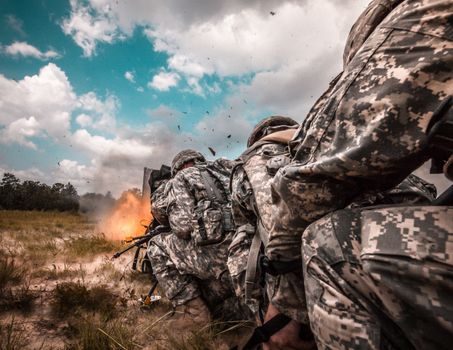
The military battery market was valued at USD 1.3 B in 2022, USD 1.4 B in 2023 and is projected to reach USD 1.6 B by 2027 at a 4.1% CAGR, per MarketsandMarkets [S1]. Named operators include EnerSys (US), GS Yuasa International (Japan), Saft (France), Exide Industries (India) and EaglePicher Technologies (US) [S1]. The growth is tied to the US Army's Next Generation Combat Vehicle program, projected for completion by 2035, which covers Optionally Manned Fighting Vehicle, Armored Multi-Purpose Vehicle, Mobile Protected Firepower, Robotic Combat Vehicle and Decisive Lethality Platform platforms [S1].
A specific engineering shift is documented: large D-sized lithium primary packs historically used in UAVs to guarantee safe landing on power failure are being replaced by small high-power lithium AA cells, which reduce overall UAV mass and extend endurance [S1]. This size-down, power-up cell migration is the canonical spec change a procurement engineer should expect in tender responses between 2024 and 2027 [S1].
Fuel Cell EV Contrast: BEVs Outsold FCEV Cars 2,000:1 in 2024
Fuel cell passenger car sales fell from 15,000 units in 2022 to 5,000 in 2024, a roughly two-thirds drop, while global battery-electric vehicles (BEVs) exceeded 10 million units and plug-in hybrids (PHEVs) exceeded 4 million units in the same window, per IDTechEx [S2]. Even with fuel and purchase subsidies cutting FCEV prices by ~50% in California and South Korea, demand has not recovered, and the report cites expensive and unreliable hydrogen refuelling, continued BEV progress, and limited model availability as the three primary drags [S2].
The contrasting vehicle class is the light commercial segment: China, the largest FCEV LCV market, recorded ~1,300 FCEV LCV sales in 2023 against ~50,000 BEV LCVs, a 38:1 ratio that quantifies how far Li-ion has pulled ahead in duty cycles below 300 km/day [S2]. For medium- and heavy-duty trucks, Nikola, Quantron and Hyzon all hit significant financial obstacles, yet trucks remain the segment IDTechEx expects to deliver the highest FCEV penetration over the 2025–2045 forecast window [S2].
Adjacent Segments: Redox Flow, Packaging, FCEV Battery Demand

Redox flow batteries are tracked as a separate 2026 commercial report on the stationary-storage side, where the chemistry's decoupling of power (stack size) and energy (tank size) makes it competitive for 4–12 hour discharge duty cycles [S5]. Battery packaging — cell-to-module and module-to-pack housings, busbars, BMS enclosures — is covered by a parallel report running on a 2022–2027 horizon, updated in January 2023, reflecting thermal-runaway containment and cell-to-pack structural integration as the two main spec axes [S6].
IDTechEx's FCEV report also provides a GWh battery demand forecast alongside fuel-cell MW and unit-sales data, useful when sizing cathode active material, separator film and electrolyte volume against a multi-chemistry automotive production plan [S2]. Specifiers comparing pack-level sensing and protection can pair this with the pressure sensor reference for cell venting detection and the industrial valve entry for thermal-management loop isolation.
Selection Criteria: Match Chemistry to Duty Cycle, Not to Hype
Four decision criteria usually drive the chemistry choice in 2026: (1) energy density required at pack level (Wh/L and Wh/kg), (2) cycle life at the operating depth-of-discharge, (3) cost per kWh delivered over the warranted life, and (4) safety/abuse tolerance for the installation environment. Against those four axes, Li-ion wins energy density and cycle life for automotive and most industrial uses, lead acid still wins cost-per-kWh delivered for SLI and UPS strings, nickel-cadmium retains a niche where temperature tolerance and long calendar life matter, and redox flow wins where discharge duration exceeds 4–6 hours and the operator can size the tank separately from the stack [S3][S5].
For buyers cross-checking procurement signals, the marine 2026 → 2034 figure of USD 2.10 B to USD 6.11 B is the cleanest growth reference on the table [S4], the military USD 1.6 B by 2027 figure is the cleanest defence reference [S1], and the secondary-battery report's 2026–2035 forecast horizon is the broadest single document for cross-chemistry global sizing [S3]. Trackable signals to watch next: the November 2026 IDTechEx fuel-cell update for any 2025 unit-sales revision against the 5,000-unit 2024 base, and any re-issue of the secondary-batteries report with refreshed end-user split data after the July 2026 cut [S2][S3].