
U.S. hot-rolled coil averaged about $1,200 per short ton in the last week of August 2026, up from roughly $800 a year earlier, while the Section 232 tariff has held at 50% since June 4, 2025 [S5]. Steel mill products overall climbed 20.7% year-over-year by January 2026, the largest annual jump since the early-2022 supply chain shock [S2].
The bearing steel market sits inside that storm: USD 6.71 billion in 2026, growing at a 3.2% CAGR to USD 9.19 billion by 2036 [S8]. For procurement teams buying ball bearings on quarterly schedules, the question is no longer whether mills will pass steel inflation through, but how cleanly the pass-through lands on PO lines by Q1 2027.
Steel Cost Stack: What Moved in 2026
Three layers compressed at once. The 50% Section 232 tariff doubled from 25% on June 4, 2025, and the BLS producer price index for steel mill products (WPU1017) reached 374.2 in July 2026 versus 305.5 a year earlier, a roughly 22.5% jump in the official series [S5][S2]. U.S. mills pushed utilization to 82.2%, the strongest in four years, and ran at their highest production level in six years through Q2 2026, which let them hold monthly increases rather than chase volume [S4].
Fall 2026 outage schedules pull more than 1 million tons of hot-rolled coil capacity out of the U.S. market between September and December 2026, tightening spot supply and stretching mill lead times to 8 to 12 weeks [S5]. Fastmarkets' Midwest HRC assessment hit $1,202.40 per short ton on August 20, 2026, a four-year high [S5]. For a procurement engineer, the practical signal is simple: spot tons are not the price your bearing supplier is paying; contract tons booked for 2027 delivery are the real number, and CRU's view at the August 2026 Steel Summit put those at $1,100 to $1,175 per ton versus roughly $800 on 2026 contracts [S5].
How That Translates Into Bearing List Prices
Bearing steel is a narrow slice of the steel market, dominated by through-hardening chromium grades such as AISI 52100 and case-hardening variants in the 100Cr6 family, but the cost stack is the same: raw billet, hot-rolled coil for races and shields, plus energy for forging and heat treat. A 20.7% mill-product increase does not map one-to-one onto a bearing because rings are a small share of the input mass, but the same mill-price discipline that lifted hot-rolled coil 50% year-over-year is showing up in mill surcharges, freight, and energy extras [S2][S5].
RSMeans data tracked structural steel at $2,660.55/ton in July 2026, up 5.59% quarter-over-quarter and 7.50% the prior quarter, after a 5.38% drop in January 2026 [S1]. The volatility is itself a cost: fabricators are signaling 10-12% pre-summer price increases on top of current rates, and structural steel project costs ran 15-25% higher in early 2026 than early 2025 [S2]. CEMCO's June 29, 2026 announcement lifted all steel-based products, with G40-to-G60 coating upcharges of 10% and G40-to-G90 at 20% as zinc costs also rose [S4]. Expect bearing makers to mirror that pattern: a base price action plus a material surcharge, rather than one clean line-item bump.
What a Buyer Should Actually Track
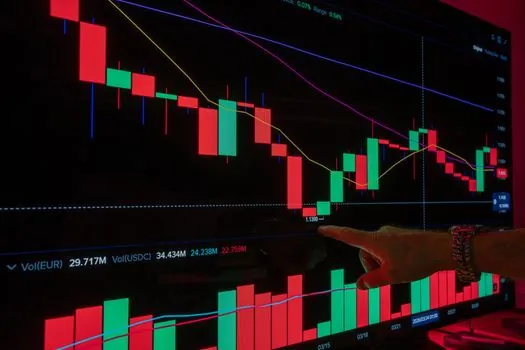
The cleanest leading indicator is the WPU1017 series and the monthly hot-rolled coil assessments from Steel Market Update and Fastmarkets; the Fastmarkets Midwest HRC number on August 20, 2026 was $1,202.40 per short ton [S5]. Watch mill outage announcements September through December 2026, because more than 1 million tons of HRC capacity is offline in that window, and watch 2027 fixed-price contract settlements which are landing $1,100 to $1,175 per ton according to CRU at the August 2026 Steel Summit, with Wells Fargo modeling about $1,000 per ton if tariffs hold [S5].
On the bearing side, the most defensible move is to lock Q1 2027 tonnage before mill order books close, and to ask vendors for an itemized surcharge that separates raw steel, energy, and freight, so a future pass-through is auditable. For applications where steel substitution is feasible, ceramic bearings reduce exposure to bearing-steel cost, though silicon-nitride rolling elements carry their own premium and are not a drop-in for every linear bearing or large-diameter raceway. Where substitution is not an option, the cost ranking on the buy side is roughly: standard deep-groove ball bearings, highest exposure; sealed and shielded variants, slightly less because the shield stock is a smaller share; large-diameter and custom geometries, lower exposure per unit but longer lead times, which magnify the cost of any PO re-pricing.
Comparing the Three Sourcing Moves
The three realistic responses to 2026 steel pass-through compare as follows. First, locking a 12-month fixed-price contract at a $1,100 to $1,175 per ton HRC-equivalent base trades a known premium for price certainty, suits high-volume standard bearing SKUs, and removes the surcharge uncertainty but exposes the buyer if HRC drops below $1,000. Second, spot-plus-quarterly-surge pricing leaves the door open to a 2027 softening, suits low-volume or project-driven demand, but the same 8 to 12 week lead times now in force mean a sudden draw competes for queue space against every other buyer chasing the same tons [S5]. Third, design substitution to ceramic rolling elements for high-speed or corrosive-duty applications raises unit cost by a meaningful single- or low-double-digit percent, but it decouples the bearing line from the bearing-steel market entirely, which is the one input the buyer cannot negotiate against.
Limits and Failure Modes of a Steel-Linked Pass-Through

Pass-throughs break down at two points. First, where a bearing vendor's contract is indexed to a specific HRC benchmark but the buyer's own end-customer pricing is fixed annually, the squeeze sits on the bearing maker's P&L; expect some vendors to widen standard tolerances or shorten standard catalog coverage to recover margin, rather than advertise a surcharge. Second, where a ball bearing or linear bearing is built to a tight ABEC-5 or ABEC-7 class with matched sets, raw-material savings are hard to capture because the bearing maker cannot swap steel lots mid-run without requalification; the pass-through then arrives as a lump at the next price-sheet revision, which is exactly the CEMCO June 29, 2026 pattern of a single effective date across all markets rather than a gradual drift [S4].
A second failure mode is freight. Diesel averaged $4.85 a gallon in 2026 versus $3.66 in 2025, and that line item is separate from the steel surcharge on most bearing quotes [S5]. For buyers sourcing from European or Asian plants into North America, the 50% Section 232 tariff applies to the imported finished bearing, not just the raw steel, so even a domestic-steel bearing from a foreign-owned plant can carry a tariff load on the finished good. The other ceiling is the 2027 contract overhang: if HRC settles toward $1,000 per ton as Wells Fargo models, vendors holding $1,175 contracts will have to absorb the spread or push it back into the spot book, and that is where mid-2027 price volatility most likely shows up [S5].
Sourcing Signals Worth Watching Through Q1 2027
Three numbers tell the story from here. The September through December 2026 HRC outage tonnage, which Fastmarkets flagged above 1 million tons, will set the spot floor [S5]. The BLS WPU1017 print for August through October 2026 will confirm whether the July 2026 reading of 374.2 holds, softens, or extends the run [S5]. The 2027 contract settlements at the SMU Steel Summit already bracket $1,000 to $1,175 per ton depending on tariff assumptions, and the actual signed numbers will land in late Q4 2026 [S5].
Bearing steel market growth at 3.2% CAGR through 2036 implies steady, not spiking, demand, so the 2026-2027 cost shock is a procurement problem, not a supply-availability problem at the bearing level [S8]. For the next negotiation cycle, the cleanest defensible move is to ask vendors to disclose the HRC benchmark and reference month on every quote, to align PO timing with mill outage windows rather than against them, and to size the safety stock at 8 to 12 weeks of cover to match the lead times that mills are now quoting [S5].
For related coverage, see FRP Pultruded Cost: Per-Ton vs Per-Shape Pricing, Resin Tier, and 20-Year Total Ownership.