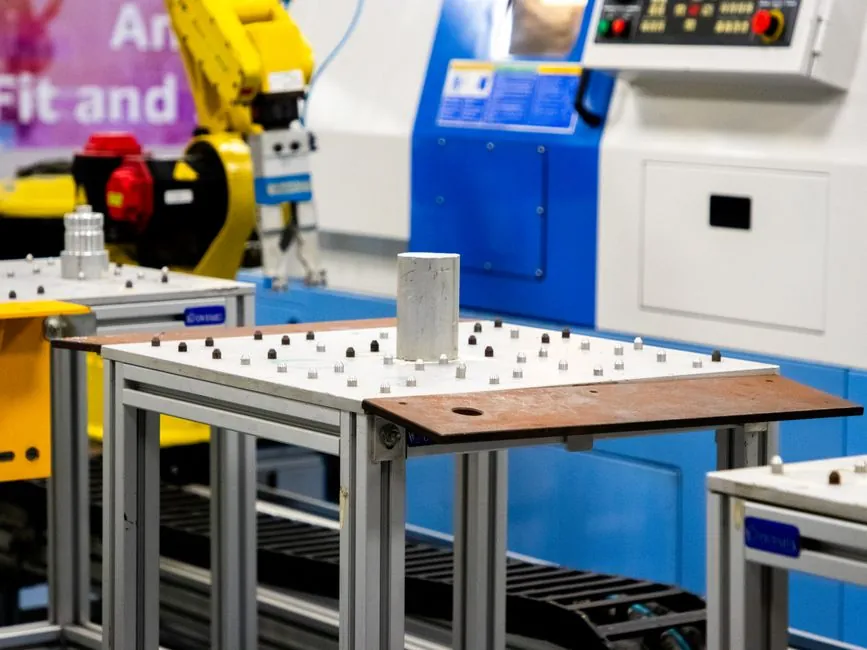
Bearing production capacity is the maximum output of a ring grinding, heat treatment, and assembly line measured in finished bearings per shift, and it varies sharply across ball bearings, roller bearings, and slewing rings because cycle times differ by an order of magnitude [S3].
In practice a plant rarely quotes one capacity figure: it quotes a capacity per product family, because a 6204 deep-groove ball bearing and a 22330 CC spherical roller bearing share almost no common bottleneck on the shop floor [S3].
Why "one number" fails for bearing capacity
Production capacity is defined as the maximum output of a production facility, measured in finished products over a given period of time, and it represents the theoretical upper limit with installed machines, labor, and resources [S3]. Historical actual output is a baseline, not a capacity, because it ignores station changes, labor-hour shifts, skill mix, and supply fluctuation [S3]. For a bearing plant that runs four product families on shared grinding cells, treating last month's actual output as next quarter's capacity guarantees a missed delivery window.
The same problem shows up in the software world, where capacity planning is "not an exact science" and "every application is different and every user behavior is different" [S1]. A bearing plant faces the identical issue: every product SKU and every customer demand pattern produces a different load profile, so a single quoted number hides the real risk.
The two inputs every bearing planner must lock down
Manual capacity calculation reduces to two key metrics: machine-hour capacity and throughput time [S3]. Machine-hour capacity equals the number of usable machines multiplied by the hours employees can run them, and it must be calculated separately for every single product or process step [S3]. For a thrust bearing line, that means separating washing, turning, grinding, bore grinding, heat treat, and assembly into individual machine-hour buckets, because heat treat furnaces and race superfinishing have very different availability profiles.
Throughput time is the second input, and it is where bearing families diverge most. A small 6204 ball bearing may complete grinding and assembly in a fraction of the time a large slewing ring needs for raceway induction hardening and gear cutting. Without splitting throughput time per SKU, a planner will either over-quote capacity on heavy product mix and miss orders, or under-quote on light mix and buy machines that sit idle.
Capacity utilization: the gate between quoted and real

Comparing production capacity with actual capacity for past periods gives the capacity utilization rate, which is useful for gauging manufacturing efficiency and finding the balance between operation rate and cost per unit [S3].
A reliable production capacity metric is also a good performance indicator, useful for motivating workers to create and meet production goals [S3]. The pitfall is treating utilization as the goal: a linear bearing cell running 95% looks productive on paper but is one tooling failure away from a ship-stop, so planners should track utilization alongside WIP and tardiness, not alone.
Selection criteria for the capacity model
For a 2026 bearing capacity study, the criteria that actually move the answer are: machine-hour capacity per product family, throughput time per SKU, changeover and setup time, OEE on bottleneck cells, and demand mix by bearing type. A spec-first buyer or planner should refuse any vendor capacity claim that does not state which of these it covers, because "annual capacity 50 million bearings" without family mix is unfalsifiable. [S4]
For comparison, three common ways to express bearing capacity in practice are: design capacity (theoretical maximum from nameplate machine hours), demonstrated capacity (best sustained output over a recent period), and order-booked capacity (committed volume on the books). Design capacity is the ceiling, demonstrated capacity is the realistic planning baseline, and order-booked capacity is the number that actually triggers overtime or a capital request. The right one to quote to a customer depends on lead time: short-cycle orders can run against demonstrated capacity, long-cycle orders must clear design capacity headroom for yield loss.
Failure modes and constraints unique to bearing production
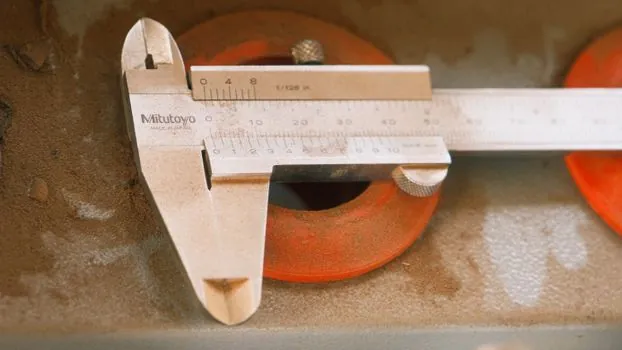
Capacity-planning questions cluster around bottlenecks: how many furnaces can run in parallel, how many grinders are qualified for a given race profile, and whether the thrust bearing washer line shares operators with the ball line. In IT terms this mirrors the question set used in server capacity planning, where "Is there enough bandwidth? How many transactions need to run simultaneously? Is the database a limiting factor?" are the deciding factors [S1]. For bearings the equivalents are: how many raceway CNC axes, how many heat-treat batches per day, and is CBN grinding the limiter or is it assembly and packaging.
Constraints that quietly cap bearing capacity include raw-material certification lead time for through-hardening steel, fixture availability for non-standard bore sizes, and qualified-operator headcount on induction hardening, which is a craft bottleneck that machines alone cannot solve. For related plant-floor decisions such as pillow block bearing selection for steel mills and pillow block bearing selection for mining, the same spec-first logic applies: define the duty cycle, the sealing class, and the load case before the part number is set.
Standards, sourcing, and the data behind the plan
Capacity numbers should be auditable: every machine-hour input traced to a machine list with nameplate hours, every throughput time to a routing with standard seconds, and every utilization figure to a defined shift calendar. Production-planning software can largely automate this process and enable accurate, data-based capacity planning [S3], but only if the underlying routings and time standards are clean. For plants also evaluating adjacent equipment, machine tool production line design in 2026 follows the same evidence rule: layout, accuracy, and uptime are stated as numbers, not adjectives.
Two trackable signals for the next planning cycle: first, watch the demonstrated-versus-design gap on the bottleneck cell each month, because a widening gap is the earliest warning that routings, tools, or operators have drifted from standard.