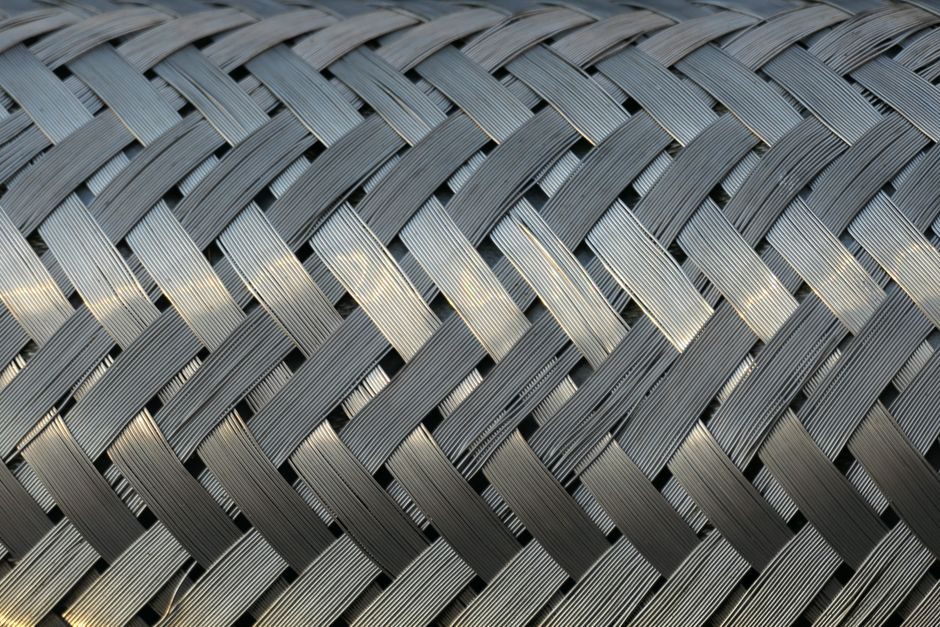
A bellows seal is a welded metal (or in some cases elastomeric) convoluted element that replaces the conventional packed-gland or single-spring seal on a valve stem or rotating shaft, pushing the process boundary away from the atmosphere and eliminating fugitive emissions along the stem.
In the 2026 DirectIndustry index, 36 manufacturers list 75 products under "valve with bellows seal" alone, with DN ranges spanning 6 mm to 250 mm, pressure classes from vacuum (10⁻³ Pa region) to 100 bar, and service temperatures from –200 °C (cryogenic LNG) to +530 °C (high-pressure steam) [S1]. For pumps, single-spring and metal-bellows mechanical seals overlap that range but pair it with shaft speed and face material, so a valve spec is not directly transplantable.
Two product families share the name "bellows seal"
The phrase covers two distinct assemblies that buyers routinely conflate. A <b>valve bellows seal</b> is a static, stem-side element welded between the bonnet and stem; the working stroke is linear and counted in millimetres, and the duty cycle is per-handle-turn, not per-revolution [S2]. A <b>mechanical-seal bellows</b> is a dynamic element on a pump shaft, with rotary face sliding against a stationary face; the duty cycle is the pump's running hours, and the convolutions absorb axial misalignment plus thermal growth of the shaft [S3].
The DN–PN–temperature cell in the table below makes the divergence obvious. Mival's 347 series globe valve with handwheel covers DN 15–250 mm at PN 27.4–40 bar and –10 °C to +400 °C, sized for hot water, oil, air and steam in heating, tank and boiler service [S2]. The 3248 series regulating valve from SAMSON, also in the same index, is built for cryogenic cold-box mounting with an integrated insulating section, DN 25–150 mm at PN 16–100 bar and –273 °C to +65 °C [S1]. On the rotating side, Chengdu Yitong's YTB132 metal-bellows mechanical seal runs –75 °C to +400 °C at 0–2.5 MPa (363 psi) with a peripheral speed ceiling of 30 m/s [S3]. Same convolution concept, three very different design windows.
Pressure-temperature envelope sets the baseline
Body class and bellows material are the two numbers that decide whether a candidate is even on the shortlist. ASME B16.34 class 150–300 flanged globe valves typically cover PN 16–40 bar up to +425 °C in carbon and stainless steel, and that envelope matches most 347-series spec sheets verbatim [S2]. Above 100 bar or 425 °C, you move into the 8021-GS4 / 8056-GS3 sliding-gate control-valve territory from the index, with PN 0–160 bar and service temperatures to +530 °C, where the bellows is welded into a heavier body and the trim is hard-faced [S1].
For cryogenic and LNG-isolation duty, the Rotarex K900 series in the index is a representative spec: DN 6.8 mm, three pressure steps (15/30/100 bar), –200 °C to +100 °C, double-walled electron-beam- or laser-welded bellows, metal-to-metal atmospheric sealing and a secondary Nitrile seal that fires only on bellows failure [S1]. On the rotating side, Yitong's YTB132 is specified for –75 °C to +400 °C at 2.5 MPa with stainless-steel/graphite/rubber face combinations for petrochemical and high-viscosity media [S3]. Pick the envelope first; everything else is a sub-decision.
Selection criteria: 6 numbers to lock before you ask for a quote
A spec sheet that doesn't carry these six values is not a spec sheet, it is a marketing page: [S1]
1. <b>DN / NPS</b> — 15–250 mm in the Mival 347 series is the most common industrial band; sub-15 mm goes to instrument valves, above 250 mm to custom forging [S2].<br>2. <b>PN / Class</b> — PN 16/25/40 covers 90% of building-services and light-process steam; PN 63–100 and ASME 600+ are for high-pressure steam and supercritical fluids [S1].<br>3. <b>Temperature</b> — published band; the –10 °C lower limit on carbon-steel globe valves is the standard ductility floor, and the 400 °C upper limit is the graphite-gasket ceiling [S2].<br>4. <b>Media</b> — hot water, oil, air, steam (Mival 347) versus cryogenic LNG (K900) versus corrosive chemical (YTB132) drives both body and bellows material [S1][S2][S3].<br>5. <b>Bellows material and weld process</b> — 321/316L stainless is the default; Inconel is specified for >400 °C or chloride-bearing streams; laser- or electron-beam-welded convolutions beat TIG-welded convolutions on cycle life [S1].<br>6. <b>Cycle count or running hours</b> — 10000 full-stroke cycles is the typical published floor for a welded metal bellows; pump-side seals are usually rated in years of service at a stated duty, not cycles [S2][S3].
Cross-reference: if you also need to seal a static flange joint in the same line, the material logic is similar but the geometry is not, and the oil seal vs gasket boundary is the usual place where buyers mis-apply a dynamic seal to a static joint.
Bonnet design, fire-safe rating and the secondary seal
Two bonnet architectures dominate the welded-bellows globe-valve market, and the choice is mostly a maintenance-versus-leak-rate trade. The <b>bolted bonnet</b> with male-female joint, F316L/graphite spiral-wound gasket (ring-joint on request) allows bonnet removal and in-situ bellows replacement, but adds a potential leak path at the body-bonnet joint [S5]. The <b>welded bonnet</b> is a permanent joint; the valve is non-repairable in the field, but atmospheric leak paths collapse from three (packing + body-bonnet + stem) to one (the bellows itself), which is the configuration most TA-Luft- and ISO 15848-compliant valve packages use [S5].
Fire-safe certification is a parallel decision. The Mark 100 safety shut-off globe in the index carries API 607 fire-safe, plus electronic positioner and accessories certified to CSA, FM, SIRA, TR CU, INMETRO, TESTSAFE, KOSHA and CCOE, so it satisfies both the process and the hazardous-area envelope in a single assembly [S1]. If the line is in ATEX/IECEx zone 1 or 2, specify the certification document number, not just "ATEX-approved" — and the same logic applies to the secondary seal on a bellows seal cryogenic valve: Rotarex K900's Nitrile secondary seal is what keeps the line clean if the primary metal bellows fatigues, but it is not a process seal and will not pass a hydrostatic test on its own [S1].
Real use cases and the boundary cases that break the design

Three application clusters carry most of the 2026 quote activity: (a) <b>building-services and light-process steam</b>, dominated by PN 16–40 stainless or carbon-steel globe valves with graphite gaskets in the Mival 347 envelope, flow rates 4.8–1086 m³/h [S2]; (b) <b>petrochemical and refinery block valves</b>, where the bolted-bonnet fire-safe design with API 607 certification and electronic positioner feedback is the baseline, used for hot-oil and hydrocarbon isolation [S1][S5]; (c) <b>cryogenic LNG and cold-box isolation</b>, where double-wall welded bellows with an insulating vacuum jacket are mandatory, and the operating-temperature window runs down to –200 °C [S1].
The application that breaks a standard metal-bellows valve is two-phase flashing service: a welded bellows does not tolerate the rapid temperature transients of a let-down valve on a high-pressure liquid/vapour line, and the published cycle-life number collapses to a small fraction of the static-rating value. The YTB132 pump-side seal hits the same wall on thermal-shock cycles: 400 °C to ambient in seconds will fatigue the convolutions faster than the published cycle count assumes [S3]. In both cases, the fix is not a bigger bellows — it is a switch to a live-loaded packing arrangement with a bellows as the secondary barrier, or to a different valve type entirely.
Where to verify and what to track next
Public spec sources to cross-check before issuing a PO: the DirectIndustry "valve with bellows seal" buying guide (36 manufacturers, 75 products) for the market map [S1]; the manufacturer product page (e.g. Mival 347 series) for the exact DN/PN/T body rating [S2]; the OEM catalogue for the bellows material grade and weld process (Chengdu Yitong YTB132 catalogue pages for petrochemical service and YTBB174/YTB121/YTB132/YT701 set for chemical-industry duty) [S3]; and the Bonny Forge bolted/welded-bonnet product page for the body-bonnet joint design and gasket spec [S5].
Two trackable signals for the rest of 2026: a single revision of ISO 15848 ( fugitive-emission class definition for valve stem seals ) is being referenced on several 2026 OEM data sheets for the first time, and welded-bellows cycle-life test data on stainless 316L versus Inconel 625 at >400 °C is being republished by at least two European manufacturers. Watch the manufacturer datasheet revision dates, not the catalogue year, when you compare cycle ratings. For adjacent process equipment, the oil seal price and cost guide covers the rotating-shaft elastomer side of the same conversation.
For component-level specifications, see linear guide.