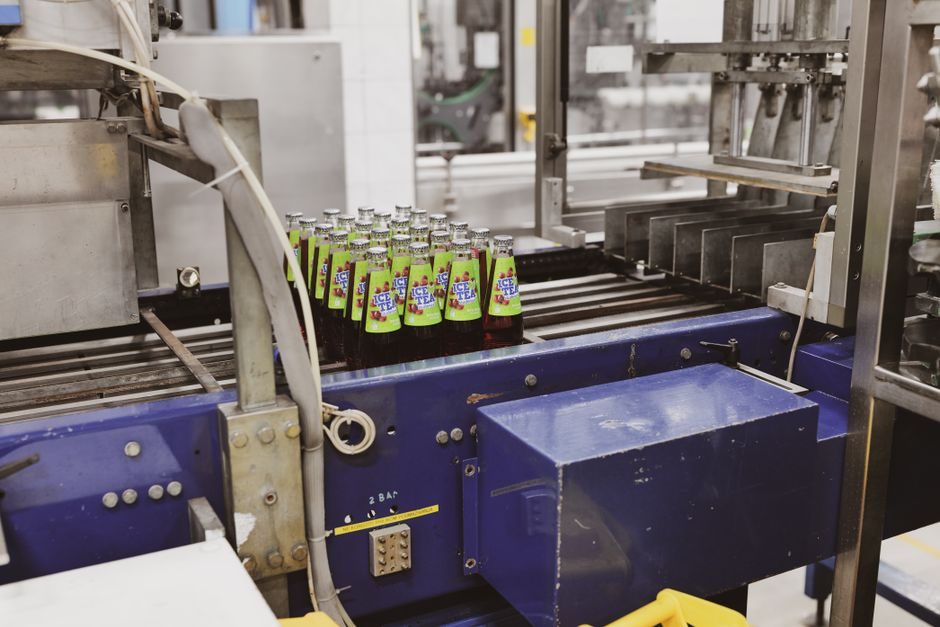
E-commerce fulfillment conveyors are engineered around three constraints that are not negotiable: carton weight band (typically 0.1-30 kg), required throughput per hour, and the physical turning radius of the sorter loop. The belt, frame, and drive must all be specified against the same worst-case package, not the average SKU.
Light-duty induction and takeaway lines in modern 3PL and DTC warehouses commonly run plied PVC or PU belts in 400-800 mm widths at 0.3-1.5 m/s, with inclined sections up to 18° handled by high-grip chevron or rough-top covers. Belt Concepts' published product line covers plied PVC, solid woven PVC, non-woven, silicone-coated, and patterned cover constructions from a Spring Hope, NC plant, with standard widths cut to order and half-slab or full-slab formats for distribution [S1].
Belt Type vs Fulfillment Node: Where Each Construction Earns Its Slot
Induction, takeaway, and transfer conveyors live in different mechanical environments and the belt carcass should be picked to match. Plied PVC and PU belts (typically 2-3 plies of polyester/polyamide weave) dominate 0.1-15 kg carton duty because of low noise, food-safe options, and easy mechanical splicing [S1]. Solid woven PVC adds impact resistance for parcel hubs handling courier totes, while modular plastic belts (usually PP or POM, 50-100 mm pitch) suit wash-down zones and tight transfers because individual modules can be popped out and replaced without scrapping the full belt.
Roller-gravity and skate-wheel sections have no belt at all and fit low-cost, non-driven zones such as order assembly packing lanes and trailer-load extensions, where the OEM catalog for extend gravity skate-wheel roller lines in China quotes US$399-8,999 per piece at 1-piece MOQ for telescopic loading variants [S4]. Match the belt material to the package face: corrugated cartons ride cleanly on smooth PU, polybagged apparel sticks to matte PVC, and hard totes need the abrasion resistance of a solid woven carcass [S1].
Throughput, Speed, and Width: the Numbers that Drive the Spec
A 600 mm wide belt running at 1.0 m/s with 200 mm carton pitch moves roughly 600 cartons per minute per lane, which sets the floor for sortation capacity in any given node. Incline conveyors above 12° typically need a high-grip cover profile (chevron, rough-top, or diamond) and a cleated profile above 18° to prevent carton back-slip; the Belt Concepts catalog lists cover-pattern profiles as a configurable option across its plied and solid woven constructions [S1].
Operating envelope for general light-duty belt conveyors in published operating-procedure guidance specifies ambient and material temperatures between -10 °C and +50 °C, and explicitly excludes materials carrying acidic or alkaline oils or organic solvents — a hard limit for any conveyor specified into a battery, chemical, or solvent-handling zone [S3]. For freezer or cold-chain nodes below -10 °C, the spec must move to low-temperature-rated PVC/PU compounds or full stainless framing, and that choice must be made before the drive train is selected, not after.
Drive, Tensioning, and the Mechanical Side of Reliability
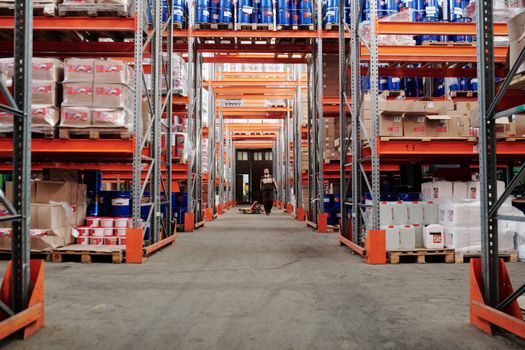
End-drive motor pulleys in fulfillment duty are typically 80-160 mm diameter with a 0.37-2.2 kW gearmotor, sized so the belt pulls at no more than 1-2 % elongation under full load. The belt tensioner is the single most-misunderstood component on a fulfillment line: screw-takeup units are fine for short induction sections under 5 m, but long takeaway or merge conveyors above 10 m should run gravity or pneumatic take-ups so the belt does not stretch unevenly across its run. [S3]
Belt selection is upstream of tensioner choice — a flat belt carcass with low elongation polyester weave is the right starting point when the line includes slider-bed or roller-bed sections, because stretch directly translates into tracking drift. Where noise is a constraint (pick/pack mezzanines, returns lines), PU-covered timing belt drives behind end pulleys cut airborne noise by 3-5 dB versus raw V-belt drives, at the cost of reduced shock absorption when a carton lands hard on the belt.
Frame, Supports, and the Floor-Plan Trade-offs
Roller-bed conveyors handle heavier cartons (15-50 kg) and run on 50-100 mm dia galvanized or stainless rollers spaced at 75-150 mm pitch; slider-bed conveyors support lighter, smaller items where sag would let the belt deform under load. Fixed installations need a concrete pad per the published transfer-conveyor operating guidance, and mobile units need their wheels wedged with timber chocks or braked before the line runs, with a 1 m clearance between parallel machines and to walls for service access [S3].
Modular plastic belts justify their higher unit cost in wash-down and food-adjacent returns zones because individual modules can be snapped out for cleaning; the same logic makes ribbed belt constructions a poor pick for dusty returns lines, since the ribs pack with paper lint and lose grip within weeks. Stainless 304 framing adds roughly 20-30 % to the structural cost versus powder-coated mild steel and is mandatory for any zone with wash-down or pharma-grade returns.
Safety, Standards, and Operating-Procedure Anchors
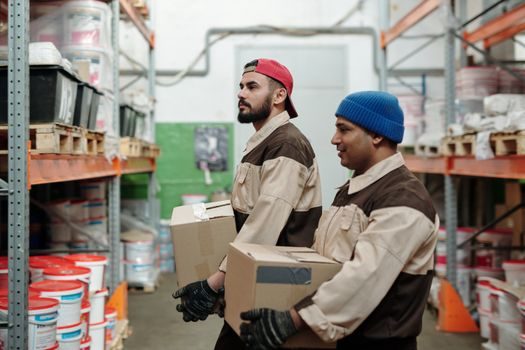
Pre-start checks on every shift must include visual inspection of belt joints, lacing, and guards, plus confirmation that the take-up is in the working stroke — the published operating procedure for transfer belt conveyors states the belt must be tensioned to the appropriate level before any start, and the conveyor must run unloaded for 3-5 minutes before material is fed [S3]. The same procedure forbids adjusting a tracking or slip event with a hand tool, bar, or wedged object while the belt is moving; all corrective work requires lockout/tagout with the power isolated [S3].
No-load start, no-load stop is the rule for series-connected conveyors: lines must start from the discharge end in sequence so downstream belts are running before upstream ones begin feeding, and the same rule applies in reverse at shutdown so no belt is parked with a load on it [S3]. Personnel must not ride the belt, touch moving parts, or cross an active belt, and the motor must have verified insulation resistance with a firm protective-earth ground before the first energisation [S3]. Underground-mining-grade belts from the same OEM family carry MSHA fire-retardant compliance as a reference point for the highest flame-resistance tier in the catalog [S1].
Comparison: Belt Construction vs Fulfillment-Duty Decision Criteria
Plied PVC vs solid woven PVC vs modular plastic vs roller-gravity, lined up on the four criteria that drive selection: cost per linear meter, typical carton-weight ceiling, repairability on a live floor, and cleanability. Plied PVC sits at the low-cost end with a 15-25 kg practical ceiling, field-spliceable with standard lacing, and wipe-down clean only; solid woven PVC moves up one tier on impact resistance for 25-40 kg parcels at a 10-20 % cost premium; modular plastic is the most expensive of the four but allows single-module swap-outs in minutes and tolerates wash-down; roller-gravity has no belt at all and is the cheapest linear meter for non-driven, low-speed packing or load-out zones [S1][S4].
Sourcing, Software Layer, and Where the Conveyor Spec Stops

On the upstream software side, multi-carrier shipping platforms like ShipWise expose order management, rate shopping, cartonization, and LTL/parcel tracking in one console, with published integrations to USPS, UPS, DHL eCommerce, FedEx, Shopify, Amazon Seller Central, Walmart Marketplace, and TikTok Shop — the layer that decides carton dimensions and weight before the conveyor sees the parcel [S2]. The same order stream also drives the mesh belt conveyor decision in returns inspection, where a metal or polyester open-mesh belt lets debris fall through and supports visual scanning of the carton face from below.
For fulfillment operators spec'ing a new line, the lowest-risk path is a domestic OEM with stocked standard widths for fast replacement, paired with one or two custom-belt SKUs for the unique nodes (incline merge, returns inspection) [S1]. The next two trackable signals: published conveyor-safety standard updates from the Chinese and EU regulatory bodies in Q3-Q4 2026, and US 3PL capital-expansion announcements in Q3 2026 that disclose sorter throughput targets — both will recalibrate the width and speed numbers above.
This topic is covered further in Cleanroom Panel Selection Guide: Core, Surface, Class, and Fire Map.