
A bench scale with a rechargeable lithium-ion battery can provide up to 500 hours of operation, but fixed, high-use stations generally gain more consistent performance from continuous AC power [S1].
Disposable-battery, rechargeable, and AC-powered bench scales cover different needs: remote deployment, intensive daily use, and stationary process integration [S2][S3].
Power Source Sets the Operating Model
AC operation removes routine charging and battery replacement from the inspection cycle. A dual-power model can therefore suit a fixed bench that operates many shifts, provided the manufacturer permits continuous adapter use. The 6 lb, 15 lb, 30 lb, and 60 lb CAS EC-2 counting scale demonstrates how AC and rechargeable-battery operation can be combined in one counting instrument [S2].
Battery operation addresses a different constraint: the scale must work away from a 110 V outlet. Battery-powered products include laboratory balances, industrial floor scales, portable wheel weighers, bench scales, and hanging scales, so battery capability is not limited to portable formats [S2][S4]. For a fixed bench scale, decide from duty cycle, outlet access, mobility, and acceptable intervention frequency rather than from power type alone.
Decision Criteria: Runtime, Stability, and Intervention
Battery power wins on deployment freedom and fast recovery from a depleted pack. A user can replace disposable AA or AAA cells or exchange a built-in rechargeable pack, while a permanently installed AC scale needs no battery stock or charging dock [S3]. Rechargeable lithium-ion technology can support operation for up to 500 hours and use a replaceable pack, which reduces the penalty of a depleted internal battery [S1].
AC power wins on measurement stability and routine availability. A 2026 field discussion reported less drift when a dual-power electronic scale ran from its AC adapter, while readings tended to drift as alkaline cells drained [S5]. That observation is not a laboratory performance guarantee, but it establishes a sensible verification rule: check zero stability and compare against a known reference mass before accepting the reading used in production.
Disposable Battery versus Rechargeable Pack
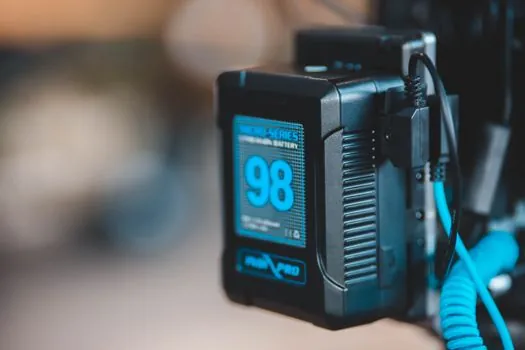
Disposable cells generally have the lower purchase price and require no charger, charging station, or managed charging time. Fresh cells can maintain consistent display brightness and response until they approach depletion, making this format practical for occasional parcel weighing, field inspection, or low-volume retail work [S3]. The weakness appears in high-use workflows: replacement purchases accumulate, and an exhausted cell can stop a time-sensitive operation.
A rechargeable pack usually costs more at purchase but shifts the operating expense toward electricity and charging time. Built-in lithium-ion or Ni-MH packs are charged by USB cable, wall charger, or docking station and are better matched to warehouse, logistics, and daily-use applications [S3]. The comparison changes with rechargeables rated below 1.2 V per cell versus alkaline cells near 1.5 V, because an electronics load may perform differently across that voltage range [S5].
Where Battery Power Fits and Where It Does Not
Battery power is appropriate for mobile benches, field weighing, temporary stations, and sites without a reliable outlet. A portable bench-scale listing includes a 500 lb capacity model, while another compact battery-powered bench scale uses a six-digit LCD display [S4][S7]. These examples show that capacity, readability, stainless construction, and battery operation can coexist, although model specifications still require separate verification.
AC power is the stronger fit for a filling-weighing scale used on a production line, a packaging station with defined shift cycles, or a checkweighing application where an interrupted power state is unacceptable. It also suits a bench scale that must remain available for calibration checks, tare operations, data transfer, and production records. If the power adapter fails, however, an AC-only scale stops, so critical processes may need a specified backup or UPS strategy.
Legal-for-Trade and Hazardous-Area Constraints
Power choice must not outrank the intended weighing transaction. Prime USA Scales identifies bench and portable products with NTEP certification, including 500 lb and 6,000 lb models, while a Brecknell floor-scale platform with alloy-tool-steel load cells is also described as NTEP legal for trade [S2][S4]. Buyers should confirm the exact capacity, configuration, and approval for the supplied model rather than assuming that every scale in a product family qualifies.
Intrinsic safety and explosion protection can constrain the acceptable battery or adapter arrangement. A listed EK-AEP balance combines battery operation, intrinsically safe construction, and materials selected for explosion protection, while a different ICS4_6x bench-scale family is identified for Category 2/DIV1 applications [S1]. No general-purpose battery should be substituted in a hazardous-area installation without the manufacturer’s approval and applicable certification markings.
Cost, Maintenance, and Failure Exposure
Disposable-battery scales minimize charging hardware but introduce recurring cell expense, disposal waste, and leakage risk during storage [S3]. Rechargeable systems reduce routine consumable costs but add charger procurement, charging time, pack aging, and the need to manage a fleet of devices. AC-powered systems have the simplest routine energy path, but add a permanent outlet, cable, and adapter to the installation.
Failure exposure differs by architecture. Disposable cells can be swapped quickly if spares are stocked, while a rechargeable pack may require a specific compatible pack and charger. An AC adapter offers uninterrupted service only while mains power remains available. For fixed operation, set a schedule for zero checks and comparison with a traceable reference mass, and use a checkweigher where packaging mass must be controlled automatically rather than read manually.
Specification Checklist Before Purchase
Specify the required capacity and graduation before the power source. Published examples span a 6 kg counting scale with 0.01 g accuracy, a 15 kg platform scale with 2 g accuracy, and a 500 lb bench scale, showing that power requirements do not define weighing performance [S1][S4]. For a compact battery-powered bench scale, confirm the six-digit display, platform dimensions, minimum load, stainless-steel construction, and permitted battery chemistry against the supplier datasheet [S7].
Then document the operating context: shifts per day, hours away from an outlet, movement between stations, charge-cycle tolerance, cleaning exposure, data-interface requirements, hazardous-area classification, and legal-for-trade status. If a manufacturer quotes a battery runtime, require the test condition and capacity basis. The published 500-hour lithium-ion figure provides a useful benchmark, but it is not transferable to every display, backlight, radio, load cell, or battery age [S1].
For a stationary bench weighing more than one shift, specify AC power with a manufacturer-approved dual-power option if available. Specify rechargeable battery power for daily mobile use where outlet access is unreliable, and specify disposable cells only when low purchase cost, infrequent use, and zero charging infrastructure outweigh replacement cost and leakage exposure. During commissioning, record a minimum of 3 zero readings, 3 repeat readings on a known test mass, and the battery or adapter configuration used.