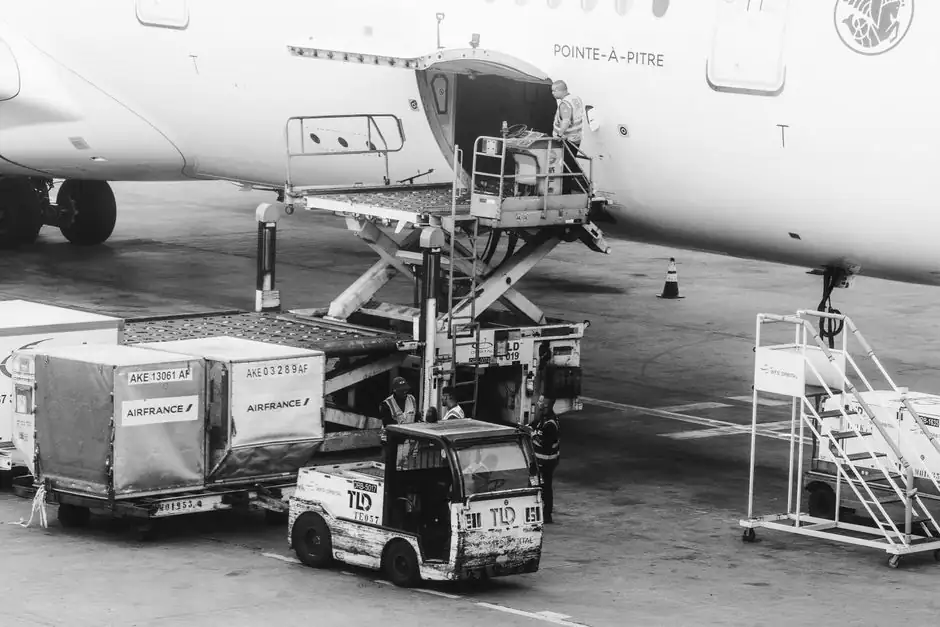
Air cargo bench and platform scales for freight terminals commonly ship in 10,000 lb, 20,000 lb, and 30,000 lb capacity tiers, with the 10' x 10' deck being the industry-standard drive-over footprint for weighing ULD containers and dollies [S5][S6]. A separate roller-deck and pancake-deck format is sold specifically for warehouse and air cargo utility, including the SL-960 and SL-940 product lines aimed at parcel and container flow [S4].
Selection is driven by four variables: container type (LD3, LD7, LD11, M-1, AKH), deck geometry (drive-over, roller, ball transfer, caster), weighing indicator (factory-paired or field-replaceable), and the regulatory chain behind the displayed weight (NTEP, OIML, factory calibration only). Aviation scales from Arlyn and Emery Winslow are specified for passenger baggage and freight on both commercial and private aircraft platforms [S7][S8].
Capacity and Deck Geometry: Matching the ULD Mix
The 10' x 10' 30K platform with 1/2" thick steel deck plate and 360° ramps in safety yellow is a published B-TEK air cargo configuration, supplied with 1/2" x 4-1/2" wedge anchors and 15 ft of B-TEK load cell cable per unit [S6]. Triner's TS20KD-1010 is the matched 10' x 10' 20,000 lb drive-over alternative, factory calibrated with a Model 7600E indicator and held to a 3" working height [S5].
Drive-over decks are the right call when dollies are rolled on and off in a straight line; ball-transfer and caster decks serve the same ULD population but allow omni-directional positioning, with 5" working height (ball) and 20" working height (caster) being the published baselines [S5]. Roller deck variants add controlled two-direction movement, useful when the scale feeds a build-up line or roller conveyor. Central Carolina Scale's dual-roller scale fits standard single or double-wide air cargo containers with 4" rollers [S9]. Prime USA Scales sells the LD3 roller deck format specifically, alongside Intercomp air cargo scales for bulk ULD weighing [S3].
Indicator Pairing, Load Cells, and Calibration Chain
Triner ships its ULD ball-deck, roller-deck, and caster-deck scales factory-calibrated to the Model TS-700SS indicator, while the drive-over TS20KD-1010 ships with the 7600E indicator [S5]. The TS-700SS pairing carries a top-access stainless steel junction box and precision ball-and-cup leveling feet, which matters for field service because recalibration does not require lifting the deck [S5].
Avery Weigh-Tronix cargo scales, originally developed for the air freight industry, are sold as three deck types and are designed to be paired with a separate indicator family for data management, giving integrators a clear path to WMS, AS/RS, or cargo handling system hand-off [S2]. When a scale is used for revenue or safety-of-flight weight-and-balance, look for NTEP CC numbers and OIML R76 certificates; when it is used only for internal weight-and-balance, factory calibration plus annual check is the typical floor [S3][S4]. For ULD build-up accuracy, internal tolerance commonly targets 0.1% of applied load or better, though the exact figure is set by the airline's weight-and-balance program rather than the deck alone. Detailed bench-scale selection logic for distribution-style weighing is mapped in this bench scale spec map for apparel DCs and carries over almost intact for parcel feeders.
Comparison of Air Cargo Deck Formats

The four deck formats are not interchangeable; the table below lines up the main options against the decision criteria an air-cargo spec writer actually uses:
Drive-over (B-TEK 10'x10' 30K, Triner TS20KD-1010): 10,000-30,000 lb capacity, 3" working height, 1/2" steel deck, low cost per pound, best for straight-line dolly flow, no omni-directional positioning [S5][S6].
Ball transfer deck (Triner ULD Ball Deck, SL-960 line): 5" working height standard, 20" with optional bottom frame, omni-directional positioning for tight ULD staging, easier to integrate with caster-equipped dollies [S4][S5].
Roller deck (Triner Roller Deck, Central Carolina dual-roller, SL-940 line): 5" working height, controlled two-direction movement, 4" rollers sized for single or double-wide ULDs, fits in-line with conveyors and build-up stations [S4][S5][S9].
Caster deck (Triner Caster Deck): 20" standard working height, adjustable, drop-in Mobra caster for tool-free maintenance, best for caster-equipped ULD dollies that cannot be lifted onto a low deck [S5].
Roller feeder parcel scale (Triner Roller Package Feeder): in-line conveyor weighing with auto-add and manual-add modes, item tally and total weight stored in memory, last-item delete, rechargeable battery, pneumatic tires with locking wheel brakes for relocation inside the terminal [S5].
Use Cases: ULD Weighing, Build-Up, and Weight-and-Balance
Drive-over 10'x10' decks are the standard for weighing loaded ULDs on their dollies before they are towed to the aircraft, and the B-TEK 30K configuration is the de-facto terminal baseline [S6]. Roller and ball-transfer decks serve build-up positions where empty ULDs are repositioned repeatedly during load planning, because omni-directional movement cuts handler time and reduces the risk of pushing a ULD off a low edge [S5].
Roller feeder parcel scales sit in the small-parcel and feeder-aircraft lane, automatically totalising weight and item count as boxes move along the line, with auto-add for hands-free flow and manual-add for non-standard sizes [S5]. For aircraft-on-jack and individual wheel-load weighing, dedicated AirWeigh plane scales at 10,000 lb and 20,000 lb capacities are sold alongside cargo scales, which is useful when the same vendor needs to cover both the ramp and the terminal [S3]. Arlyn's aviation line covers passenger and baggage scales for commercial and private airports, fitting the apron side of the same operation [S7].
Limitations, Failure Modes, and Sourcing Notes

Bench and platform scales in this segment do not replace aircraft weighing systems: drive-over and roller decks read gross weight of a ULD plus dolly, and the dolly tare has to be subtracted in the WMS or weight-and-balance software [S5][S6]. Low-profile 3" drive-over decks are vulnerable to shear loading if dollies are pushed on at speed, so 360° ramps and wedge anchors are not optional in a working ramp [S6]. Ball-transfer and roller decks need periodic ball and roller inspection; the Triner design exposes the leveling feet from the top so this can be done without pulling the deck [S5].
NTEP and OIML certificates apply to the indicator-load cell-deck combination, not the deck alone, so a deck swap without re-certification voids legal-for-trade status [S3]. Custom air cargo scales are routinely built to footprint and capacity outside the catalogue, with Emery Winslow listing floor, baggage, airplane, and freight scales under a single aerospace/aviation custom program [S8]. For first-time buyers, the most common spec gap is the indicator protocol layer (analog 4-20 mA, RS-232/485, Ethernet/IP, or wireless), which must be specified before the indicator ships, not after, because field retrofits on factory-calibrated pairs add cost and recalibration downtime [S2][S5].
Trackable signals to watch over the next quarter: NTEP CC renewals on the SL-960, SL-940, TS-700SS, and 7600E pairings, any capacity expansion above 30,000 lb for wide-body main-deck ULDs, and indicator-side protocol options (EtherNet/IP, PROFINET, OPC UA) added to the Triner and Avery cargo lines. B-TEK's 10'x10' 30K spec and the dual-roller format for single or double-wide containers remain the published reference points for new terminal builds in 2026 [S6][S9].
For the relevant spec sheets and selection criteria, see bench scale, air pick, and air impact wrench.