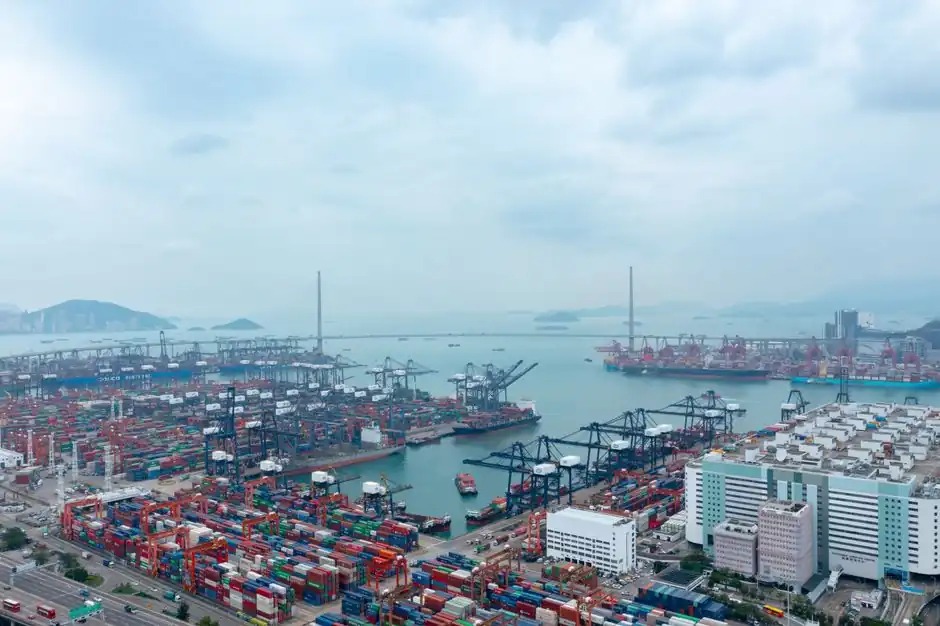
Industrial bench scales for port and intermodal logistics typically span 3 kg to 3000 kg load ranges with 0.2 g to 200 g readability, IP65 to IP67/IP68 protection, and ATEX certification for hazardous-area use, as published in OEM catalogues for 2026 [S1][S5].
For port terminals, container freight stations (CFS), and bonded warehouses, the bench scale is not the primary weighing station, that role belongs to weighbridges, axle scales, and forklift scales. It is the secondary verification point at the documentation desk, the parts counter, the QA bench, and the small-parcel shipping station [S2][S7].
Where Bench Scales Actually Sit in a Port Weighing Stack
A port weighing stack runs from weighbridge (60,000+ kg) at the gate, through axle scales and pallet/forklift scales (1,000-5,000 kg) on the yard, down to bench and counting scales (3-300 kg) inside the CFS and documentation office [S7]. Avery Weigh-Tronix lists forklift scales plus bench and floor scales as the standard port and sea-freight complement to weighbridges, with axle weighers for mobile applications [S7].
RHEWA positions counting scales and other industrial scales as a logistics-specific line for inventory, order picking, and shipping verification, not for bulk or pallet weighing [S8]. In practice, this means a 30-300 kg bench scale with parts-counting firmware is the workhorse for cargo-manifest reconciliation, sample weighing for customs inspection, and small-parcel rate calculation, sitting beside a platform scale for pallet verification and a crane scale for lifted cargo.
Selection Criteria: Capacity, Readability, Resolution, IP, and Interface
Five parameters drive the spec sheet: maximum load, readability (d), verified resolution (e), ingress protection, and data interface. The Minebea Intec Midrics line, a representative industrial bench/floor unit, publishes 3 kg to 3,000 kg load ranges, 0.2 g to 200 g readability, up to 15,000d non-verified or 2 x 3,000e verified resolution, IP65 or IP67/IP68 protection, and ATEX certification for hazardous-area deployment [S5]. The dual-indicator, stainless-steel-indicator design lets the platform sit in a wet zone while the readout sits at a clean workstation, a common requirement in port food-cargo and chemical-cargo sheds [S5].
Rice Lake's bench-scale family emphasises mobility and adaptability, with single-point and beam load cells behind the deck, and indicator options including wireless communication and remote displays for yard-side use [S3]. For port logistics, the practical decision matrix is:
Load under 30 kg: bench scale, 0.1-1 g readability, typical for small-parcel and document weighing at the shipping desk.<br>Load 30-300 kg: heavy-duty bench or low-profile platform, 5-50 g readability, typical for pallet-jack-fed CFS verification, sample drums, and airline-style air-cargo cages.<br>Load 300-3,000 kg: floor scale or pallet/forklift scale, not a bench, regardless of catalogue naming [S2][S7].
Port Environment: IP Rating, Material, and Hazardous-Area Rules
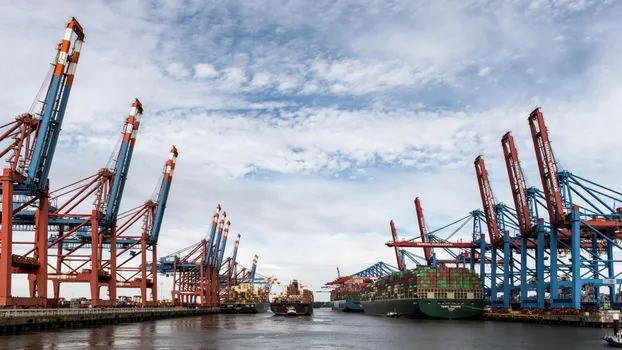
Port benches get salt spray, dock-water splash, diesel fumes, and occasional washdown. IP65 is the minimum for sheltered documentation desks, IP67/IP68 is the right call for open-sided CFS bays and reefer-container adjacent weighing where condensate and brine are routine [S5]. Stainless-steel platforms and indicators are standard for food, pharma, and chemical cargo; galvanised steel is acceptable for dry general-cargo benches, painted steel for indoor-only low-duty stations [S5].
For chemical tank-farm adjacent weighing, ATEX-certified indicators and platforms are mandatory under the European ATEX framework, and equivalent IECEx or NEC Class I/II/Division 1 or 2 ratings govern other jurisdictions. The Midrics ATEX-certified configuration is one of the few industrial bench lines that publishes the certification in-line with the standard product page rather than as a custom build [S5]. Rice Lake's explosion-proof scale family extends this to dedicated hazardous-area indicators and remote displays, useful when the bench must be sited within a defined hazardous zone but readout must be at the safe-side panel [S3].
For general-cargo and container-freight stations, where no flammable atmosphere is normally present, the standard IP-rated stainless or galvanised unit is the cost-effective choice. Specifying ATEX where it is not required adds 20-40% to unit cost and lengthens lead time, with no operational benefit.
Who Should Buy a Bench Scale for Port Use, and Who Should Not
Buy a bench scale for port logistics if the operation runs any of these: a documentation desk weighing small parcels, samples, and airway bills; a CFS quality bench for sample drums and break-bulk pieces under 300 kg; a parts counter for spares, consumables, and ship-chandlery items; a checkweighing station on a reefer or food-cargo line for net-weight verification; or a customs-lab bench for sample weighing within a controlled environment [S2][S4][S7].
Do not buy a bench scale for pallet verification at 500-2,000 kg, for which a platform scale or floor scale with approach ramps is the correct tool; for in-motion truck weighing, which requires a weighbridge; or for any application where the load must be lifted onto the scale, where a crane scale or forklift scale is engineered for that duty cycle [S2][S7]. The 2026 procurement guidance from global-scales.com explicitly flags the bench-vs-floor mismatch on 500 kg pallet loads as the single most common port-procurement error, with three-month lead-time penalties when the wrong unit is ordered [S2].
Comparison: Bench, Platform, and Floor Scales Against Decision Criteria
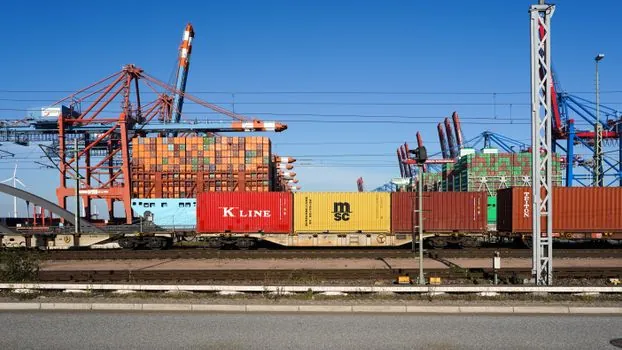
Lining the three categories against the criteria that matter in a port setting: capacity envelope, deck height, typical port use, and approximate relative cost, the choice becomes a routing decision rather than a brand decision. The published MT and Minebea Intec ranges cover 0.6 kg-600 kg for platform configurations and 3 kg-3,000 kg for combined bench/floor lines, with the 3,000 kg end achieved on floor-style decks rather than tabletop units [S1][S2][S5].
Bench scale: 3-300 kg typical (industrial units reach 500 kg), tabletop or low-bench deck 50-150 mm high, used for documentation, sample weighing, and parts counting, lowest unit cost in the family. Heavy-duty bench or low-profile platform: 300-600 kg, deck 30-80 mm with optional ramps, used for pallet-jack-fed CFS verification, mid-range cost. Floor scale: 1,000-3,000 kg, deck at floor level with integrated or bolt-on ramps, used for pallet and drum weighing, highest unit cost, not relocatable frequently [S1][S2][S5].
For a port operation, the rule is straightforward: every weighing station should be specified by the heaviest expected load divided by 0.8 (a 1.25x safety margin), with readability set to 0.1% of that load for trade-grade applications, or 0.01% for QA/QC laboratory work. A 150 kg bench with 5 g readability meets 0.003% resolution, well inside QA-grade, while a 3,000 kg floor scale at 200 g readability sits at 0.007%, appropriate for pallet verification but not for parts counting [S5].
Integration: Indicators, Software, and Yard-Side Data
Port weighing does not end at the local display; weights feed the terminal operating system (TOS), the warehouse management system (WMS), and customs declarations. Bench-scale indicators with serial, Ethernet/IP, PROFINET, Modbus TCP, or OPC UA interfaces (the latter via OEM miOPC-style middleware) can push weight events directly to a yard-management dashboard without manual transcription [S1][S5]. For hazardous-area benches, remote display and barrier-mounted intrinsically-safe interfaces keep the operator away from the classified zone while preserving real-time data flow [S3].
Battery-powered and bench-portable indicators (typical 50-100 hours on a charge, varies by load cell excitation and wireless duty cycle) let the same unit serve a documentation desk in the morning and a customs-lab bench in the afternoon. Wireless communication kits, published by Rice Lake and others, are useful where running cable to a fixed indicator is impractical, but introduce a documented 0.05-0.1% accuracy penalty in some configurations and should be validated against the application tolerance [S3].
Logistics-Specific Failure Modes and Constraints

Three failure modes show up repeatedly in port bench-scale service logs. First, the load-cell corner-loading error: a 30 kg parcel placed at the corner of a 600 mm x 400 mm deck can read 0.3-0.5% off-centre, an error that compounds when a tolerance stack-up pushes the customs declaration outside the legal-for-trade band [S2][S3]. Specifying a deck at least 1.2x the largest parcel footprint eliminates most of this. Second, vibration-induced drift: a bench scale sited on a CFS floor shared with forklift traffic can drift 2-5 g over a shift, fixable with anti-vibration mounts or a separate stand [S3]. Third, condensation under the platform: even IP67 units trap moisture under the deck in a reefer-adjacent bay, and routine quarterly inspection of the load-cell cavity is the standard mitigation [S5].
For a port handling pharmaceutical or high-value electronics cargo, the bench scale also serves as the documentation-of-record station, and OIML R76 or NTEP legal-for-trade certification is non-negotiable. Verified resolution of 2 x 3,000e (the Midrics published value) is the typical European baseline; 10,000d NTEP is the US equivalent [S5]. Buying a non-verified indicator for a legal-for-trade application is a common procurement shortcut that surfaces as a customs audit finding.
Trackable Signals for the Next Procurement Cycle
Three signals are worth monitoring for the next 2026-2027 port-procurement cycle. First, the ATEX/IECEx-certified indicator segment continues to compress, with the same OEM platforms now covering Zone 1/21 and Division 1 from a single part number, simplifying spares holding across mixed-fleet terminals [S5]. Second, wireless and battery-powered bench indicators are crossing the 100-hour runtime threshold, which makes the "one bench, two shifts" deployment model operationally realistic rather than aspirational [S3]. Third, the platform-vs-bench naming overlap in vendor catalogues is being addressed, with at least one major 2026 catalogue restructuring capacity bands into 0.6-600 kg (platform) and 3-3,000 kg (floor) segments, reducing the 500 kg pallet bench-scale procurement error that still costs Eastern Province depots an average three-month replacement cycle [S1][S2].
See also our earlier report, FIBC Bulk Bag Selection for Automotive Parts Logistics: Spec Map.