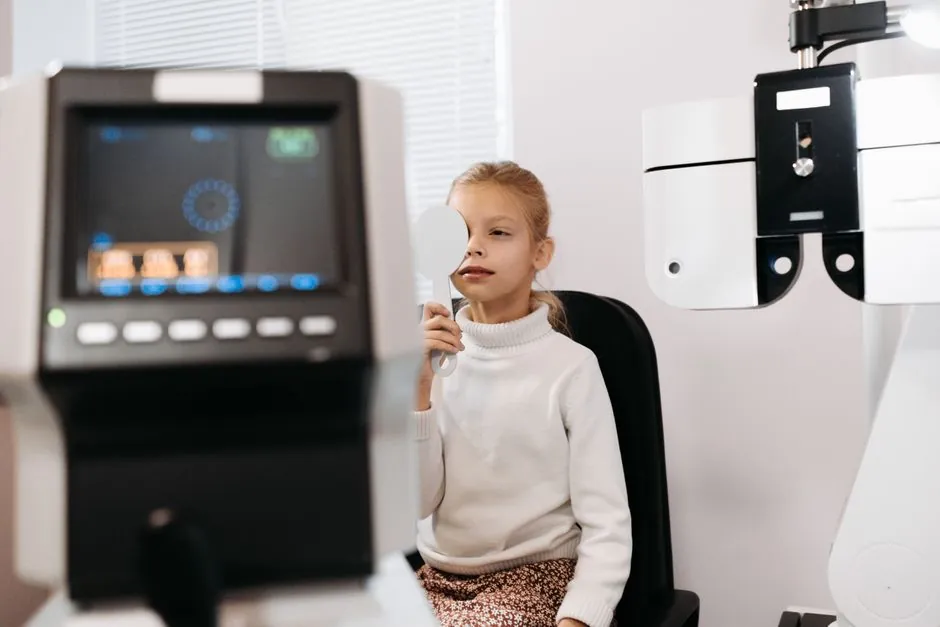
Benchtop optical comparators span screen diameters of roughly 10" to 30" with stage travels of 6"x4" to 10"x6" and load capacities up to 150 lb, mapping a clear size-versus-capacity envelope for shop-floor buyers [S1][S2][S8].
Selection starts with four physical numbers: screen diameter, workstage size, X-Y travel, and Z focus travel; these bound the largest part and feature geometry the unit can hold and project at the chosen lens magnification [S1][S4][S7].
Screen diameter bands and what they actually let you measure
Standard benchtop screen diameters cluster at 10", 14", 16", 20", and 30", with special builds from 6" up to 50" available from one North American supplier [S4]. Starrett's VB400 ships a 16" (400 mm) ground-glass screen with crosslines, while its comparator range as stocked by dealers covers 14" to 30" screen sizes in both manual and automatic travel configurations [S1][S2][S7].
Field of view is governed by a simple ratio: screen diameter divided by lens magnification. A 10X lens on a 14" screen projects a 1.4" field of view, and the same lens on a 30" screen yields a 3.0" field of view, so doubling the screen diameter at constant magnification roughly doubles the part area visible at once [S4]. Common lens steps are 10X, 20X, 25X, 31.25X, 50X, and 100X, with working distance shrinking as magnification rises [S1].
Stage travel, focus travel, and load capacity by class
Starrett's VB400 workstage measures 16" x 9" (400 x 230 mm) with 8" x 4" (200 x 100 mm) of X-Y travel and 2" (50 mm) of focus travel, with a maximum load of 22 lb (10 kg) and an optional larger workstage delivering 10" x 6" (250 x 150 mm) travel [S1][S7]. The Genx 14" horizontal-beam comparator posts 6" and 10" horizontal travel options, 1.75" Z focus travel, 125 lb stage capacity, and 1,000 W surface illumination from twin 1.5" beams [S3].
The c-vision Benchtop video contour projector carries 60 lb on its motorized XY table, while the smaller c-vision Lite benchtop supports 45 lb on a manual XY table with optional motorized motion [S2]. A 2003-era Deltronic DH 216-200LCD system reaches motorized XYZ travel of 6" x 17" x 3" with 10X to 100X magnification and 0.05% optical accuracy, illustrating how floor-class travel stacks against bench-class units [S3].
Manual versus motorized stage travel: who each fits
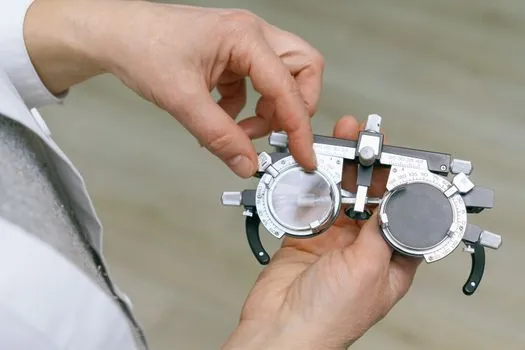
Manual XY travel with fine adjusters and quick-release handles suits low-volume shops, prototype inspection, and applications where overlay charts drive the measurement; motorized CNC travel is the right call when routines repeat, GD&T extraction is needed, or operator fatigue on multi-axis sweeps is a concern [S2][S4]. One practical-engineering forum thread flags this directly: when parts are mounted on shafts a few inches long, a vertical projector or microscope loses usable Z, pushing the buyer back to a horizontal-beam benchtop with adequate focus travel [S5].
For very small features such as 0.020" thick gear teeth with tight root radii, the conversation shifts to a measuring microscope with a cross-hair reticle and a Mitutoyo X-Y DRO, because a budget bench comparator under $3,200 was judged "useless for any sort of accuracy" by a hands-on user in the same thread [S5]. Micro-Vu bench and floor 14" units, the Mitutoyo PH-A 350, and similar 300 lb-class horizontals remain the workhorses when the part simply will not fit a vertical projector [S3][S5].
Comparison checklist across screen size, travel, load, and lens range
The checklist below lines up the main decision criteria a buyer weights when picking a benchtop optical comparator, using figures from current OEM catalogs and dealer listings [S1][S2][S3][S4][S8]:
1) Starrett VB400 (16" / 400 mm screen): 8" x 4" standard travel, 10" x 6" optional travel, 2" focus travel, 22 lb load, 10X-100X lens range, manual motion with Heidenhain 0.5 micron scales, LED profile and surface illumination [S1][S7].
2) Genx 14" horizontal beam comparator: 6" or 10" horizontal travel, 1.75" Z focus, 125 lb load, 10X-62.5X lens range, 1,000 W surface illumination, deep-etched screen with 1 minute vernier [S3].
3) c-vision Benchtop video contour projector: 60 lb load, motorized XY with precision linear scales, telecentric dual-magnification optics over a 3" viewing area, Measure-X Compare overlay software [S2].
4) c-vision Lite benchtop: 45 lb load, manual XY (motorized optional), 2" field of view on tri-magnification or fixed lens, compact footprint for tight benches [S2].
5) J&L Metrology benchtop range: 10", 14", 20", 30" standard screens with custom builds 6" to 120", manual or full CNC XY, and optional Vivic video-camera retrofit in place of projection optics [S4].
Dorsey Metrology summarizes the dividing line: screen sizes 16" and smaller are typically benchtop units rated to 150 lb, while anything larger tends toward floor models with heavier stages and longer travels [S8]. Buyers should also weigh DRO versus overlay workflow, because a digital readout lets you measure features that exceed the visible screen by stepping the stage, while overlay-chart inspection still wants the whole feature on the glass at once [S4].
Spec-derived failure modes and shop-floor constraints
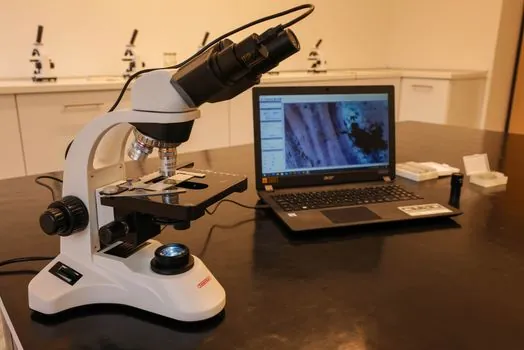
The most common benchtop miss-spec is under-sized X-Y travel: if the largest part dimension exceeds travel, the operator is forced to reclamp, which kills repeatability and any hope of a GD&T routine, so the J&L selection guide explicitly tells buyers to verify workstage size, travel, and weight capacity before screen size [S4]. A second failure mode is mismatched lens magnification, where a 100X lens on a 10" screen only shows 0.1" of part at once, fine for thread roots but useless for overall profile checks that need the full part projected [S1][S4].
Z focus travel is the third quiet constraint: a 2" focus on the VB400 covers most turned and stamped parts, but operators measuring stepped housings, shaft-mounted gears, or tall stampings have historically been pushed toward horizontal-beam units with deeper wells rather than vertical projectors [S1][S5][S7]. For lighting, LED profile plus surface illumination has displaced older tungsten setups on new units, while legacy horizontals like the Genx still use 1,000 W halogen beams that add heat and shop-floor load [S1][S3].
Standards, sourcing signals, and what to verify before purchase
No single ISO or ASME standard governs benchtop optical comparator geometry, so buyers fall back on manufacturer-stated optical accuracy (for example, 0.05% on the Deltronic DH 216-200LCD), scale resolution (0.5 micron on Starrett VB400 Heidenhain scales), and ISO 17025 calibration of the overlay charts and DROs they intend to use [S1][S3]. Two higher-level shop standards do apply: calibration of the glass scales and overlay charts against traceable length standards, and routine verification of edge-detection linearity if the unit runs an automatic video path.
Useful pre-purchase signals: confirm screen diameter and field-of-view math against your largest feature at your working magnification, confirm X-Y travel covers the longest part axis without reclamping, confirm Z focus covers the tallest mounted assembly, and confirm load capacity with a 2x safety factor over the heaviest production part [S1][S4][S8]. For a deeper dive on the floor-versus-bench decision, the Bench vs Floor-Standing Optical Comparator spec map walks through the large-part envelope, while the Belt vs end vs self drive on horizontal balancing machines 2026 spec selection piece covers the matching rotating-component workflow if your shop balances rotors after profile inspection. Track OEM catalog refreshes from Starrett, J&L, Dorsey, and the c-vision line for any 2026 screen-size or travel rev-bumps, and watch the optical glass and lighting equipment categories for upstream LED and projection-lens changes that often precede comparator product updates.