Basket strainers from current manufacturers span DN50 to DN1000 (2" to 48") with pressure ratings from PN6 to ANSI Class 2500, served by European, North American, and Asian suppliers under ASME Section VIII Div. 1, ASME B16.34, and API 598 test regimes [S1][S4][S5].
The supply base includes heavy fabricated shops (Fil-Trek, Armaturenfabrik Schneider) capable of exotic alloy work, mid-volume Chinese OEMs (Lianda, ZONCIC, VERVO) shipping ASME Class 150 to 600 duplex units, and regional distributors in the GCC offering multi-brand basket and Y-strainer packages from Eaton, Fisher, and SVR Global [S1][S2][S3][S4][S5][S6].
Manufacturer Tier and Fabrication Capability
Fil-Trek (Canada) builds custom fabricated basket strainers in sizes from 1" to 48" and larger, with ratings up to ANSI Class 2500, in carbon steel, 304/316 stainless, duplex, super duplex, Hastelloy, Inconel, and titanium, and offers both ASME Section VIII Div. 1 "U"/"UM" code-stamped and non-code designs [S1].
Armaturenfabrik Schneider (Germany) markets its welded-design SKF basket strainer family in DN50 to DN1000 with PN6 to PN40 ratings, plus a full range of conversions and special solutions for process water, chemical, and power duties [S4]. Lianda Filtertech (China) produces simplex, duplex, stainless, and custom configurations in its own factory with documented dimensional inspection on every unit [S2].
Mid-tier Chinese suppliers VERVO and ZONCIC ship flanged basket and duplex units to ASME Class 150/300/600 in WCB, CF8, CF8M, A105, F304, F316, and alloy steel bodies, with SS304/SS316 perforated or mesh-lined baskets and a typical 2" to 24" size envelope [S3][S6]. GCC Valves aggregates this capability regionally, supplying ASTM A216 WCB, A351 CF8/CF8M, A536 ductile iron, and A352 LCB/LCC units with Saudi Aramco, SABIC, KOC, KNPC, ADNOC, SWCC, NWC, and BAPCO Energies approval lists [S5].
Body Material and Metallurgy Options
Standard bodies available across the manufacturer set include ASTM A216 WCB carbon steel, A351 CF8/CF8M stainless, and A536 ductile iron for general service, with A352 LCB/LCC specified for low-temperature carbon service [S5].
For corrosive and high-temperature process lines, fabricators offer 304/316 stainless, duplex, super duplex, Hastelloy, Inconel, and titanium [S1]. Basket elements (the removable filter media) are predominantly SS304, SS316, or SS316L, in either perforated plate or wire mesh form, and are specified separately from the pressure-containing body [S3][S5].
Fil-Trek pairs ASME U-stamp fabrication with Hastelloy and Inconel weld overlays for hydroprocessing and offshore produced-water service, and uses reinforced support cages behind fine mesh to prevent basket collapse under differential pressure [S1][S5]. Material traceability to EN 10204 3.1/3.2 is offered by GCC-supplied brands for downstream QA acceptance [S5].
Pressure Class, Size Range, and End Connections
Size envelopes cluster around three tiers: compact DN50 to DN300 (2" to 12") for chemical skid and instrument protection; standard DN50 to DN600 (2" to 24") for process headers; and large-bore DN50 to DN1000 (2" to 48") for utility water, cooling, and pipeline commissioning [S1][S3][S4][S5].
Pressure ratings split between PN6/PN16/PN25/PN40 European fabricated lines and ASME Class 150/300/600/900 flanged lines, with the upper end reaching ANSI Class 2500 on custom Fil-Trek units [S1][S4][S5]. End connections include RF and RTJ flanges to ASME B16.5, buttweld ends to ASME B16.25, threaded NPT, and socket weld, with quick-opening clamp and swing-bolt covers as standard maintenance options [S1][S5].
Fil-Trek separates its catalogue by geometry: 90 Series inline, 91 Series offset, 92 Series same-side, 93 Series duplex, 94/95 Series Y-type, 96 Series T-type, and 97 Series temporary startup units, all available in code or non-code formats [S1]. The 96 Series T-type targets large-bore cooling-water and firewater mains, while 97 Series cones are sacrificial strainers fitted during pipeline flushing and removed before mechanical commissioning [S1].
Simplex, Duplex, and Continuous-Service Selection
A simplex basket strainer is a single-chamber filter for batch operations or low-flow systems where line shutdown for cleaning is acceptable, while a basket strainer in duplex configuration holds two parallel chambers and a flow-switching handle or valve so one basket can be opened for cleaning while the other remains in service, eliminating process interruption [S1][S3].
Duplex units are specified for oil and gas, petrochemical, power generation, and water treatment lines where stoppage would trip a pump, starve a heat exchanger, or interrupt continuous catalyst circulation, and they protect downstream ball valves, gate valves, control valves, flow meters, and pumps from rust, weld slag, scale, and pipeline debris [S3].
ZONCIC duplex strainers ship from 2" to 24" (or custom larger), in Class 150/300/600, with WCB, CF8, CF8M, A105, F304, F316, or alloy steel bodies, and SS304/SS316 baskets with perforated or mesh openings tuned to the service [S3]. Selection between simplex and duplex is driven by three criteria: cost (simplex is cheaper per unit but charges downtime), continuous-service requirement (duplex mandatory for non-stop lines), and dirt loading (duplex has larger effective area and longer change interval) [S1][S3].
Filtration Media, Mesh Grades, and Maintenance Features
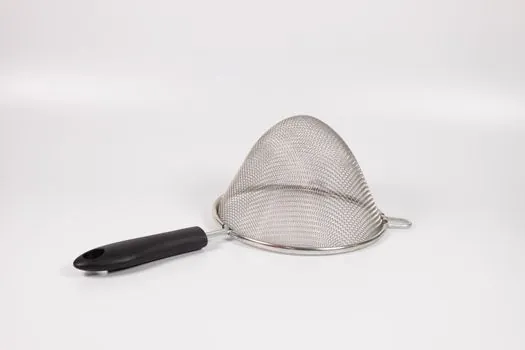
Perforated plate and woven wire mesh are the two element styles; perforated plate is used for coarse debris retention above 500 microns, and wire mesh extends retention down to about 25 microns where differential pressure allows [S1][S5].
Fil-Trek stocks perforated or wire-mesh screens from 1/32" to 1/2" opening (roughly 0.8 mm to 12.7 mm) and adds quick-opening closures, blow-down connections, and differential pressure monitoring taps for predictive maintenance [S1]. Reinforced support cages behind fine mesh prevent element collapse when the basket loads with debris and the differential pressure rises [S5].
Gasket and seal options are PTFE for chemical compatibility, flexible graphite for high temperature, and spiral-wound SS316 with graphite fill for ASME B16.20 class services, allowing the same body platform to be re-rated by changing the cover gasket and bolting [S5]. Hydrostatic and seat testing to API 598 is the default QC regime for ASME-stamped units, with EN 10204 3.1/3.2 mill certificates for material traceability on owner-spec projects [S5].
Regional Approvals, Lead Times, and Sourcing Routes
Buyers in the Middle East typically procure through regional stockists and EPC packages approved by Saudi Aramco, SABIC, KOC, KNPC, ADNOC, SWCC, NWC, and BAPCO Energies, with Eaton, Fisher, SVR Global, Flowork, and Middle East Piping as the common basket-strainer brands in that supply chain [S5].
European and North American fabricators compete on lead time for custom engineered units in exotic alloys, with Fil-Trek emphasising in-house engineering and competitive lead times for ASME code work, and Schneider covering the DIN/PN envelope through its German plant [S1][S4]. Chinese OEMs (Lianda, ZONCIC, VERVO) are competitive on standard carbon and 316 stainless simplex and duplex units in the 2" to 24" Class 150 to 600 band, which dominates chemical, water, and HVAC bids [S2][S3][S6].
For a buyer comparing typical basket-strainer suppliers in 2026, the decision matrix reduces to four criteria: pressure class (PN6 to PN40 vs ASME 150 to 2500), body material (carbon steel vs 316 stainless vs duplex/exotic), configuration (simplex vs duplex continuous-service), and regional approval list (Aramco/SABIC/ADNOC vs ASME code-stamp vs EN 10204 traceability) [S1][S3][S4][S5]. Buyers chasing fastest delivery on standard ratings buy Chinese OEM simplex/duplex units; buyers needing exotic alloy ASME code work buy North American fabricators; buyers in the GCC route through approved regional distributors carrying the named brand packages [S1][S2][S3][S5][S6]. For context on adjacent filtration hardware, the Y-strainer vs precision filter spec map and the Y-strainer price and cost guide cover the smaller-bore end of the same supply chain.