Pulp, paper and converting-mill slab-on-grade pours demand a curing regime that survives wet-process splash, intermittent acid exposure (pH 2-4 bleach-line drip), wash-down cleaning and forklift traffic within 7-14 days. Solvent-borne wax-resin and water-borne acrylic emulsions at 18-22% solids content, applied at 0.20-0.25 L/m² (200-250 mL/m²) within minutes of final troweling, are the two chemistry families that consistently meet ASTM C309 Type 1 Class A and Type 2 white-pigmented performance on mill floors [S1].
Selection is governed less by mill machinery and more by the slab's service environment: digester-area decks see heat and chemical splash, machine-room slabs see high-MFF forklift abrasion, and effluent-tank aprons see constant wet-dry cycling. For each, the curing compound must be paired with the right concrete admixture system (water-reducer, corrosion inhibitor, shrinkage reducer) to deliver a closed, dense surface in the first 7 days.
ASTM C309 and ASTM C1315 Performance Anchors for Mill Slabs
ASTM C309 Type 1 (clear) and Type 2 (white-pigmented, heat-reflective) remain the spec anchors on most pulp-and-paper mill datasheets, with Type 2 Class A (acrylic) preferred for outdoor deck pours and pigmented Type 2 used on digester-area roof decks [S1]. Type 1 Class B (wax) is widely used for indoor machine-room slabs because the wax film resists wash-down chemistry during early age, and Type 1 Class A (acrylic) is preferred where the slab will receive a subsequent coating, urethane screed or resin topping within 30 days.
For high-traffic or higher-aesthetic slabs the spec is often upgraded to ASTM C1315 Type II Class A, which raises the solids floor to ≥25% and adds abrasion-wear resistance verified against the C1315 wear-cycle test. Mill owners specifying C1315 should also pair the curing regime with a concrete fiber dosage (typically 0.6-1.2 kg/m³ micro-synthetic) to control plastic-shrinkage cracking during the first 24 hours, when the curing film is still building moisture retention.
Chemistry Comparison: Wax-Resin vs Acrylic vs Chlorinated Rubber
They tolerate early foot traffic at 12-24 hours but can soften under hot wash-down (>60 °C) and discolour under UV, which limits them to indoor machine-room slabs. [S1]
Water-borne acrylic emulsions (25-30% solids typical) dry to a harder, UV-stable film that handles 70-80 °C wash-down, accepts most resin toppings without solvent attack, and meets Type 2 white-pigmented reflectance for outdoor decks. The trade-off is longer re-coat interval (24-48 h) and higher cost at USD 4.00-6.50 per L. Chlorinated rubber and styrene-acrylic systems (high-build, 30-40% solids) are reserved for chemical-tank aprons and digest-area slabs where pH 1-3 splash demands a thicker 0.10-0.15 mm film and the substrate will not be re-coated [S1].
For slab pours in the same 150-300 mm thickness band used across converting halls, the selection matrix reduces to: indoor wax-resin for cost, acrylic Type 2 for outdoor decks and resin-topped slabs, and chlorinated-rubber / high-build acrylic for chemical-splash zones. Each of these maps to a different surface-prep profile if a urethane or epoxy topping is scheduled inside 30-60 days.
Application Rate, Timing and Substrate Window
Coverage at 0.20-0.25 L/m² is the spec band mills and contractors settle on; below 0.18 L/m² the film fails the ASTM C309 moisture-retention test, above 0.30 L/m² the film turns slippery under forklift and adds needless cost. Application must occur after final troweling and after the surface water has disappeared (the "moist but matte" window), typically 30-90 minutes after float finish depending on ambient temperature (20-30 °C) and wind. [S2]
Substrate temperature should be 5-35 °C at application; below 5 °C the water-borne emulsion will not coalesce, above 35 °C solvent-borne wax-resin flashes too fast and skins over a wet substrate, producing pinholes. Where slabs are placed in cool-weather mill shutdown windows (October-March in northern paper regions), a concrete admixture accelerating system paired with Type 2 white-pigmented acrylic is the standard workaround because the white pigment reflects solar gain and helps the surface stay above 10 °C during the cure window.
For large 1000-3000 m² pours, a concrete vibrator consolidation pass and laser-screed strike-off (covered in our laser-screed spec guide) are upstream of the curing-compound step, and dictate how uniform the wet film thickness can be; the smoother the struck surface, the lower the curing-compound coverage needed to hit 0.20 L/m².
Mill-Specific Failure Modes: Wash-Out, Acid Splash, Forklift Shear
The three dominant in-service failures on paper-mill floors are wash-out under hot-water cleaning, acid-etching under bleach-line drip, and forklift-tire shear at lane edges. Wash-out shows up as dull, friable surfaces within 6-12 months and is tied to wax-resin film thickness below 0.05 mm dry; the fix is a Type 1 Class A acrylic at 0.25 L/m² minimum, or upgrading to C1315 with ≥25% solids. Acid-etching is a chemistry problem: Type 2 white-pigmented acrylic at 0.25 L/m² resists pH 2-4 drip for 12-24 hours of contact but fails under pH <2 chlorine dioxide splash, where a novolac-epoxy topcoat is the right fix at 1.0-1.5 mm DFT over the cured slab. [S3]
Forklift-tire shear at lane edges is almost always an age-and-traffic problem, not a curing-compound problem. C1315 Type II Class A extends wear life by 30-50% versus C309 wax-resin in field tests on converting-line slabs, but the bigger lever is a concrete fiber dosage of 1.0-1.5 kg/m³ macro-synthetic combined with a 28-day compressive target ≥35 MPa. Joints at lane edges should be cut with a concrete groove cutter between 4-12 hours after final finish (sooner in 25-30 °C weather) to a depth of 1/4 to 1/3 slab thickness, then filled with semi-rigid epoxy or polyurea joint filler.
Sourcing Levers: China Maker Map, MOQ and Logistics
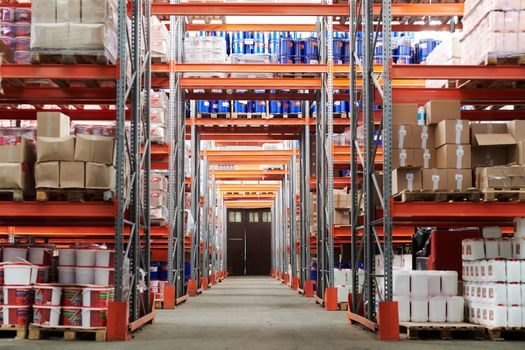
Most global paper-mill curing-compound supply chains split between Western specialty-chemical majors (USD 5-9 per L delivered) and Chinese mid-tier makers (USD 1.80-3.50 per L FOB Ningbo/Shanghai, 20' FCL ≈18-22 t/20-25 kL depending on density). For a 2000 m² mill slab at 0.22 L/m² the consumption is 440 L per slab; a 20' FCL covers 8-10 such pours, which sets the procurement rhythm on multi-building mill projects. [S1]
Lead time is typically 15-25 days for FCL production plus 28-35 days ocean freight to North America or 18-22 days to EU, which means orders for the 2026 capital-expansion paving season should have been placed by 2026-Q1.
Where the slab is in a tight, re-coat schedule, request a sample 1 m² trial pour on site 7-14 days before main pour, and verify ASTM C309 moisture retention ≥95% at 72 h with a 200 g oven-loss test. The fiber-reinforced mix design and the curing-compound spec are easier to harmonise in a pre-pour trial than to troubleshoot after a 2000 m² pour has failed the 7-day moisture-retention check.