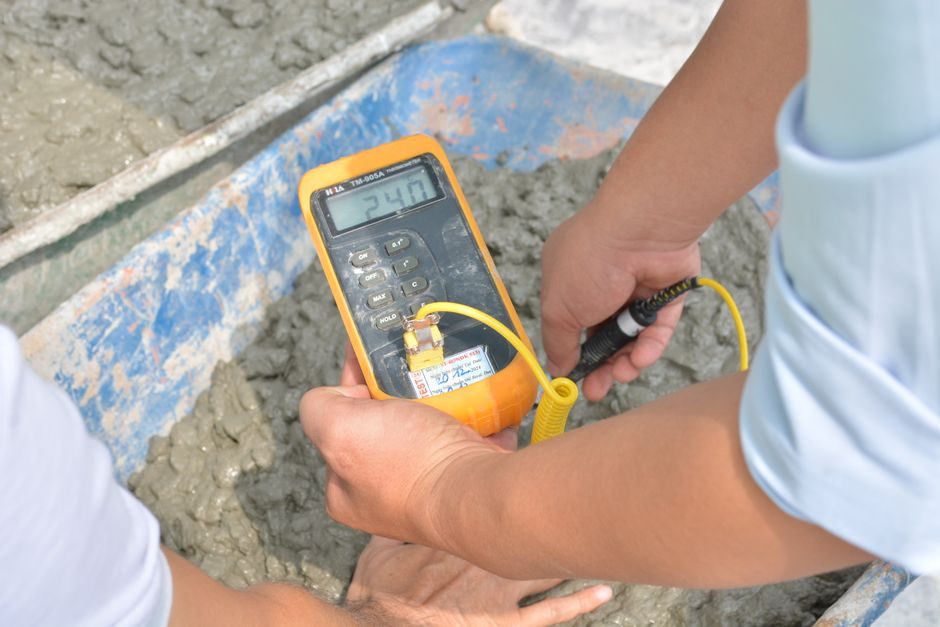
Concrete fiber selection is governed by four hard numbers — fiber material, length (mm), aspect ratio (length/diameter), and dosage (kg/m³ or % by volume) — and each combination corresponds to a discrete structural role from plastic-shrinkage control to load-bearing slab replacement of rebar.
Material Family Comparison: Steel, Synthetic, Glass
CFS 100-2 steel fiber is suited to slab-on-grade applications, where it allows extended joints without visible cracks and minimal curling compared to re-bar or mesh reinforcement [S4].
Synthetic macrofibers (polypropylene, polyolefin blend, or PVA) carry equivalent dosage windows of 3-10 kg/m³ and aspect ratios 50-100, meeting EN 14889-2 class II structural macrofiber definitions; SikaFiber and FibeRego ranges span 6-54 mm cut lengths for shotcrete, precast, and slab-on-ground duty [S1][S2].
Alkali-resistant (AR) glass fibers, dosed at 5-15 kg/m³ with 12-25 mm length, are the standard reinforcement for thin-section GFRC architectural panels under ACI 544 and EN 15422; their resistance to the high-alkalinity pore solution is provided by ≥16% ZrO₂ content in the glass formulation [S2].
Spec Standards That Bind the Numbers
ASTM C1116/C1116M Type I (steel), Type II (glass), Type III (synthetic), and Type IV (natural) are the master classification used in nearly every North American project spec, and they cascade into Type-specific sub-standards: ASTM A820 for steel fiber geometry, ASTM D7508 for polyolefin macrofibers, and EN 14889-1/-2 for the European equivalent [S1][S2].
Dosage and performance verification sit on top: ASTM C1609/C1609M residual strength (first-peak and residual at L/600) for fiber-reinforced concrete beams, and EN 14488-3 for fiber-reinforced shotcrete residual flexural strength at 1, 2, 4, and 6 mm deflection points [S2].
Selection Criteria by Structural Role

Plastic-shrinkage crack control in slabs and pavements maps to monofilament or fibrillated polypropylene microfibers, 6-20 mm length, 0.6-1.2 kg/m³ dosage per ACI 302.1R; these are non-structural and do not replace temperature-shrinkage reinforcement. [S1]
Slab-on-grade and joint replacement of light mesh maps to hooked-end steel fibers 35-60 mm length, 0.5-1.0 mm diameter, dosed 20-40 kg/m³, with CFS 100-2 cited for extended joint spacing and reduced curling versus WWF; composite steel deck applications escalate to CFS 150-5-class crimped 50 mm fibers at 30-50 kg/m³ [S4].
Shotcrete and tunnel linings — both wet-mix and dry-mix — use steel 25-35 mm × 0.55 mm at 30-60 kg/m³ (EN 14488-3) or synthetic macros 6-12 kg/m³ for corrosive or non-magnetic environments; the dry-mix mortar base mix must accommodate fiber addition without segregation.
Marine and aggressive chemical exposure pushes the choice toward stainless steel (1.4301/1.4401) or polymer macros over carbon-steel or AR glass; for subsea durability the comparison of fiber chemistries against chloride diffusion is detailed in the marine selection piece Best Concrete Fiber for Marine: Spec-Driven Selection Across Fiber Types.
Mechanical Performance and Dosage Trade-offs
Residual flexural strength fR1 (or R1,3) rises roughly linearly with steel-fiber volume fraction in the 0.25-1.0% range, then plateaus as fiber packing and balling degrade dispersion; published FRC research on steel-fiber-reinforced geopolymer concrete reports fR1 of 4-7 MPa at 0.5-1.0% volume fraction with 35-50 mm hooked-end fibers [S3].
Synthetic macros deliver lower absolute residual strength than steel at the same volume fraction — typically 60-80% of an equivalent steel dosage — but eliminate corrosion risk and magnetic permeability, which is decisive for hospital MRI base slabs, transformer pads, and rail track concrete [S1][S2].
Balling and pumping penalties kick in above ~1.0% volume fraction for steel and above ~12 kg/m³ for macros in standard mixers; superplasticizer demand and aggregate top-size selection (max 20 mm for 50 mm steel fibers) must be coordinated with the concrete admixture package and the concrete vibrator consolidation plan to avoid clumping [S1].
Compatibility with Concrete Mix Design and Plant Equipment
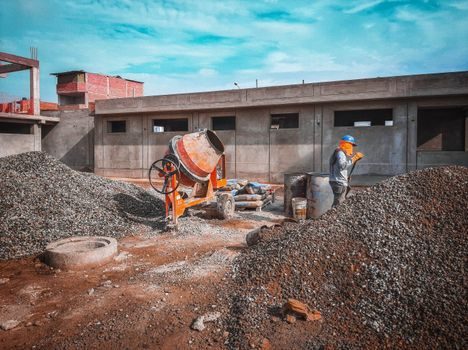
Mixers and batching sequence matter: fibers must be added after the sand/coarse aggregate is wetted but before final water adjustment, and the concrete batching plant conveyor or weigh-hopper must be sized for the cumulative mass gain of 20-50 kg/m³ fiber dose per cubic meter — a 100 m³ pour at 35 kg/m³ is 3.5 t of fiber to meter in. [S2]
Finishability and pumpability are the hidden costs: longer steel fibers (60 mm) need a pump capable of 70-100 mm line diameter, and slab flatness tolerances tighten because fibers resist trowel drag, so F-number FF/FL targets should be re-specified for FRC slabs to avoid burnished trowel marks [S1][S4].
For projects where fiber choice is paired with specialty cement (sulphate-resistant, calcium sulfoaluminate, or geopolymer binder) the cement-side spec and the fiber-side spec must be reviewed together; the framework in How to Choose Special Cement: Spec-First Selection Across Application Classes applies unchanged, and macro-PP or steel dosages typically rise 10-20% when the binder is geopolymer versus OPC [S3].
Who It Is For and Who It Is Not For
Fiber reinforcement pays off in slab-on-grade, shotcrete, precast, composite steel deck, and crack-control scenarios where rebar placement labor is the dominant cost, and it is the right call when the joint spacing, slab thickness, and load case are explicitly designed around ASTM C1609 or EN 14488-3 residual-strength numbers. [S3]
Fiber is the wrong call for heavily congested rebar zones, members requiring bar-development-length or splice design to ACI 318, and thin elements (<50 mm) where fibers have no room to mobilize pull-out strength; in these cases fibers are an additive for crack control only, not a structural substitute.
Sourcing and Verification Checklist

Mill cert and traceability — request a mill test report per ASTM A820 for steel, a manufacturer DoP under EN 14889-1/-2 for European projects, and AR-glass certification of ZrO₂ content for GFRC [S1][S2].
Dosage verification — track the concrete batching plant scale readings per truck, and cast beam specimens per ASTM C1609 on the first three pours plus every 1000 m³ for residual-strength acceptance.
Watch the 2026 supply window: synthetic macrofiber lead times have stretched to 8-12 weeks for high-modulus polyolefin products (SikaFiber, FibeRego ranges), and steel-fiber 1.0 mm diameter is the long-pole item where mills like Concrete Fiber Solutions and FibeRego are quoting 6-10 week mill-to-site [S1][S4].