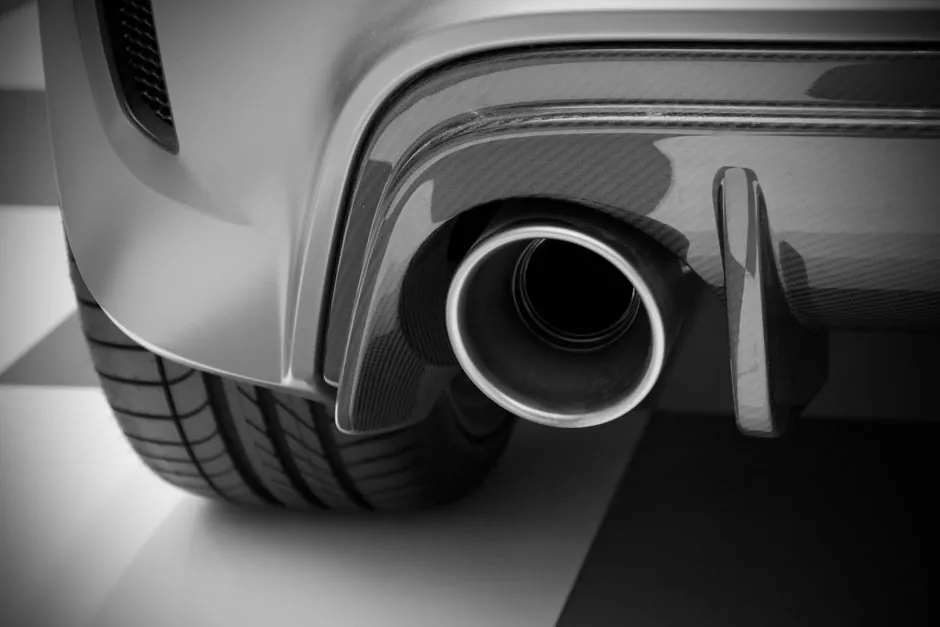
Under-hood polymer tubing in modern vehicles routinely spans -40 to 125 C service windows, with PA12 multilayer lines dominating fuel and vapor service and EPDM or thermoplastic-elastomer hoses covering pressurized coolant and charge-air circuits [S3][S5].
For a process engineer specifying tubing for a passenger car, light truck, or two-wheeler, four material families cover the bulk of applications: PA12 (and PA6/PA66 multilayer), cross-linked polyethylene (PEX/PE-RT), EPDM rubber, and thermoplastic elastomers such as TPE-E and TPV, with fluoropolymers reserved for the most aggressive media or heat [S3][S5]. Generic garden PVC, the kind indexed in DHgate plastic-pipe-adapter listings at US $0.31-0.93 per fitting [S1], is not rated for fuel or under-hood heat and should be treated as a non-substitute for these duty classes.
Why Generic PVC and PE Fittings Do Not Qualify
DHgate catalogs PVC curved pipe adapters and PE quick-connector splitters priced US $13.94-31.93 for garden and farm irrigation duty, with no published pressure or temperature rating beyond a "durable" marketing claim [S1][S2]. PVC's heat-deflection point sits near 65-70 C, well below the 100-125 C zone of an engine bay, and its chemical resistance to gasoline, diesel, and modern bio-additive fuels is poor, so it fails both thermal and media gates. Standard PE and PVC pipe lines cataloged in DHgate's "Pipe Fittings Plastic" feed, 20-24 mm quick connectors and Y-splitter valves, are dimensionally convenient for low-pressure water but lack any SAE J844 or ISO 7628 pressure class on the public product page [S2]. For any automotive line carrying fuel, brake fluid, oil vapor, or pressurized coolant, fall back to rated polymer tubing from a hose or tube maker that publishes burst, impulse, and chemical resistance data.
Fuel and Vapor Lines: PA12, PA6 Multilayer, and Coextruded Barrier Tubing
PA12 (polyamide 12) is the default for through-tank and engine-bay fuel lines because of its low moisture regain, good cold impact at -40 C, and resistance to gasoline, diesel, E10-E85 ethanol blends, and biodiesel. SAE J844 and ISO 7628 cover PA tubing for automotive air-brake and general fluid service, and PA12 multilayer constructions typically add an EVOH or conductive inner layer to limit hydrocarbon permeation to under 2 g/m2 per day at 40 C, the threshold most OEMs write into their fuel-line specs. The engineering-plastics overview from Made-in-China lists PA and PA12-class compounds in the broader plastic-pipe and tube sourcing catalog with OEM customization on diameter and wall [S3], which is the supply path most Tier 1 fuel-line shops use.
For higher temperature fuel-rig service, PA6 and PA66 are sometimes used, but their higher moisture absorption shifts the dimensions in humid storage; PA66's melting point near 255 C sounds attractive yet its hot-wet tensile drop makes it a second choice behind PA12 for long, fuel-carrying runs. Where permeation is critical, fluoropolymer inner liners (PVDF, ETFE) paired with a PA12 jacket give the best combined barrier and mechanical package, at a material cost roughly 4-6x that of monolayer PA12 [S5].
Coolant, Heater, and Battery-Cooling Lines
Engine coolant and heater hose are dominated by EPDM rubber, with a steady-state rating of -40 to 125 C and short peaks to 150 C, and by reinforced silicone where under-bonnet temperatures climb higher. For electric-vehicle battery cooling, two polymer choices dominate: PEX/PE-RT (raised-temperature polyethylene) for glycol loops up to about 95 C, and PA12 or PPA (polyphthalamide) for higher-temperature direct-cooling battery packs targeting 100-110 C loop exit. Compared to PA6, PEX is cleaner, lower-cost per meter, and tolerant of glycol-water chemistry, but its pressure rating at 100 C is materially lower than at room temperature, so wall thickness must be calculated on the hot-side condition, not the cold-side. [S3]
For turbocharged charge air, a polyester thermoplastic-elastomer (TPE-E or TPV) reinforced with aramid or polyester braid handles 130-150 C continuous and 1.5-2.5 bar surge, replacing the older all-rubber solution in many 1.5-2.0 L turbo engines. The wider steel-plastic-composite pipe category, a metal core with a polymer inner and outer skin, overlaps these duty classes in the 80-110 C range and is commonly used for cabin-heater lines and air-conditioning refrigerant manifolds where burst strength above 30 bar matters.
Vacuum, Air, and Nylon Brake Tubing
Vacuum and low-pressure air lines (boost reference, crankcase ventilation, brake booster) use PA6, PA66, or PA12 single-wall tubing per SAE J844, commonly in 4-12 mm OD with rated burst of 14-28 bar depending on diameter. Coiled PA12 is now standard for compressed-air and air-brake lines on commercial vehicles because it remains flexible to -40 C and resists the road-salt corrosion that quickly rusts steel brake-pipe assemblies. A reliable working-pressure rule is to size the line at 4x the static working pressure for the impulse cycle, 1 million cycles minimum, which is the typical OEM impulse gate. [S3]
Selection Criteria, Compared
For an automotive line design, four decision criteria narrow the material: continuous temperature, peak temperature, media compatibility, and permeation or barrier requirement. PA12 leads on the combined cold-flex, fuel-resistance, and low-permeation axis, EPDM dominates high-temperature coolant and steam at the lowest cost, PEX/PE-RT is the right answer for warm-side EV coolant loops, and PA6/PA66 multilayer is the budget pick for air and vapor service where -40 C flexibility and modest pressure are the only constraints [S3][S5].
On cost per meter, the order from cheapest to most expensive typically runs PE/PEX, then PA6/PA66 monolayer, then PA12 monolayer, then PA12 with EVOH barrier, then fluoropolymer-lined assemblies, with EPDM rubber hoses priced close to PA6 for the same bore. A useful cross-check: if the line touches fuel, choose PA12 or barrier-lined PA; if it touches glycol above 110 C, choose EPDM or silicone; if it touches air or vacuum below 6 bar, PA6 monolayer is normally sufficient; if the application is a refrigerant line above 25 bar, step up to a plastic pipe composite or a steel-reinforced polymer hose and verify against the refrigerant maker's compatibility table.
Limitations, Failure Modes, and Sourcing Reality
Polymer tubing's main failure modes in service are permeation (fuel lines losing mass through the wall), oxidative aging (EPDM and TPE-E losing elongation after 5-7 years at sustained 125-135 C), and cold-impact cracking (PA6 below -30 C if not properly plasticized). For PE pipe and engineering plastic lines, do not confuse automotive-rated compounds with commodity grades, because additive package, moisture conditioning, and lot traceability determine whether a PA12 batch passes a Tier 1 PPAP. A practical sourcing step is to require a sample certificate showing burst, impulse, and chemical-resistance data per SAE J30 (fuel hose), SAE J844 (air-brake tubing), or ISO 7628 (road-vehicle thermoplastic tubing), then confirm lot-level traceability on every shipment [S3].
For a working engineer closing out a sourcing decision, the actionable next steps are: pull the per-line fluid, peak temperature, peak pressure, and permeation limit, then map each to a duty class (fuel, coolant, air, refrigerant), and require the supplier to publish a 4x-burst safety factor and a 1 million-cycle impulse rating on the part drawing. Two trackable signals to monitor in the next 12 months are the EV-battery coolant loop trend (whether 100-110 C becomes the new PEX ceiling, pushing more packs to PA12 or PPA), and the rise of bio-based PA11 and PA12 grades as ethanol-content fuels climb past E20 in more markets.
This topic is covered further in Seamless Steel Pipe Suppliers 2026: Tianjin, Wuxi, Shandong Capacity and Price Map.