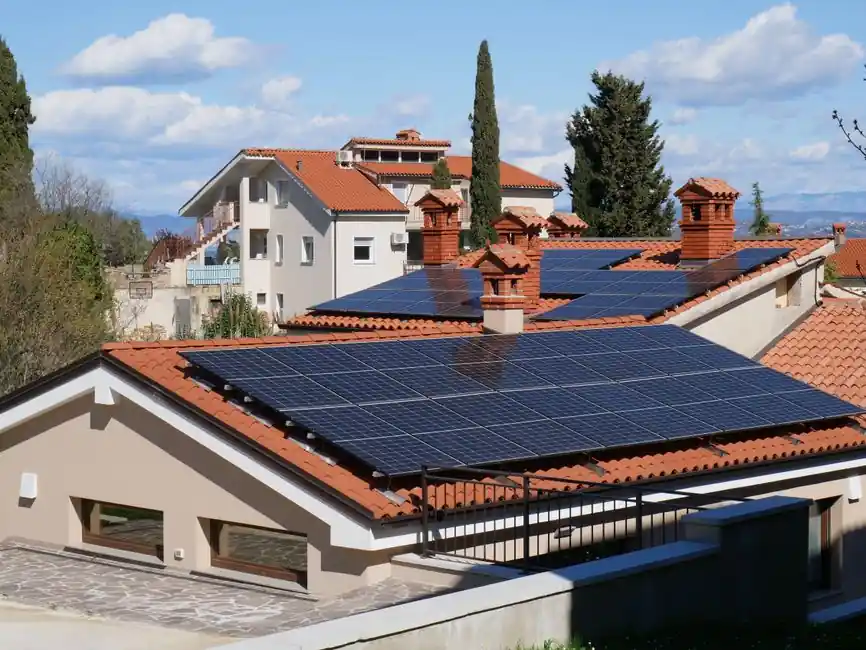
White EPDM reflects 70–80% of solar radiation, and on a 95°F Gulf Coast summer day a black EPDM roof surface can exceed 170°F [S3].
Both colors retain EPDM roofing characteristics, but black is favored for heating-dominated climates and snow retention, while white serves cooling-dominated buildings with solar PV, cool-roof, or lower roof-temperature objectives [S1][S2].
Reflectance and thermal performance
White EPDM reflects 70–80% of incident solar radiation, compared with 90–95% absorption by standard black EPDM [S3]. The color choice therefore changes the roof's solar heat gain, while insulation remains the primary energy-efficiency control in many ASHRAE Climate Zones 4–8 [S2].
On a 95°F Gulf Coast summer day, a black EPDM roof surface can exceed 170°F [S3]. Standard black EPDM absorbs 90–95% of solar radiation, converting sunlight into heat that transfers into the building below [S3].
Specify the actual product's aged reflectance and emittance rather than assuming that the word “white” establishes compliance.
Climate-based selection criteria
White EPDM is the stronger choice in cooling-dominated climates because its 0.70–0.80 initial solar reflectance materially limits roof heat gain [S3]. Black EPDM performs well in heating-dominated climates, where its high absorption can assist winter heat gain, and its dark surface reduces snow load and dries more quickly than white EPDM [S1][S7].
EPDM is designed to remain flexible through significant seasonal temperature changes and associated expansion and contraction [S5]. These properties make black EPDM defensible in northern climates where snow, ice, freeze-thaw exposure, and heating demand matter more than summer roof-temperature reduction.
Use white EPDM where roof cooling load dominates, PV mounting benefits from a cooler surface, or the project requires a documented reflective-roof strategy. Use black EPDM where heating balance, snow retention, fast drying, or established black-EPDM installation practice outweigh the cooling benefit of a reflective surface [S1][S2].
Black, white EPDM, and alternative membranes
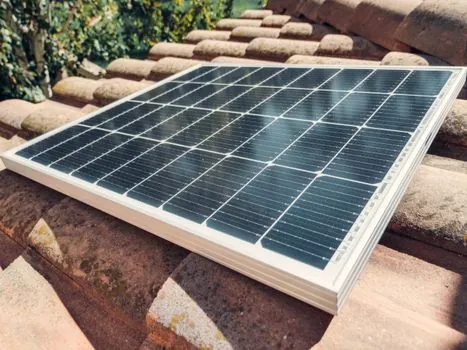
White EPDM provides an initial solar reflectance of 0.70–0.80 [S3].
Black EPDM is not the best answer for a cooling-dominated building seeking the lowest roof temperature, and white EPDM is not the automatic answer for every warm climate because heating penalties, moisture behavior, and reflectance aging must be evaluated [S2]. A white membrane also requires explicit confirmation of product-level performance; generic EPDM color labels do not establish an aged-rating target.
Cost, payback, and lifecycle economics
The premium covers the additional manufacturing operation for the white surface, which can be a factory-applied coating or a co-extruded top layer bonded to the black rubber base [S3].
Lifecycle evaluation should not stop at utility savings. The EPDM Roofing Association gives an average EPDM service life of approximately 38 years and emphasizes durability, repairability, embodied carbon, total cost of ownership, solar compatibility, and vegetative-roof compatibility [S2]. Black and white membranes share the principal EPDM characteristics of flexibility, weathering resistance, and durability, so color is one variable within the complete assembly rather than the entire specification [S4].
Installation assembly and performance constraints

The selected color does not remove the need to coordinate membrane thickness, insulation, drainage, edge details, penetrations, attachment, and solar-module loading.
Reflectivity can diminish after installation, so procurement documents should identify both initial and aged solar reflectance, thermal emittance, and the product formulation. Black EPDM's carbon-black surface contributes to UV and heat resistance, while white EPDM obtains its reflective behavior from a distinct white layer or coating rather than from a different base rubber chemistry [S3][S5].
Cool-roof selection can also create a tradeoff in cold regions. Research reviewed by the EPDM Roofing Association identifies increased heating demand and moisture risks as possible disadvantages of highly reflective roofs, and reports that insulation rather than roof color delivered the strongest and most consistent energy benefit in ASHRAE Climate Zone 4 and north [S2]. Roof moisture design, winter heat loss, snow behavior, and aged reflectance must therefore be modeled together.
Specification and procurement checklist
Specify color from a project-specific thermal model rather than from a national generic preference, and require the membrane manufacturer to document initial and aged reflectance plus emittance for the exact grade offered [S2][S3]. Include the roof insulation R-value, HVAC efficiency, roof-to-wall ratio, climate zone, utility rates, and expected holding period in the energy comparison.
For a cooling-dominated warehouse, compare white EPDM against black EPDM and white TPO on first cost, installed assembly, aged reflectance, peak roof temperature, repair method, attachment system, and utility impact. For a heating-dominated or snow-prone building, compare black EPDM against white EPDM using heating load, snow retention, drying behavior, membrane flexibility, and cold-region moisture risk [S1][S5].
Request samples or the manufacturer's technical data sheet, verify that the stated surface configuration matches the proposed black or white EPDM system, and record warranty coverage for membrane, coatings, seams, flashings, and accessories. The material family is covered in the EPDM rubber reference, while installers should also distinguish membrane properties from the insulation and attachment design.
For a documented cool-roof requirement, white EPDM is the EPDM-compatible option when its tested aged performance and total assembly meet the project target; otherwise, white TPO may warrant comparison because its cited initial reflectance reaches 0.80–0.85 [S3][S4].
The decisive procurement signal is not membrane color alone: compare installed reflectance after aging, roof-temperature reduction, seasonal heating and cooling demand, assembly compatibility, and a 25-year cash-flow comparison for the specific building.