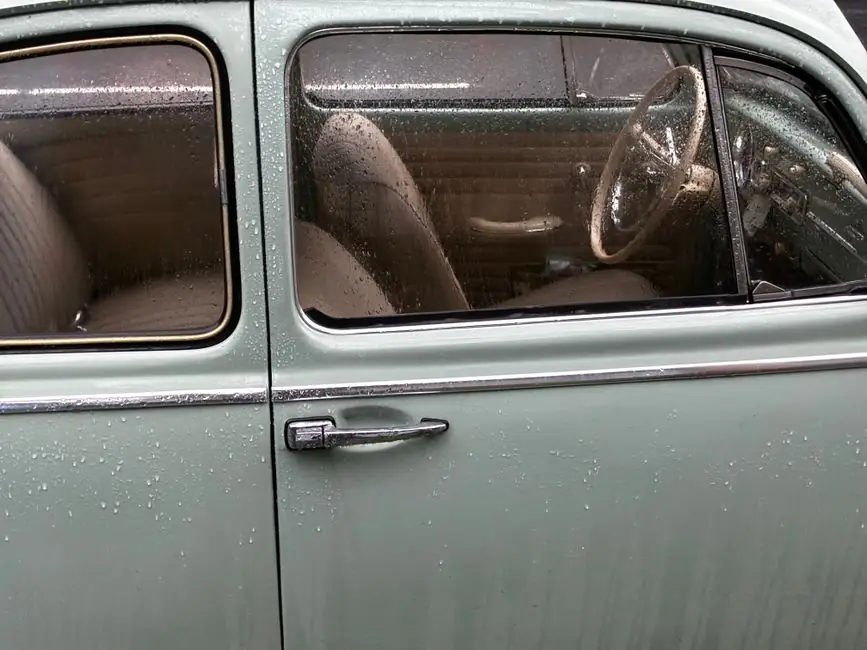
EPDM compounds are used for both automotive door and trunk weather seals because they resist UV, ozone, weather, and repeated temperature exposure [S1][S2].
The practical difference is application-specific: door seals control water, dust, drafts, and road noise around a frequently opened closure, while trunk seals protect cargo spaces from moisture, dirt, and road noise [S1][S3].
Material Scope and Seal Function
EPDM, or Ethylene Propylene Diene Monomer, is a synthetic rubber used in seals and automotive weatherstripping.
The material grade may be the same family, but a finished door seal and trunk seal are not interchangeable components. Door seals fit around the body aperture and must compress as the door closes. Trunk seals sit around the trunk opening and compress against the trunk lid or related flange [S1][S3].
For related material context, EPDM rubber is distinct from industrial rubber as a broad category, while engineering plastic and TPE may appear as alternatives where recyclable processing or lower cost matters more than long-term weather performance [S3][S5].
Door Seal Requirements
Automotive door seals perform 3 primary barrier functions: excluding water, blocking dust and noise, and reducing unwanted airflow into the cabin [S1]. Their geometry must tolerate the door’s closing load, repeated opening cycles, body-panel movement, and tolerance variation between the door and frame.
Door weatherstripping also has to control airflow and cabin noise rather than merely keep rain out. A profile that seals in a laboratory may leak when the hinge side, latch side, and roof corners have different gaps, so part-level fit and compression matter as much as compound selection [S1][S4].
Trunk Seal Requirements

Trunk seals have 4 measurable design drivers: water exclusion, cargo protection, road-noise reduction, and corrosion prevention by limiting moisture ingress [S3]. Their functional consequence is more severe than a small cabin draft: a failed trunk seal can leave wet cargo, promote musty odors, and contribute to rust [S3].
EPDM is a leading trunk-seal choice because it offers strong resistance to UV radiation, ozone, weathering, aging, and changing temperatures [S3]. The same weather-facing concerns also explain why EPDM is used for automotive door, window, and trunk seals [S1].
Trunk seals are used in passenger cars, classic-car restoration, commercial vehicles, utility vehicles, and specialty automotive builds [S3]. The operating environment may include road splash, standing water, cargo abrasion, and less frequent closure cycles than a passenger door.
Compound Comparison by Decision Criterion
EPDM is noted for resistance to ozone and UV exposure, making it suitable for outdoor applications such as automotive weatherstripping, while PVC is also listed as a trunk-weatherstripping material.
TPE and PVC are listed as materials used in trunk weatherstripping.
The correct specification is therefore not “EPDM versus TPE” alone. Compare compounds against five criteria: closure compression, UV and ozone exposure, water ingress, installation method, and expected service life. For the seal family, EPDM rubber provides the relevant compound baseline, while fluororubber should be considered only when unusually severe chemical or temperature exposure justifies its higher material cost.
Failure Modes and Replacement Indicators
A door seal commonly fails through hardening, compression set, cracking, tearing, or detachment. Typical symptoms include water entry, drafts, increased road noise, and reduced cabin temperature control [S1][S4]. Door inspection should cover all 4 perimeter zones, including the top and lower corners where long-term water collection and compression loads concentrate [S4].
A trunk seal has four listed replacement indicators: water leaks in the trunk, visible cracks or damage, increased road noise, and a loose or detached seal.
Material substitution can conceal a fit problem. If a replacement seal uses a harder profile, greater compression, or a different section height, leakage may result from the new component rather than the old compound. Specify the profile dimensions, hardness, sealing-lip geometry, attachment method, and vehicle-specific fit before approving EPDM for either location.
Specification and Sourcing Requirements
At minimum, an EPDM weather-seal specification should identify 4 controlled items: polymer type, nominal hardness, physical profile, and attachment method. For service verification, the compound file should also define weathering, ozone, water, and compression-set acceptance criteria appropriate to the vehicle’s climate and closure duty. [S2]
Single-durometer EPDM is appropriate where one section must maintain consistent hardness and flexibility, while dual-durometer EPDM is appropriate where a soft contact face must meet a rigid structural backbone [S2]. Clip-on EPDM suits a mechanically retained installation, while taped EPDM supports bonded attachment to a prepared surface [S2].
Do not infer that a generic EPVC, EPDM, or weatherstrip label defines automotive suitability. The source material identifies EPDM, TPE, and PVC as common trunk-seal material families [S3], but it does not provide a universal temperature range, ozone concentration, tensile value, or automotive test duration. Those figures must come from the supplier’s compound datasheet and the OEM’s own validation, not from the polymer name alone.
For a release package, record the seal location, drawing revision, EPDM grade, durometer, color, profile dimensions, closure compression, attachment method, environmental exposure, and test results. The component family should be described as EPDM automotive weatherstrip, with separate part numbers and validation records for door and trunk applications.