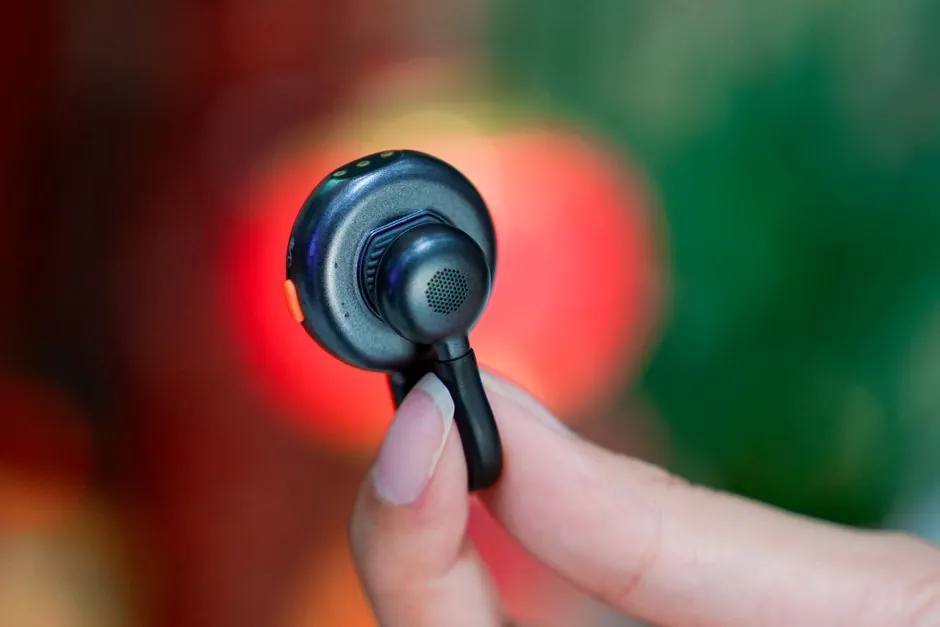
Available products include 3M WorkTunes Connect models with Bluetooth and AM/FM radio, the Sordin Supreme X2 BT, and the M300T Bluetooth electronic hearing protector.
The available range includes 3M WorkTunes Connect models, the Sordin Supreme X2 BT, the Klein Tools AESEM1, and the M300T electronic protector, with Bluetooth 5.4 and hands-free calling documented for the AC147 and AM/FM reception documented for the 3M WorkTunes Connect.
What Bluetooth Hearing Protection Delivers
A Bluetooth hearing protector combines an acoustic-attenuation device with a communication system, allowing the wearer to receive radio, telephone, music, or amplified environmental audio without removing the hearing protection. Communication is the transmission of information from a sender to a receiver through a channel, and in these products the channel can be radio, Bluetooth, a wired AUX connection, or the microphone and speakers built into the earmuffs [S1].
The practical distinction is between passive and level-dependent protection. Passive earmuffs depend on their shell, seals, and absorbing materials to reduce noise. Electronic hearing protectors such as the EARMOR M300T amplify safe ambient sounds such as voices, movement, and callouts while limiting harmful sound levels [S2]. For an engineering specification, this distinction matters because passive attenuation is fixed, whereas an active product may preserve situational awareness through controlled amplification.
Bluetooth itself does not establish a product’s hearing-protection performance. Noise reduction must be specified separately through a documented rating such as NRR, SNR, or a manufacturer’s stated dB reduction. A broader comparison of hearing protector types is useful when the application includes machinery, shooting, airsoft, construction, or outdoor radio use.
Attenuation, Radio, and Runtime Compared
The documented products differ materially in protection level, communication hardware, and power endurance.
The comparison indicates three distinct purchasing routes: fixed industrial attenuation with built-in AM/FM and Bluetooth, fixed passive attenuation with long battery life, or level-dependent active listening for hunting and shooting. For industrial purchasing, the NRR and SNR figures require conversion or testing under the applicable assessment method before they are used for exposure calculations.
Selecting by Work Environment and Communication Need
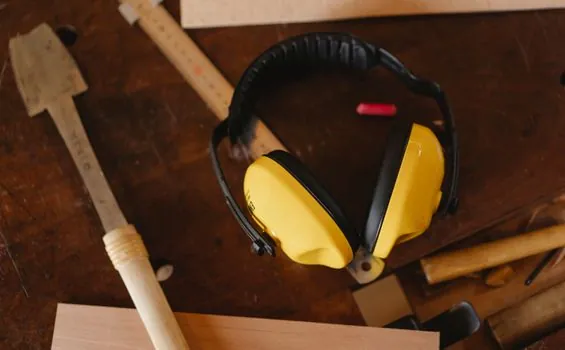
Fixed-attenuation models suit users who need a stated passive protection level plus ordinary Bluetooth audio. The 3M WorkTunes Connect 90570E-1 is specified at up to 33 dB noise reduction and supports Bluetooth connections for music and calls [S7].
Built-in radio is the practical differentiator for crews that work apart from cellular coverage. The 3M WorkTunes Connect model combines a 26 dB Noise Reduction Rating with AM/FM radio and three equalizer settings [S6][S9].
Level-dependent active protection is intended for users who need to hear environmental cues while wearing hearing protection. The Sordin Supreme X2 BT is described as a level-dependent Bluetooth protector for hunting and shooting, while the EARMOR M300T uses electronic amplification to make voices, movement, and callouts audible [S2][S4]. These products serve different needs from a conventional face shield, which protects the face but does not replace certified hearing attenuation.
Active, Passive, and Hybrid Use Cases
Industrial and utility work commonly requires hearing protection, phone access, and awareness of machinery, vehicles, and alarms. For an actual purchase specification, the required acoustic rating, radio bands, communication method, and work-duration battery profile should be written separately.
Hunting and shooting have a different acoustic profile from general industrial noise. The Sordin Supreme X2 BT is explicitly positioned for those activities, and the EARMOR M300T is aimed at airsoft and milsim users [S2][S4]. Airsoft applications can involve abrupt impulsive noise, so a product described as a tactical ear protector should not be assumed to provide the same attenuation, impulse performance, or electronic protection as certified industrial earmuffs without supporting test data.
Radio-enabled hearing protectors also cover site entertainment and crew communication. The AC147 product combines Bluetooth 5.4, hands-free calls, AM/FM/DAB radio, SNR 30 dB, and soft earmuffs with noise-absorbing foam [S8]. Its IP67 rating is another procurement variable, although ingress protection and hearing attenuation are separate performance claims.
Battery, Connectivity, and Environmental Constraints
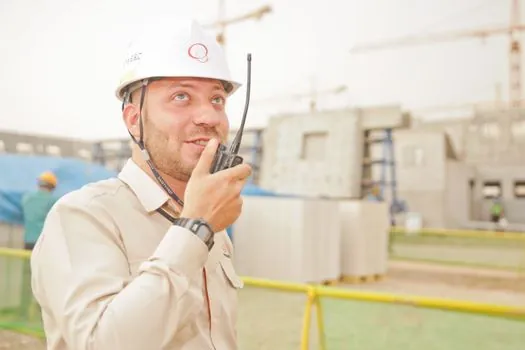
The AC147 listing describes a “Long battery life” without quantifying the runtime. The AC147 uses Bluetooth version 5.4. Neither specification alone establishes radio runtime, call runtime, or performance after battery degradation.
Connectivity also differs by product. The AESEM1 supports Bluetooth 5.0 and hands-free calling, with an environmental noise-cancelling microphone and raised oversized buttons [S5]. The Hocazor HP033 accepts a 3.5 mm AUX input for an external audio source, and the AC147 includes AM/FM/DAB reception [S3][S8]. A wired AUX path can remain useful when Bluetooth pairing or radio reception is not the primary function.
Environmental requirements narrow the shortlist further. AC147 is rated IP67, while the supplied information for the 3M, Klein Tools, Sordin, EARMOR M300T, and EARMOR C51 listings does not establish equivalent ingress ratings [S8]. A site with washdown exposure, temperature extremes, chemicals, or frequent impact should therefore verify enclosure, battery, microphone, and certification evidence rather than infer durability from a Bluetooth label.
Procurement Controls for Noise Reduction Claims
The first procurement control is to distinguish the rating type. Published figures include 22 NRR for the AESEM1, 26 dB Noise Reduction Rating for one 3M WorkTunes Connect model, up to 33 dB noise reduction for model 90570E-1, and SNR 30 dB for AC147 [S5][S6][S7][S8]. These labels describe different assessments, and a buyer should not rank one against another without converting them through the applicable workplace method.
The second control is to separate communications from attenuation performance. Bluetooth 5.0, Bluetooth 5.4, AM/FM, DAB, 3.5 mm AUX, hands-free calling, and level-dependent amplification are communication or usability features [S3][S5][S8]. None independently proves compliance with a workplace noise-exposure limit or verifies the claimed NRR, SNR, or dB reduction.
The third control is to require product-specific documentation before approving model 90570E-1, AESEM1, AC147, Sordin Supreme X2 BT, M300T, or C51 for a defined hazard. The package should identify the protected frequency range or applicable rating method, battery endurance under the intended mode, radio bands, charging method, replaceable cushions or seals, and service support. A protective clothing program should treat hearing, face, respiratory, and fall-protection equipment as separate controls rather than treating connected earmuffs as a complete PPE system.
The most trackable procurement signals for Bluetooth hearing protectors are model-specific attenuation test data, measured radio and call runtime, declared ingress rating, and confirmed replacement-part availability. A shortlist covering 22 NRR passive protection, 26–33 dB noise reduction, SNR 30 dB active communication, Bluetooth 5.0 or 5.4, and 90+ hour battery claims gives buyers concrete points to verify before issue [S5][S6][S7][S8].