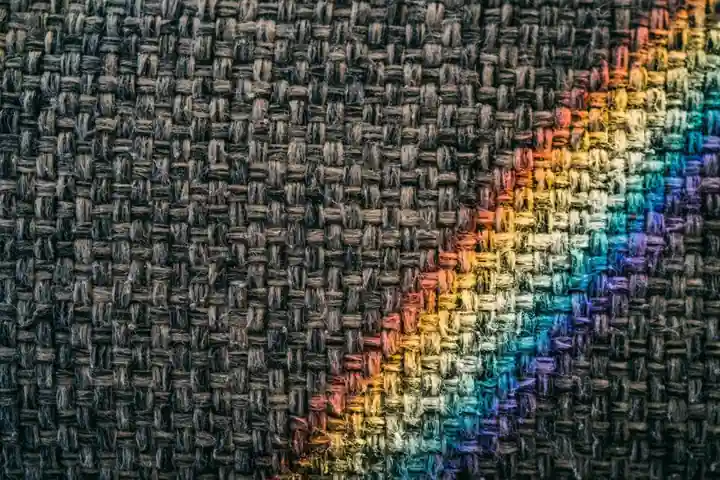
On round, tapered, or irregular carbon-fiber tubes, biaxial braided sleeves cut lay-up time versus woven 2x2 twill because the sleeve is supplied as a seamless tube that is slid and stretched over a mandrel, eliminating the cut-wrap-overlap sequence that woven fabric forces [S2][S3]. Sleeve architecture carries continuous fibre along the entire length of the part, a behaviour that composite fabricators describe as "near net-shape pre-forms" because the braid angle self-adjusts as the diameter changes [S3].
Woven carbon-fiber cloth, by contrast, is shipped as a flat 0.125 in wide tow-based sheet in common 3k, 6k, 12k, and 15k tow ratings and is laid up by hand, making it the lower-cost option for flat panels and 2D curves but the slower option for tubes [S5]. The trade is therefore not strength alone but build sequence, scrap rate, and fibre orientation control.
Architecture: Seamless Braid vs Flat Woven Tow
A braided sleeve is produced as a seamless tubular braid, most often biaxial in a basket-weave pattern of two yarns crossing over and under, and is most commonly defined as a ±45° fibre orientation, although the actual on-mandrel angle drops as the sleeve is stretched over larger diameters [S3]. The "Chinese finger trap" geometry expands and contracts to fit non-uniform cross-sections, and as the sleeve is pulled over a mandrel with changing sections, fibre orientation, thickness, and braid yield vary in a way that is "predictable and repeatable" for part manufacture [S3].
A woven fabric instead starts as a flat sheet in which tows are interlaced in patterns such as plain (over/under every tow), 2x2 twill (over 2, under 2, diagonal), or harness satin (4HS, 5HS, 8HS), with plain weave offering the highest fabric stability and harness satin the highest drapability [S5]. For tubes built from flat woven cloth, the fabricator must cut, wrap, and overlap the cloth, a process that drives both labour cost and the scrap that braided sleeves avoid [S3].
Lay-Up Speed, Conformity, and Scrap Rate
Compared to flat fabrics, braided carbon-fibre sleeves deliver faster application on tubular parts, improved conformity around curves and tapers, reduced seams and overlaps, and balanced torsional and hoop strength [S2]. In practical terms a sleeve is slid over a mandrel, stretched longitudinally to tighten, and then wetted out with epoxy or vinylester, with optional silicone bladder inflation inside an inexpensive mould cavity as the cure step [S3].
For 2x2 twill the longer distance between tow interlaces means fewer crimps and less potential stress concentration than a plain weave, but the fabric still must be cut and overlapped on a tube, so a 7.5 oz/254 gsm sleeve such as the carbon/Kevlar hybrid sleeve is typically specified where impact and abrasion resistance are the priority on a hollow shaft or handle [S4][S5].
Mechanical Behaviour: Hoop vs Axial
Biaxial braid at ±45° puts a high share of the fibre in the hoop and off-axis direction, which is exactly what most thin-walled tubes need for external pressure, torsion, and bending-driven hoop strain [S3]. The same geometry is the reason filament-wound tubing is described as "more expensive, yet more brittle" than braided-sleeve tubing, and is "not meant to be used in impacts" such as model rocket or automotive structures where braided sleeves remain the default [S3].
Woven 2x2 twill, by contrast, is closer to a balanced 0°/90° laminate, so it carries axial and hoop load more evenly but with the additional "crimp" penalty that the tow angle makes each time it passes over or under its neighbour, a stress-concentration source that does not exist in a continuous braid [S5]. Where pure axial stiffness dominates, an aluminum-alloy tube wrapped in uni-directional carbon or 0°-biased woven cloth is often a stronger choice than either pure braid or pure 2x2 twill, but that is a different spec path.
Process Compatibility and Resin System
Both formats are compatible with the same shop-floor processes: resin infusion, vacuum bagging, hand laminating, and pultrusion or mandrel wrapping are all listed as suitable for a braided carbon-fibre sleeve, with epoxy, vinylester, and polyester resins all approved by the supplier [S2]. Sleeves additionally work in bladder-inflation cures over silicone or inexpensive cavity moulds, a process that woven fabric also tolerates but only after the cut-and-wrap step [S3].
A typical 2x2 twill at 3k tow ships at areal densities of roughly 200 to 600 gsm depending on grade, while braided sleeves in the carbon/Kevlar hybrid class are commonly stocked at 7.5 oz/254 gsm for reinforcing tubes, shafts, and handles in impact-prone service [S4][S5]. The hybrid mix is chosen where the operator wants the abrasion tolerance of aramid on the outer ply and the stiffness of carbon on the inner, an option that a flat woven fabric also offers but in ply-by-ply lay-up rather than as a one-step sleeve [S4].
Selection Criteria: Sleeve, Woven, or Both
For pure round tubes under 50 mm diameter where impact and hoop strength dominate, the braided sleeve is the lower-risk pick because it removes the seam-overlap wrinkle that a 2x2 twill wrap leaves on a small radius [S2][S3]. For flat panels, 2D curves, or large moulded shells where cosmetic appearance and balanced 0/90 stiffness matter more than build time, 2x2 twill or harness satin remains the cheaper, more stable format [S5].
For tapered drive shafts, handle tubes, and roll-wrapped parts that change diameter along their length, a sleeve slightly undersized to the part diameter, consolidated with shrink tape or vacuum bagging and paired with an epoxy system, gives the best fibre tension and cosmetic finish, per supplier process guidance [S2]. Where a part must carry a known axial load in addition to hoop, a hybrid lay-up of braided sleeve over a uni-directional carbon-fiber underlayer is common in motorsport and drone structures, because it adds 0° stiffness the braid cannot supply on its own [S2].
Limitations and Failure Modes
Plain-weave carbon has high stability but is "not well suited for layups with complex contours" and the short interlace distance creates harsh crimp that can weaken the part over time, a failure mechanism that braided sleeves avoid by eliminating the interlaced tow [S5]. Harness satin solves the contour problem but at the cost of fabric stability, so it is rarely the right pick for a thin-walled tube that needs hoop stiffness [S5].
Braided sleeves have their own constraints: as the braid is stretched over a large-diameter mandrel, the on-part angle drops below ±45° and fibre volume fraction falls, so the part becomes more axial-leaning and less hoop-efficient, a geometric penalty that the fabricator must account for in the ply schedule [S3]. A biaxial braid is also more expensive per metre than commodity 12k twill, so for non-round, non-tubular parts the cost premium is rarely recovered in labour savings [S3].
Standards, Sourcing, and Trackable Signals
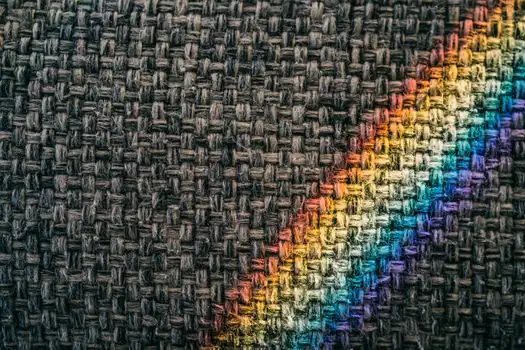
No international standard (ASTM, ISO, or EN) currently harmonises braid angle, tow count, or sleeve areal density, so procurement is driven by supplier data sheets, for example a carbon/Kevlar hybrid sleeve at 7.5 oz/254 gsm with declared impact and abrasion resistance [S4]. Tow-size selection (3k versus 12k versus 24k) is a separate spec decision covered in the related 3K vs 12K vs 24K tow guide, which directly affects the cosmetically visible weave pattern of any woven layer used in the same laminate [S5].
Trackable signals for buyers over the next quarter: whether suppliers begin publishing braid-angle-vs-diameter curves for their stock sleeve sizes, and whether 3k-tow 2x2 twill prices continue to track below equivalent biaxial-sleeve prices on a per-metre basis. For related carbon-fibre selection detail on tow size and weave pattern trade-offs, see the 3K vs 12K vs 24K tow selection guide.