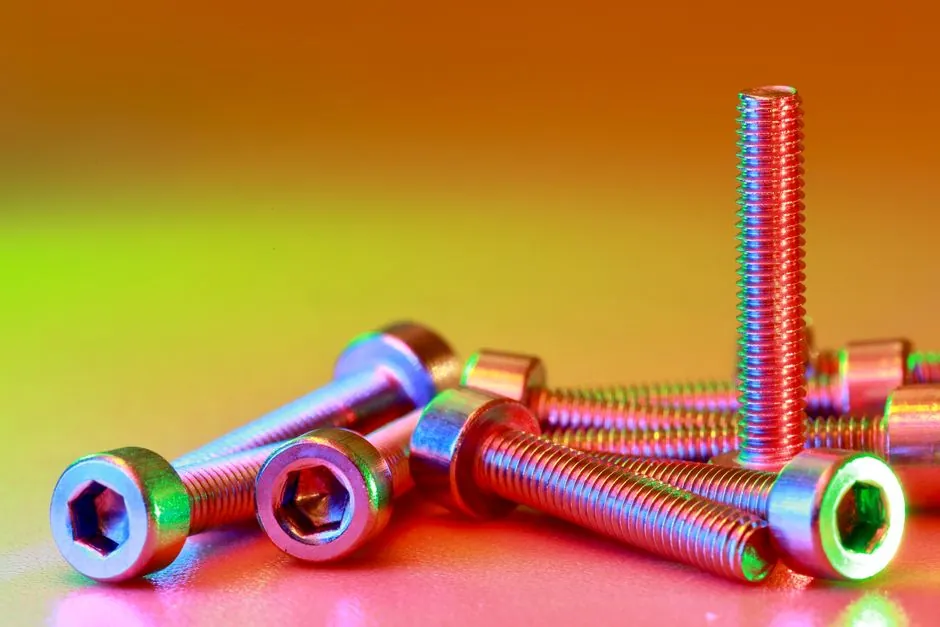
Bolted joints into carbon fiber laminates fail by through-thickness crushing and delamination long before a steel bolt reaches its proof load, with measured maximum torque on a continuous-fiber thermoplastic composite joint roughly 40% higher when a washer is added versus a bare-bolt baseline of around 43 Nm before compression failure [S2].
The conservative rule, repeated across OEM and aerospace guidance, is to drop standard steel-bolt torque targets by 20-30% at any carbon-fiber interface and to spread the clamping load with a flat washer, hardened washer, or compression limiter sized to keep bearing stress below the laminate's allowable [S4][S5][S8].
Why standard torque values crush composite laminates
Carbon fiber reinforced polymer is anisotropic and weak in the through-thickness direction: roughly 10% of applied torque actually stretches the bolt into preload, while ~50% fights thread friction and ~40% fights under-head friction, so the bearing stress the laminate sees is concentrated and large relative to its interlaminar shear and compressive strength [S5].
On a CFRTP gear-mount study, the maximum torque a bolted joint could carry before cracks or breakage was lower than a steel joint of the same size, and the achievable preload decayed over time from viscoelastic relaxation of the thermoplastic matrix even when no installation damage occurred [S2]. NASA's 2005 torque-tension study on composite hardware likewise framed the core engineering question as how much torque a composite component can carry before any failure initiates, not how much a steel chart says it can [S1].
Washer selection: flat, hardened, fender, or compression limiter
The single most effective mitigation against crushing is increasing the bearing area under the bolt head and nut; large-flange heads, flat washers, hardened washers under Grade 8 bolts, and bonded washers are the four workhorse options called out in current OEM guidance [S3][S5]. Nord-Lock's own engineering note confirms that anti-vibration washers can be used on fiber composite assemblies, provided the load distribution and corresponding tightening torque are optimised, because the washer pair only protects the joint if the underlying laminate is not already being over-pressed [S6].
For large-diameter bolts above 0.25 in (6.35 mm) in composite laminates, installation torque must be limited or other mitigations used specifically to avoid crushing the laminate, which is the threshold above which bearing-area mitigation becomes mandatory rather than optional [S8]. In automotive and EV battery-enclosure work, the standard approach combines a metal bolt or rivet nut with a compression limiter (a metal sleeve that carries the clamp load) so the composite only sees a controlled bearing footprint, not the full bolt-head reaction [S3].
Torque numbers and the 20-30% derate heuristic
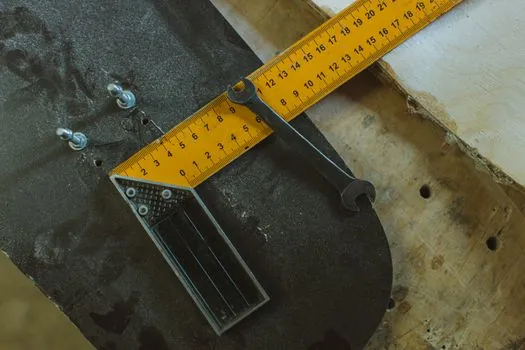
The composite-specific rule of thumb is to use torque values 20-30% lower than the standard manufacturer recommendation for a steel fastener of the same size and grade when the joint is at a carbon-fiber interface [S4]. On the CFRTP test case, adding a washer lifted the maximum allowable torque to about 60 Nm, roughly 40% above the no-washer compression-failure baseline, giving a concrete data point for the washer benefit on a mid-sized bolt [S2].
The general bolt-installation rule that ~10% of input torque becomes preload, ~50% is lost to thread friction, and ~40% to under-head friction still holds on composite joints, so any action that lowers friction (lubrication, plated bolts, anti-seize) will inflate the actual preload at a given torque and push the laminate closer to crush [S5]. Stainless steel and titanium fasteners at composite interfaces typically need an additional 20-30% torque reduction on top of the composite derate because their friction behavior differs from plain-steel specs [S5][S9].
Comparison of mitigation options on four decision criteria
Four bearing-area mitigations line up against the criteria that drive composite-joint design: cost, install complexity, crush protection, and preload repeatability. A flat washer is the cheapest and simplest, adds modest crush protection, and gives repeatable preload if the washer is hard enough not to dish; a hardened washer (e.g. through-hardened to HRC 38-45) costs slightly more and dramatically improves crush protection because it does not deform under the bolt head [S5].
A bonded washer, where a layer of adhesive or a metal-backed laminate patch is co-cured or secondary-bonded under the bolt site, costs more in process time but offers the best crush protection and a sealed bearing surface, and is the preferred route for aerospace primary structure [S3]. A metal compression limiter is the highest-cost option because it requires a precision sleeve in the laminate, but it gives the most repeatable preload and is the standard solution in automotive chassis and EV battery enclosures where thousands of identical joints are installed per vehicle [S3]. For the common bicycle, drone, or robotic-arm case, a large-OD flat stainless or titanium washer under a titanium bolt gives most of the benefit at a fraction of the cost [S9].
Where threaded inserts and inserts beat bare bolts
Threaded fasteners installed directly into carbon fiber reinforced laminates will crush the composite layers around the hole if the bolt is over-torqued, has too small a head, or is reused repeatedly in the same hole [S7]. The standard mitigation in production hardware is a metallic threaded insert (brass, stainless, or titanium) potted into the laminate at layup, which gives the bolt a metal-on-metal bearing surface and decouples the composite from the bolt's under-head reaction [S3][S7].
For repair and low-volume work, rivet nuts and rivet-style threaded inserts achieve the same effect without co-curing, and they allow standard steel torque values to be used on the insert while the composite still only sees a controlled bearing footprint [S3]. This insert-plus-standard-torque approach is also how the automotive sector gets cycle times compatible with volume production, where direct bolting into a thermoplastic matrix would otherwise force a 20-30% torque derate and slow the assembly line [S2][S4].
Real use cases and failure modes by industry
Aerospace primary structure, exemplified by the Ford GT carbon-fiber chassis program, treats every fastener in a carbon-fiber stack as a designed joint, with controlled bolt spacing, edge distance, and washer or compression-limiter hardware specified in the drawing, not left to the installer [S3]. In the bicycle industry, titanium and 316 stainless fasteners paired with large-OD washers are the standard answer to the combined galvanic-corrosion, torque-control, and crush-risk problem at carbon-fiber frame interfaces [S9].
The dominant failure mode in every one of these cases is the same: bearing-stress-induced delamination and through-thickness crushing under the bolt head, followed by loss of preload, joint slip, and fatigue crack initiation at the hole. The fix is also the same: bigger washer footprint, derated torque, and where production volume justifies it, a compression limiter or bonded insert [S2][S3][S7][S8].
Applicable standards and sourcing notes
No single ISO or SAE standard publishes a universal composite-bolt torque table, which is why OEM- and program-specific drawings remain the controlling documents; the recurring engineering requirements are the 20-30% derate versus steel, the mandatory washer or compression limiter for bolts above 0.25 in diameter, and the use of inserts where the joint is disassembled more than a few times [S4][S8]. General bolt-installation practice follows standard torque-preload guidance where roughly 10% of input torque becomes clamp load, ~50% is lost to thread friction, and ~40% to under-head friction [S5].
Trackable signals for the next 6-12 months include the release of additional EV-battery-enclosure composite-fastener application notes from major cell-to-chassis programs, and any revision to common aerospace composite-joining SBs that codify the compression-limiter requirement rather than leaving it as a recommendation. The 3K vs 12K vs 24K carbon fiber tow decision feeds directly into laminate bearing strength, since heavier tows shift the crush threshold of the joint and therefore the safe torque window at a given bolt size.