
ICH Q13 requires a continuous manufacturing control strategy to link drug-substance and drug-product quality attributes to controlled process parameters, monitoring, and corrective actions [S2][S4].
ICH Q13 describes scientific and regulatory considerations for the development, implementation, operation, and lifecycle management of continuous manufacturing of drug substances and drug products [S7].
Define CQAs and the process scope
The first engineering task is to identify the critical quality attributes, or CQAs, for each material and dosage form. For drug substances, the control strategy addresses parameters affecting manufacture and quality, including impurity control [S2]. The scope should also state whether the system makes an active pharmaceutical ingredient, a drug product, or both, because the scientific rationale, operating models, and lifecycle evidence must match the registered product [S4].
Continuous manufacturing is not one equipment configuration. The control strategy should define the relevant unit operations, material-flow sequence, operating ranges, product-contact path, and the point at which material is considered a completed batch.
For oral solid dosage forms, the process chain may include continuous granulation and drying, followed by compression and, where required, coating or other finishing operations [S1][S3]. The surveillance camera category does not form part of a pharmaceutical control strategy unless a separately justified monitoring function requires it.
Structure the control strategy in layers
A practical structure has 4 layers: material and equipment controls, parameter controls, product-quality monitoring, and governance.
Material controls address input variability, weighing, segregation, and traceability. Equipment controls address calibration, sensor performance, agitation, feed rate, discharge, and cleaning. Parameter controls define set points, operating ranges, alarms, interlocks, and actions that preserve the validated state. Product-quality monitoring verifies that CQA performance remains acceptable through sampling and laboratory or at-line testing [S2][S4].
These layers should not be treated as independent. A change in feeder calibration can alter blend uniformity; a change in drying endpoint can affect granule moisture and downstream compression behavior; a lubrication condition can affect tablet weight and dissolution. The written strategy must make those cause-and-effect relationships explicit rather than listing every instrument reading without an operational purpose.
Compare control approaches by decision criteria

The main control options differ in response speed, diagnostic depth, and operational burden. A fixed-parameter approach is simple and inexpensive but provides limited visibility when feed or equipment behavior changes. Statistical process control offers faster variation detection but does not by itself prove product quality. Model predictive control can account for interactions and constraints, yet it requires a validated model, reliable measurements, and disciplined maintenance.
The practical choice is not the most sophisticated controller. It is the least complex architecture that can detect a credible failure, act before material escapes the controlled state, and preserve a defensible data trail.
Control startup, disturbances, and shutdown
A continuous line has no natural batch boundary to reset every variable.
At steady state, control elements monitor the state of control and take appropriate actions when control is lost [S4]. Disturbances can include feed interruption, sensor failure, motor overload, incorrect valve positioning, environmental excursion, or an out-of-limit intermediate-property result.
Shutdown is part of the operating strategy, not an administrative afterthought. The procedure should address stop times, material hold limits, line drain-down, segregation of nonconforming material, and preservation of electronic records.
Link CQA monitoring to decisions
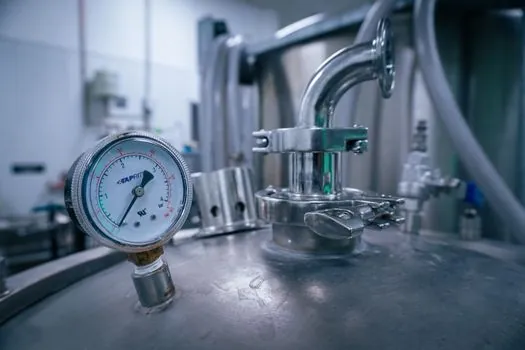
Control-strategy selection for each CQA begins with the consequence of variation. If the CQA is content uniformity, the control system must connect feed or blend measurements to a corrective action that protects the affected material. If it is residual solvent, sampling and analytical turnaround time determine whether control can be feedback, in-process, or release-based. If it is dissolution, the relationship between formulation, granulation, compression, and curing must be experimentally defined before a controller can manipulate an upstream variable [S8].
ICH Q13 separates process monitoring from continuous process verification, with continuous verification supporting assurance that the process remains in control during production [S4]. The control strategy should therefore define both real-time operating controls and periodic verification activities. Verification may include sampling, analytical testing, trend review, process-model assessment, or another scientifically justified check, but each method needs a defined purpose and frequency.
For digital execution, electronic batch records and historian data should preserve parameter trends, alarms, interventions, material movements, test results, and change approvals. The comparison of advanced process-control options in Advanced Process Control Energy Savings and Selection offers a broader architecture discussion, but pharmaceutical acceptance also depends on validated science and the product-specific control strategy.
Establish governance and change control
ICH Q13 covers development, implementation, operation, and lifecycle management of continuous manufacturing [S7]. A workable governance system assigns ownership for process monitoring, data review, deviations, deviations investigation, calibration, change control, and continued process verification [S2][S4]. It should also define the escalation path when a monitored attribute moves outside its expected range.
Changes require impact assessment. A new raw-material supplier, sensor replacement, control-algorithm revision, operating-range modification, software upgrade, or change in formulation can alter the relationships between process inputs and CQAs. The change-control record should identify the affected CQA, parameter, control element, analytical method, validation evidence, and training requirement before implementation.
Auditable alarm rationalization is necessary because excessive nuisance alarms train operators to ignore meaningful deviations. Every critical alarm should have a defined priority, owner, action, and consequence. Review periods can examine repeated alarms, unexplained variability, sampling failures, sensor drift, and interventions, with predefined thresholds for corrective work.
Handle common failure modes

Continuous control fails when a nominal set point is treated as proof of quality. That approach cannot detect a slowly drifting feeder, a biased laboratory method, or a consistent interaction between several variables. ICH Q13 instead requires monitoring the state of control and taking appropriate action when necessary [S4].
Four failure modes deserve specific controls. First, inadequate input characterization can allow material variability to propagate downstream. Second, poor start-up control can leave the line outside its qualified state before the first saleable output. Third, weak sampling design can conceal within-stream variation. Fourth, informal overrides can break the link between an alarm, a material disposition, and an approved reason for intervention.
Start-up strategy development has been demonstrated for continuous granulation and drying, while integrated control methods have been proposed for selecting control strategies against each CQA [S1][S8]. These examples support process-specific engineering, but they do not remove the need to validate the actual product, equipment train, sensors, control logic, and operating ranges.
Scale evidence without losing process control
ICH Q13 addresses changes in production output, including the ability to increase throughput while maintaining control [S4]. A controlled rate change is not an automatic scale-up. The engineering review must recheck feeder capacity, residence time, mixing intensity, shear, drying capacity, compression speed, discharge behavior, and laboratory sample representativeness against the proposed output.
A practical validation package connects 5 evidence layers: CQA risk assessment, operating ranges and design space, sensor and method validation, start-up and steady-state data, and continued process verification. The perimeter alarm concept belongs to facility security rather than product-quality control, while access control may support electronic-record governance, but neither substitutes for validated process controls.
The next trackable milestone is a signed control-strategy matrix that assigns every CQA to at least 1 measured attribute, 1 control action, 1 data owner, and 1 escalation route. Follow that matrix with alarm-rationalization review, start-up challenge testing, and an approved production-output change protocol. Those deliverables create an auditable path from operating data to product disposition under ICH Q13.