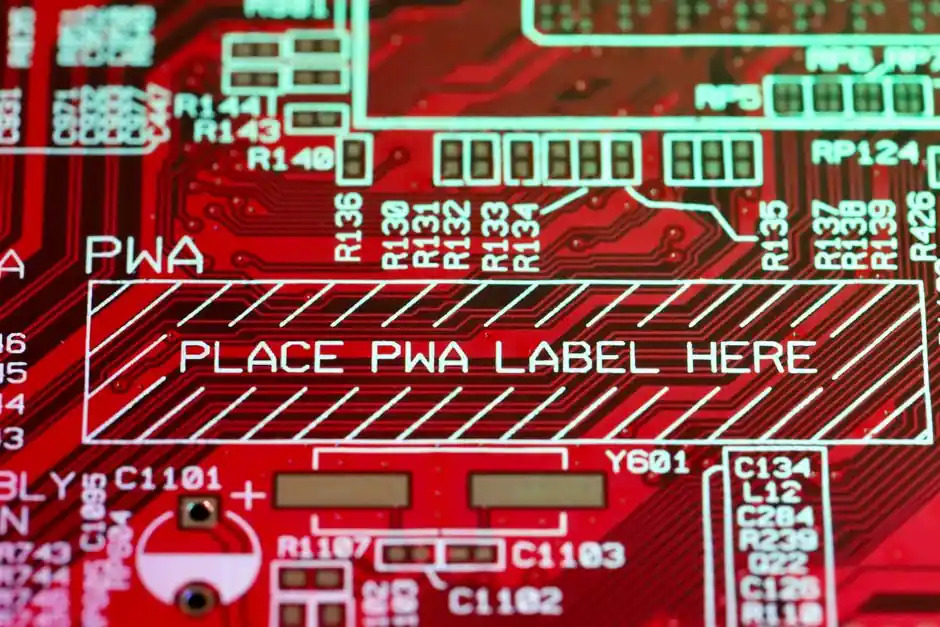
Aerospace parts require permanent, verified identification through production, assembly, inspection, maintenance, and end-of-life records, with 2D Data Matrix codes commonly joining human-readable serial numbers and part identifiers [S1][S3].
Serial-level traceability must capture material heat lot, manufacturing, inspection, supplier, and installation history, while lot, batch, date-code, or work-order identification may be sufficient when the contract, drawing, regulation, or product risk does not require unique unit-level history [S4][S5].
Direct Part Marking Defines the Physical Record
Direct part marking applies an identifier directly to the component instead of attaching a label or tag, allowing the part to remain identifiable through years of service, repeated handling, inspection, and maintenance [S1].
Typical identifiers include serial numbers, part numbers, manufacturer codes, and 2D Data Matrix codes [S1]. A practical identity record links the physical mark to the material batch, production machine, operator, inspection results, and other manufacturing history [S3]. The serial number is the unit-level key, while the part number identifies configuration and the manufacturer code identifies the controlled source.
For unmarked or mixed-process inventory, a controlled serialization strategy can restore the link between the physical item and its released production record [S2]. This is not interchangeable with part numbering: a part number describes the configuration, while a serialized identifier distinguishes one controlled unit within that configuration and links it to individual history.
Marking Methods Fail Differently by Material and Service Life
Dot peen creates a permanent mark by mechanically indenting the surface and is well established for metal aerospace components, including engine components that must tolerate machining, heat treatment, coatings, temperatures, and handling [S1][S3].
Laser marking produces a high-resolution permanent mark without physical contact and is commonly applied to aluminum, titanium, and stainless steel, particularly where dense 2D Data Matrix codes or automated production are required [S1]. Chemical etching remains an option when material and surface conditions suit it, while inkjet marking is more suitable where heat exposure is limited [S1].
The choice cannot be reduced to marking durability alone. Dot peen is suited to metal and difficult geometry, laser marking supports high data density and sensitive alloys, etching depends on surface behavior, and inkjet is constrained by environmental exposure [S1]. The selected process must remain readable under the component’s actual heat, vibration, corrosion, chemical exposure, mechanical wear, and repeated handling conditions [S1].
Compare Identification Routes by Traceability and Control
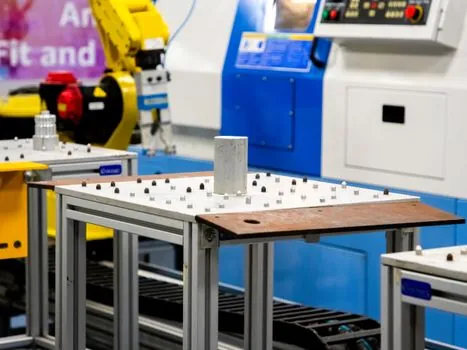
Direct part marking supports long-term traceability, quality control, and supply-chain compliance by providing a permanent, readable identifier that remains with the component throughout its lifecycle [S1].
This comparison makes the decision practical: RFID supports automated movement and inventory visibility, but it does not replace a permanent mark on a critical component; a paper label provides low-cost lot identification but offers the least durable link; direct marking is the stronger choice when the item itself must retain its identity [S4].
Standards Define Identification, Retention, and Audit Scope
AS9100D clause 8.5.2 requires organizations to identify outputs throughout production, control unique identification where traceability applies, and retain the documented information needed to retrieve product history [S5]. AS9100D clause 8.5.2 addresses documented identification from raw-material heat lot through manufacturing, inspection, and delivery, while AS5553E addresses counterfeit-parts prevention [S5].
AS9132 is the IAQG Data Matrix marking specification [S3]. MIL-STD-130 provides the US Department of Defense framework for identification marking of military property, while OEM documents such as Rolls-Royce JES131 and RRES90003 can add customer-specific marking requirements [S3].
Retention periods depend on the governing framework and customer flow-down. For example, 14 CFR 21.137 requires minimum record retention of 5 years for products and 10 years for critical components, with customer requirements often extending those periods [S5]. Audit evidence must test both directions: backward traceability reconstructs a finished part’s history, while forward traceability defines the population of parts, assemblies, and deliveries affected by a suspect material lot or process record [S5].
Serialization Must Integrate with Production and Assembly
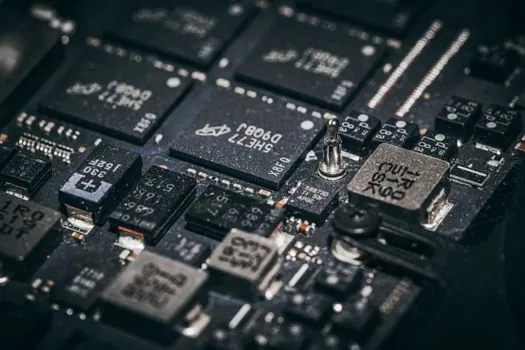
Modern direct part marking software supports serial-number generation, database integration, consistent code formatting, code verification, and traceability-document generation, reducing manual transcription between the marking cell and the quality record [S1][S9].
Aerospace fastener traceability records every stage from raw material and fabrication through inspection, distribution, and final installation, creating an unbroken chain of custody and a verifiable data trail [S4].
A practical record model should preserve the mark identifier, part number, revision or configuration, serial number, material heat lot, supplier source, process history, inspection results, delivery status, and installation event as separate linked fields [S4][S5]. A database architecture designed for manufacturing genealogy can extend the same discipline beyond aerospace by defining the relationships between material, process, inspection, and assembly records Build an MES Data Model for Traceable Genealogy.
Verification, Automation, and Legacy Records Control Failure Modes
Automated marking improves placement, readability, repeatability, and throughput while reducing operator variability, and robotic or multi-axis cells with integrated vision verification support complex or high-value parts [S1][S3].
The principal failure modes are not limited to an unreadable mark. A misplaced mark can obstruct a functional surface, an incorrect serial can link the part to the wrong record, a weak mark can degrade during coating or service, and a valid-looking code can fail the specified symbol quality criteria [S3]. Verification must therefore address identity content, code conformance, placement, legibility, and the match between the physical mark and the released digital record [S1][S9].
Serialization must also coexist with older lot-based processes, paper travelers, supplier certificates, and records held in multiple systems [S8]. Migration is best handled as a controlled data problem: define the identifier, capture its provenance, verify it against the physical part, preserve legacy links, and test backward and forward lookup using heat lot, serial range, supplier source, configuration, and process history [S5].
Who Needs Serial-Level Marking and Who Does Not

Unit-level serialization is the correct choice for products whose history must be isolated, including life-limited or critical components, high-value parts, items involved in an investigation, and products covered by customer or regulatory flow-downs [S5]. It is also appropriate where a recall must be narrowed by serial range rather than by an entire material lot [S5].
Serial-level marking is not automatically required for every aerospace output. Where the customer, contract, drawing, regulation, and product risk do not require unique unit history, a controlled lot, batch, date code, or work-order number may retrieve the required conformity and history records [S5]. For fasteners, full traceability may cover lot and serial records, mill test reports, part marking, and chain of custody, with the appropriate granularity determined by the component and program risk [S4].
The decision threshold is therefore evidence-driven. Specify a unique serial identity when failure isolation, installation history, life-limited configuration, or recall containment depends on distinguishing individual units. Use controlled lot identity when shared processing and inspection evidence are acceptable under the applicable contract and risk basis, and retain the record pathway for as long as the governing requirement demands [S4][S5].
The next trackable signal is the first successful audit that retrieves one serialized component backward to its material heat lot, manufacturing record, and inspection results, then forward to its assembly and delivery history; the second is evidence that every marked code passes the specified verification process with zero unlinked records [S1][S5].