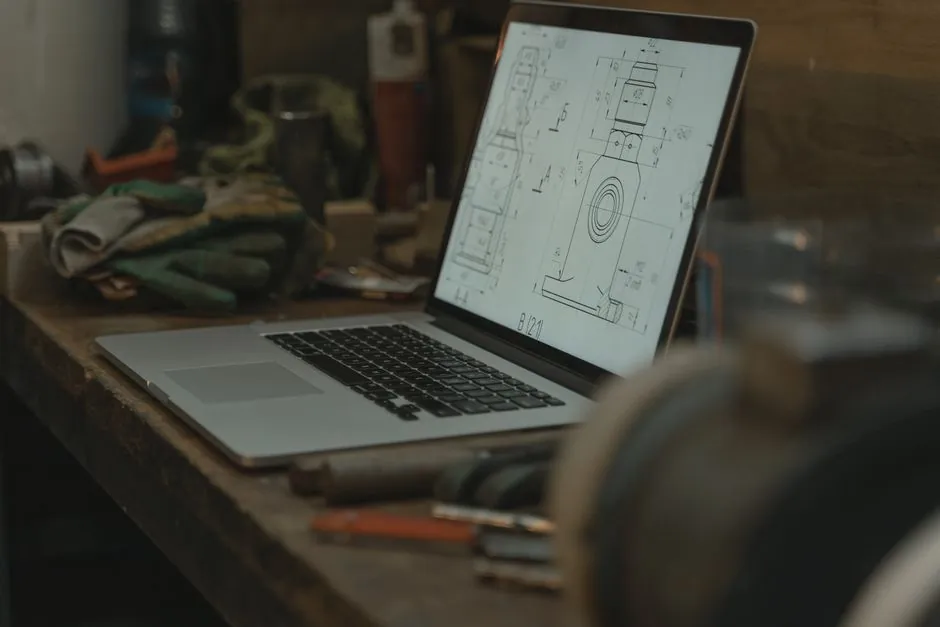
A paperless shop floor system can cut document-handling work by replacing physical routers with searchable instructions, live job status, and electronic approvals [S2][S3].
The strongest case is a controlled hybrid implementation in which digital records govern work instructions, quality checks, material traceability, and deviations across multiple work centers [S1][S4].
What a paperless shop floor actually replaces
Paperless manufacturing digitizes the production record, not only the office copy. That record can include routing steps, drawings, setup sheets, purchase orders, inspection evidence, operator acknowledgements, material identity, and approval history [S2][S5]. A typical paper traveler is a linear point-to-point packet, and its location can lag the physical movement of a job when work leaves the expected sequence [S5].
The scope includes 4 core control loops: work authorization, production status, quality evidence, and exception handling. Electronic delivery can put job information and material information at the work center faster, while a searchable knowledge base allows operators to retrieve work instructions, deviations, and operating procedures without searching folders or physical document racks [S4][S5].
Not every paper process is equally wasteful. Engineering drawings, safety documentation, controlled prints, calibration certificates, and legal records still require a defined retention and access process. The practical target is controlled electronic evidence with traceable revisions, not indiscriminate deletion of paper archives.
Benefits that can be measured on the floor
Electronic routing reduces the work required to create, distribute, update, recover, and store shop-floor documents [S2]. In a job shop, that can translate into less time walking for instructions, less manual transcription, and fewer schedule delays caused by missing or obsolete documents [S2][S4][S5].
Four measurable outcomes should anchor a pilot: elapsed time from release to work-center acknowledgment, first-pass yield, mean time to close a deviation, and the number of production transactions corrected after the fact. The supporting literature identifies reduced human error, real-time production visibility, improved workflow efficiency, stronger traceability, and faster maintenance coordination as core benefits [S1][S2][S3].
Paperless records also improve auditability when every revision has an owner, timestamp, approval state, and retained history. That supports compliance reviews more directly than a signed sheet whose relationship to other revisions cannot be reconstructed [S3]. For mixed production, real-time machine and labor status can improve scheduling decisions, while embedded inspection instructions can reduce ambiguity about what quality evidence is required [S1].
Where paperless projects fail

The largest implementation pitfall is treating digitization as a document-scanning project. Scanning a signed PDF can create an archive, but it does not create controlled routing, live status, role-based work instructions, or integrated deviation handling [S2][S5]. A workflow that still depends on repeated spreadsheet entry can reproduce the labor and transcription errors the project was intended to remove [S4].
Four failure modes deserve explicit controls. First, version control can fail if superseded instructions remain accessible. Second, connectivity loss can strand operators without current work. Third, training gaps can turn a clean interface into a slower process. Fourth, poor integration with accounting, purchasing, inventory, CAD, and machine systems can create duplicate entry and conflicting records [S1][S2][S3].
Access control and retention also require engineering judgment. Searchability is valuable only when permissions, audit trails, backup, recovery, and long-term export are defined. Older knowledge is useful when it can be retrieved years later, but isolated spreadsheets may be difficult to mine and can be corrupted, while paperless systems require a deliberate data-retention design [S4].
Choose digital, hybrid, or paper by operating risk
Digital routing fits jobs with frequent engineering changes, high-value traceability requirements, complex approvals, or several work centers that must exchange status quickly. Hybrid control fits plants where a controlled print remains necessary for machine startup, remote work, regulatory inspection, or outage recovery. Fully paper-based control may remain defensible for isolated, low-complexity operations with controlled document distribution and short approval cycles [S2][S4][S5].
The choice is not a referendum on tablets or filing cabinets. It is a workflow decision based on routing complexity, data risk, connectivity, document revision rate, and the cost of wrong instructions. The comparison makes one constraint clear: paperless systems improve visibility and version discipline, but only controlled fallback procedures prevent a network or power failure from becoming a production stoppage.
Fit and implementation sequence for manufacturers

A paperless system is suited to manufacturers that need shared status across production, engineering, quality, and maintenance, especially where physical jobs travel through several steps [S1][S2]. It also fits facilities with searchable knowledge requirements, frequent deviation handling, or an audit need for complete revision history [S3][S4].
It is not the right first step for a plant with unstable network coverage, undefined document owners, inconsistent job numbers, or no process for reconciling electronic and physical records. A useful first stage is to standardize work-center codes, material identifiers, routing steps, revision rules, and exception codes. Only then should operators be connected to electronic instructions [S2][S5].
A controlled rollout should use 4 measurable gates: cycle-time improvement for routing delivery, data accuracy for completed operations, closure time for deviations, and recovery performance during a simulated connectivity outage. Expansion should proceed only when the pilot shows that the electronic record matches physical work and that supervisors can identify deviations without collecting paper packets [S1][S2][S3].
Connections with production equipment and operating data
Paperless routing becomes more valuable when it connects to machine state rather than merely replacing a traveler with a PDF. Shoplogix describes machine connections, no-code dashboards, work and labor tracking, embedded quality checks, and real-time alerts as parts of a broader smart-factory architecture [S1]. StartProto identifies routing and bills of material, scheduling, live work-in-process visibility, quality management, lot tracking, and serialization as linked capabilities within one manufacturing platform [S3].
Those integrations introduce new failure modes. Dashboard accuracy depends on clean machine identity, timestamped events, valid state logic, and reconciliation between reported and physical completion. A power trowel, floor grinder, or concrete vibrator may contribute operating data, but the manufacturing system must distinguish a connected asset from an active production transaction.
For production analysis, paperless status data can support better OEE dashboards, while dashboards themselves must expose event gaps and stale states rather than presenting false precision. The linked guidance on building OEE dashboards that drive floor decisions is relevant because live electronic records are useful only when operators trust the displayed status and exceptions.
Governance, controls, and measurable acceptance criteria
A defensible paperless system needs at least 7 controls: unique job and work-center identifiers, controlled document revisions, named approval authority, timestamped transaction history, role-based access, offline contingency records, and tested backup recovery. The literature specifically identifies documentation creation, distribution, revision, version management, approval, storage, and search as core failure points in paper systems [S2][S4].
Acceptance should be quantified rather than described as digital transformation. Track the percentage of work orders delivered without a physical traveler, the percentage of operators acknowledging the correct revision, the number of transcription errors per 100 transactions, the mean deviation-closure time, and minutes of production delay caused by missing instructions. The broader business case can then include reduced downtime, shorter lead times, lower quality-control cost, and less paper consumption, all identified as paperless benefits [S2][S7][S8].
Cybersecurity and cleanroom conditions can determine the operating envelope. Paper may be prohibited where it creates particle contamination, while connected platforms must address authentication, device security, software updates, and network segmentation [S4]. A secure deployment should preserve the ability to revoke access, export records, and recover from corrupted or unavailable data.
The next decision should be a measured pilot on 1 high-value routing family, with 1 controlled instruction set, 1 exception workflow, and 1 outage drill. Track cycle time, revision errors, deviation closure, and production-delay minutes for 30 days, then expand only if the digital record remains synchronized with the physical job [S1][S2][S5].