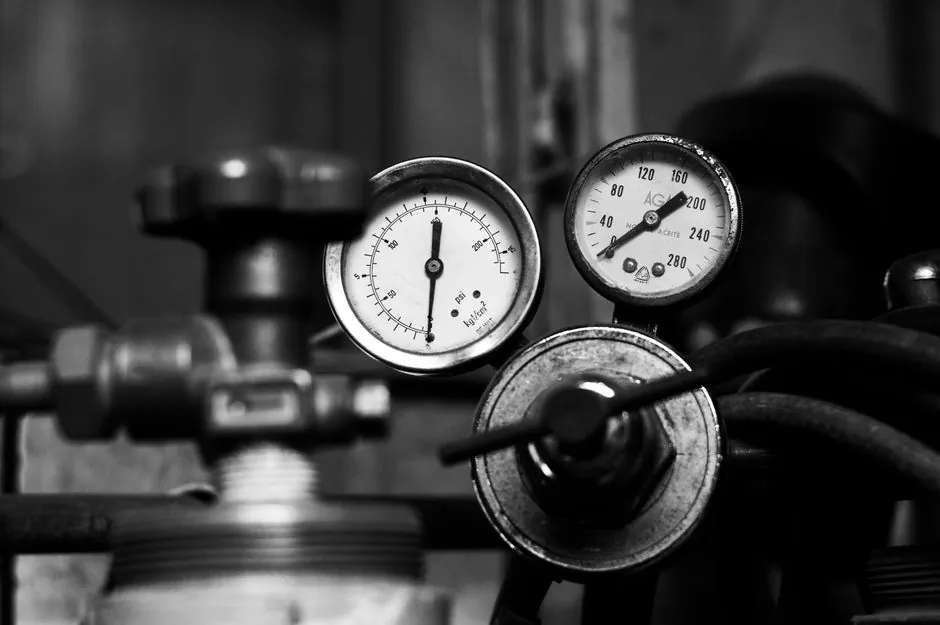
A concentric butterfly valve's inherent flow curve is not a clean equal percentage across its full 0 to 90 degree travel; it tracks equal percentage roughly between 20% and 70% opening, flattens below 20% into a near quick-open shape, and approaches linear above 70% as the disc clears the seat [S5][S8].
The practical consequence for process control: a line-size butterfly is cheap and compact, but its installed gain swings from very high at small openings to very low near full open, which forces a tight loop-tuning window and limits effective rangeability to roughly 25 to 50% of nominal travel unless trim, positioner cam, or geometry is changed [S3][S7].
Inherent vs Installed: What the Curve Actually Means
The inherent flow characteristic is the laboratory curve measured at constant differential pressure across the valve, with flow plotted against valve stroke; it is a property of the trim geometry alone and is what manufacturers publish on the data sheet [S1][S4].
The installed flow characteristic is what the loop sees once the valve is bolted into piping: as the valve opens, line friction absorbs more of the system pressure, the available dP across the valve drops, and the real curve deviates from the inherent one, often enough to convert an equal-percentage inherent into a near-linear installed curve when the valve's dP is a small fraction of the total system dP [S1][S4][S10].
A valve trim that is equal percentage in the lab typically becomes closer to linear in the field whenever the valve pressure drop is below roughly one third of the total loop drop, which is the usual condition for line-size butterfly installations because their Cv is so high [S4][S10].
Butterfly Geometry by Type: Concentric vs High-Performance
A standard concentric (resilient-seated) butterfly, with the disc shaft on the seat centerline, exhibits an inherent equal-percentage characteristic between 20% and 70% of opening, with the gain flattening sharply below 20% (high incremental gain) and rolling off above 70% (low incremental gain) [S5][S8].
A high-performance butterfly, double-offset so the disc clears the seat on opening and seals metal-to-metal at shutoff, shifts the inherent curve toward the middle: sources describe it as approximately midway between equal percentage and linear, which improves the controllable range but still does not give a pure linear trim [S2].
Globe valves are different hardware: their inherent characteristic is set by the plug profile (linear, equal percentage, or quick opening shaped on the same body), and the same physical globe can be supplied with any of the three trims [S1][S6]. A butterfly has no equivalent field-swappable plug profile, so the inherent curve is fixed by the disc and seat geometry and can only be reshaped externally by a characterizable positioner cam, by adding a trim ring, or by moving to a different body style [S4].
Equal Percentage vs Linear vs Quick-Open: Decision Criteria
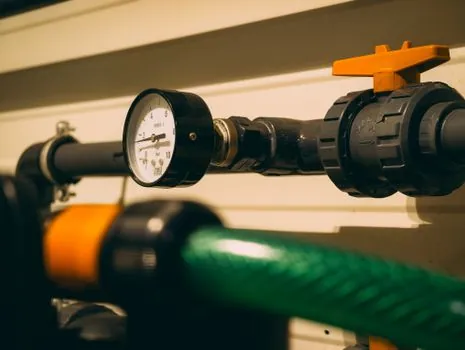
Equal percentage delivers a small flow change at low lift and a progressively larger flow change as the valve opens; this matches processes where the process gain rises with flow, such as heat exchangers whose heat-transfer coefficient climbs with throughput, and it is the most widely specified inherent characteristic in process control [S3][S4][S10].
Linear trim gives equal flow change per unit stroke at constant dP; it is the right pick when the valve takes the dominant share of the loop's pressure drop, which is rarely true for line-size butterflies, and it is the common choice for level loops on liquids where the system curve is roughly linear [S1][S4][S9].
Quick-opening (fast-opening) trim releases most of its flow within the first 20 to 30% of stroke and is used for on-off or safety service, not throttling; the shape is not standardized, so two vendors' "quick-open" curves can differ noticeably [S1][S6].
On the four decision criteria that actually drive a spec, equal percentage, linear, and quick-open line up as: rangeability (high, low, low), sensitivity at low lift (low, medium, very high), sensitivity near full open (high, medium, very low), and fit to a line-size butterfly body (good with positioner cam, poor, poor) [S1][S4][S5][S10]. For the operating envelope of a typical butterfly valve on a throttling loop, equal percentage with a characterizable positioner is the safest default.
Where a Standard Butterfly Fails as Equal Percentage
Below 20% of nominal travel, a concentric butterfly's incremental gain spikes: a small step from the controller produces a disproportionately large flow change, which shows up in the loop as setpoint overshoot, oscillation, and the classic "hunt" pattern where the controller alternately opens and closes the valve [S3][S5].
Above 70% of travel, the same curve goes flat: large controller steps produce only small flow changes, so the loop becomes sluggish and the controller has to keep nudging the valve toward its seat, which is also where seat wear and cavitation risk concentrate [S3][S8].
The combined effect is a useful controllable range of roughly 25 to 50% of stroke for a standard butterfly, which is the reason butterfly valves are most often deployed in secondary loops or in applications where pressure drop across the system must be limited and a line-size, unobstructed path is required [S3].
Reading the Curve in Vendor Curves vs DCS Reality
Vendor inherent-characteristic curves are taken at constant dP with water or air, plot normalized flow (Q/Qmax) versus percent travel, and are the right tool for comparing two trims on the same basis [S1][S7].
The installed curve on a DCS trend, by contrast, is the loop's response to the PID output, and it embeds pump curves, pipe friction, heat-exchanger dynamics, and the positioner's cam profile; because installed characteristics include both valve and pipeline effects, the same butterfly that looks 'equal percentage' on the data sheet can look different on a DCS trend when process conditions distort its installed gain [S3][S4].
For instrument air, cooling water, and large-diameter ventilation or low-pressure gas headers, flow measurement loops on butterfly throttlers usually need either a characterizable positioner or an external characterized cam to recover the equal-percentage shape, otherwise the loop will operate across the flat top of the inherent curve and never close the deal on tight control.
Selection Rules by Application
For heat-exchanger temperature control, fermentor temperature control, and other loops where process gain rises with flow, specify a high-performance butterfly with equal-percentage inherent characteristic and a characterizable positioner, and verify with the vendor that the published curve holds between 20% and 70% opening at the installed dP share [S2][S3][S8].
For line-size cooling-water or large-diameter low-pressure gas isolation where the requirement is to throttle over a narrow range near one operating point, a concentric butterfly with a linear-characterized cam is acceptable and economic; expect a controllable range of 25 to 50% of stroke and tune the PID conservatively [S3][S5].
For on-off or isolation duty, including most double-block-and-bleed and ESD applications, specify quick-opening behavior and avoid the equal-percentage throttling window entirely; seating material (PTFE, RTFE, metal) then matters more than the characteristic, and flow sensor feedback is rarely required at the valve itself [S1][S6].
For services where the butterfly must act as the primary control element and the process is sensitive, replace it with a globe or a high-performance control butterfly with a documented equal-percentage inherent curve across at least 20 to 80% of travel, and size it so that its dP is the dominant share of the loop drop rather than a sliver of it [S3][S4][S10]. The electromagnetic flowmeter and Coriolis flowmeter references on this site cover the verification side of the loop, but the rule stays the same: fix the inherent curve first, then validate against an installed flow meter reading.
One more use case worth flagging: in pump recirculation and minimum-flow bypasses, the butterfly often operates at a single fixed opening for years, and any of the three inherent characteristics will work because the controller is effectively a hand valve; in that case, choose on shutoff pressure rating, seat material, and actuator torque budget rather than on the characteristic curve.
For related coverage, see Cantilever vs Selective Pallet Rack for Long Bar Stock: Spec Decision.