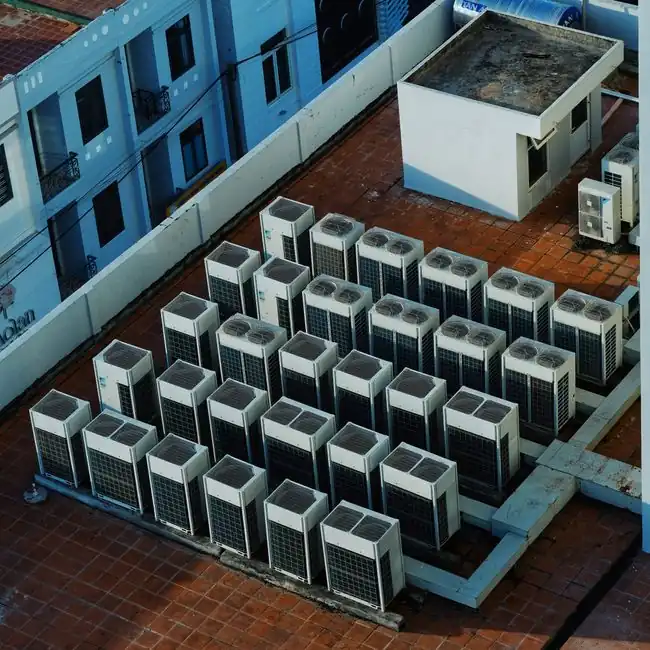
Butterfly valves suit common HVAC isolation duty when selected as resilient-seated, quarter-turn units, while double-offset and triple-offset designs address higher pressure, temperature, and durability requirements [S2][S4][S5].
The selection must match the valve function, system pressure and temperature, fluid chemistry, flow direction, actuation method, and allowable pressure drop, with 25% to 50% of total system pressure drop allocated to the control valve [S1].
Define the HVAC duty before choosing the design
Butterterfly valves are quarter-turn rotary valves used primarily for isolation in HVAC piping [S4]. They can also modulate flow, because the disc can rotate through intermediate positions between fully open and fully closed [S3].
That distinction matters. A maintenance isolation valve is selected for dependable shutoff and low cost, while a modulating control valve requires stable sizing, sufficient actuator torque, and a stroke response that does not produce hunting. HVAC valves regulate, isolate, direct, or balance flow in hydronic systems carrying water, glycol, or steam [S4].
For chilled-water applications, the example service condition is approximately 42°F, or 5.5°C [S4]. Condenser-water systems are more severe because the open loop introduces oxygen, scale-forming minerals, and debris, making corrosion-resistant construction and suitable elastomer seats relevant selection criteria [S4].
Compare the three principal butterfly valve designs
Concentric, double-offset, and triple-offset designs should be compared by pressure capability, operating temperature, seat life, and installed cost rather than by offset count alone. The principal options are summarized below. [S2]
Resilient-seated valves are the most economical option for lower-pressure, ambient-temperature applications [S2]. Double-offset construction moves the disc away from the seat early in the opening stroke, leaving contact during only the final 5% to 7% of closure and reducing operating torque and wear [S2]. Triple-offset valves add conical, inclined sealing geometry, so the disc and seat do not rub during operation and sealing is produced by metal-to-metal wedging [S2].
Match materials to the circulating medium
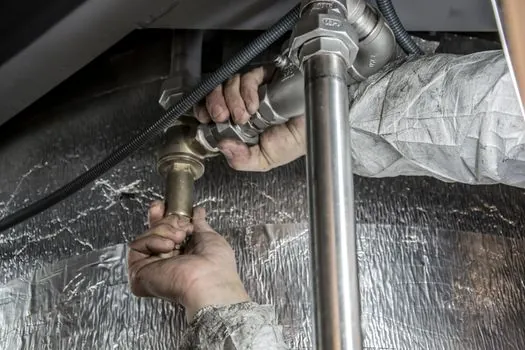
For standard heating and cooling water, an EPDM seat is a common HVAC choice, but the selected elastomer must be compatible with the actual water/glycol concentration and temperature [S4]. Seat material is not interchangeable across every HVAC service: resilient-seated valves are suitable for lower-pressure HVAC and general service, while high-performance designs are required for steam, chemicals, and higher pressures [S5].
Elastomer seating provides bubble-tight isolation in resilient-seated designs, but that advantage does not remove the temperature limit of the specific rubber or polymer [S5]. Bray lists EPDM, BUNA-N, and PTFE among application-specific seat materials [S2]. For a project submittal, the body, disc, stem, seat, and actuator materials should each be checked against the fluid, pressure, and temperature rather than treated as a single generic valve grade [S3][S5].
Metal options include stainless steel, aluminum bronze, and duplex alloys, while PVC, CPVC, and PVDF provide corrosion resistance and low weight in chemical applications [S5]. Fiberglass-reinforced composite construction is non-conductive and is used for seawater, chlorine, and aggressive chemical service [S5]. For ordinary building hydronics, the practical decision is usually economic, not exotic: use a compatible resilient seat for low-temperature water and move to double-offset or metal-seated construction when service severity warrants it.
Size the valve around pressure drop and control behavior
A control valve should absorb 25% to 50% of the total system pressure drop [S1]. This allocation gives the trim enough authority to change flow, but it also makes line sizing, fittings, and valve selection interdependent. An undersized valve can starve a coil, while an oversized valve can hunt, waste energy, and accelerate actuator failure [S4].
Butterfly valves are available in two-way and three-way configurations, and tight shutoff depends on proper selection of actuator force [S7]. Belimo's documented HVAC family includes wafer and lug types in 4-inch, 5-inch, and 6-inch sizes, with pneumatic, electric, or hydraulic actuators available for all valve sizes [S3][S8].
For modulating service, check the valve's rated flow coefficient at the planned opening position, available actuator torque at minimum and maximum differential pressure, and stroke speed against the control signal. Low opening positions are particularly relevant because a butterfly valve can lose effective flow control near its narrowest opening, as discussed in Why Butterfly Valves Lose Flow Control Below 20° Open.
Choose the actuator and installation method
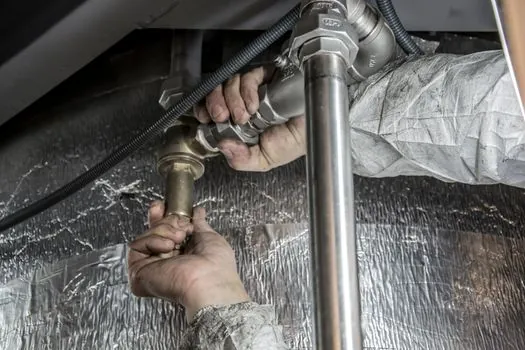
Manual operation is suitable for infrequent isolation, while automatic HVAC systems can use pneumatic, electric, or hydraulic actuators at all valve sizes [S3]. Electric actuators support direct digital control and remote status feedback, pneumatic actuators provide compact proportional or on-off action, and hydraulic actuators serve high-force or hazardous-area applications where the required installation conditions are satisfied.
Wafer and lug constructions are both available for HVAC butterfly valves, including documented 4-inch, 5-inch, and 6-inch sizes [S8]. Wafer installation is compact but requires careful flange alignment and gasket support. Lug construction provides independent seat retention and is more suitable where the valve must be removed from a live flange or where maintaining the integrity of the upstream and downstream pipework matters.
Actuator selection should use the valve manufacturer's torque requirement as the governing input, then add the mechanism's operating environment, fail position, control signal, and required service life. For modulating control, actuator force and valve travel must work together; excessive force can damage the seat, while insufficient force prevents full travel or degrades shutoff [S7].
Know where butterfly valves are the wrong choice
Butterfly valves are not the default selection for every HVAC control duty. Steam systems are primarily served by globe valves because their throttling behavior suits high-temperature steam, high velocity, and phase-change conditions [S4]. For very low-flow applications, a conventional modulating control valve may provide better authority than a quarter-turn disk.
Resilient-seated construction is not suitable for high-pressure or high-temperature service, and even a double-offset valve remains dependent on compatible body, disc, and seat materials [S5]. Triple-offset designs reduce rubbing and wear but carry higher upfront cost and require careful media-compatibility selection [S5]. A metal-seated valve can also be unsuitable where chemical attack on the sealing surfaces is a concern.
Isolation-only duties do not justify paying for a high-performance control trim. Conversely, a valve intended for throttling should not be specified solely from its pressure class. Verify rated capacity, flow characteristic, actuator torque, seat material, body style, and cycle-life expectations against the actual loop.
Build a traceable HVAC purchase specification
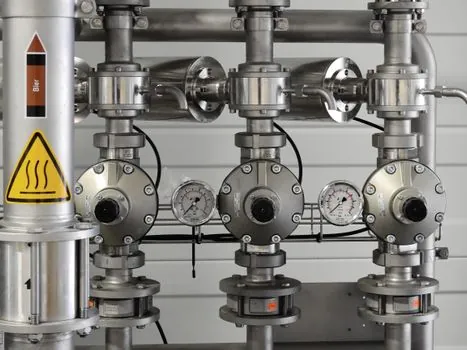
A butterfly valve submittal should state the system service, design pressure, design temperature, fluid composition and glycol concentration, flow direction, valve function, connection method, size, allowable pressure drop, actuator type, control signal, fail position, and seat material [S3][S4]. This converts a general valve request into enforceable selection criteria.
For routine building services, specify a resilient-seated, quarter-turn butterfly valve with an EPDM seat where the fluid and temperature permit it. Use double-offset construction when the installation needs higher pressure capability, lower operating torque, longer seat life, or steam and chemical capability [S2][S5]. Reserve triple-offset metal-seated construction for severe high-pressure, high-temperature, or frequent-cycling service where the lifecycle benefit justifies its cost [S2][S5].
For procurement, track three signals in the submittal: the 25% to 50% control-valve pressure-drop allocation, the applicable maximum pressure and temperature, and the verified actuator torque at design differential pressure [S1]. These three checks expose undersizing, incompatible seat selection, and inadequate actuator sizing before installation.