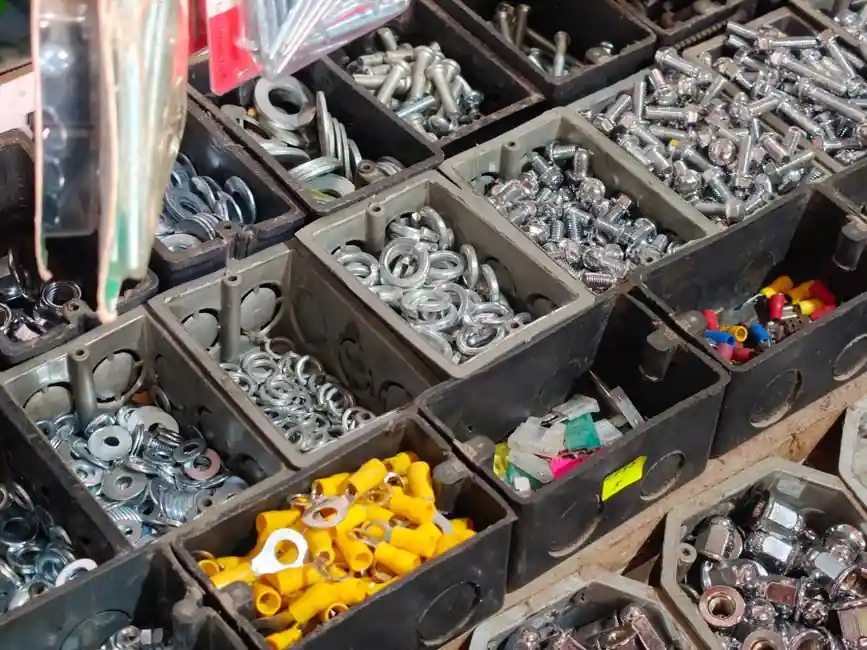
An IP66 enclosure is only as watertight as its weakest entry point, which is almost always the cable gland at the bottom of the cabinet: wrong thread, mismatched sealing range, or wrong material, and the whole protection concept fails [S2].
Selection therefore runs in a fixed order: measure the cable outer diameter with a caliper on a straight, undamaged jacket section, confirm the enclosure cut-out and thread standard (metric M, PG, NPT), then match ingress rating, material, and any required hazardous-area certification to the installation environment [S1][S2].
How a Gland Actually Seals: Core Parts and Torque Logic
Tightening the compression nut drives an internal taper radially inward, pressing the elastomer sealing ring against the cable outer sheath and closing the gap that would otherwise admit water and dust [S2]. In armoured cable glands the same axial travel also forces clamping jaws into the steel wire armour, producing both a mechanical anchor and a low-resistance earth bond, which is why armoured glands are mandatory where the armour itself is the protective earth path [S2].
The standard parts list is short: gland body with entry thread, compression nut, sealing grommet or ring, clamping jaws or cone (armoured types only), and an internal lock nut that secures the body to the enclosure wall [S2]. A separate cable gland reference page lays out the same five-element anatomy and shows how each part contributes to either the seal, the strain relief, or the earth continuity path. Under-torque and the seal leaks with no strain relief; over-torque and the elastomer splits or the cable sheath deforms, so most manufacturers publish a tightening torque per gland size on the data sheet.
Material Options and What They Survive
Brass (typically nickel-plated) is the default for outdoor and industrial use because it handles UV, ozone, common oils, and a temperature band wide enough for most process plants, and accepts metric, PG, and NPT threads from stock [S1][S2]. Stainless steel (A2 / A4 grades) is specified where corrosion rules, including coastal, chemical, and wash-down food-grade lines, and where the gland must carry hazardous-area approval such as ATEX or IECEx [S2].
Polyamide (nylon) glands are widely used on indoor control panels and light commercial enclosures: cheap, non-corrosive, and rated to roughly IP68 in many sizes, but they lose mechanical strength above 80 to 100 °C and degrade under prolonged UV, so they are not a coastal or rooftop choice [S1][S2]. Aluminium sits between brass and stainless on cost, with good mechanical strength but poorer long-term corrosion resistance in salt atmospheres, so it is usually kept to indoor switchgear and transformer boxes [S2].
IP and IK Ratings: What the Numbers Actually Mean
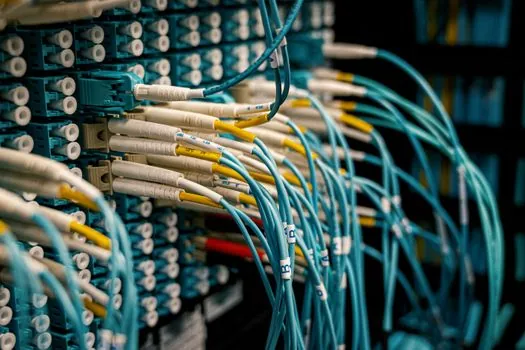
IP ratings follow IEC 60529, a two-digit code where the first digit rates solid-particle ingress (0-6) and the second rates water ingress (0-9); an IP68 rating means dust-tight and continuous water immersion beyond 1 m depth, while IP66 means dust-tight and protected against powerful water jets [S1][S2]. A gland on a rooftop solar combiner or a wash-down food line is a different animal from one inside a control room, so the realistic expectation is to match the second digit to the worst credible water exposure at that entry, not to the enclosure as a whole [S2].
IK ratings follow IEC 62262 and grade mechanical impact from IK00 (no protection) to IK10 (20 J impact); they are often overlooked, but on a quarry, mobile equipment, or a public-area enclosure, IK07 or IK08 is a sensible minimum on any gland body exposed to impact [S2]. For a fuller view of how IP fits into broader equipment-sealing practice, the construction machinery and equipment page shows typical IP/IK pairings on heavy-mobile cabs and engine bays, which is the same logic that drives outdoor gland choice.
Sizing Procedure: Five Steps That Prevent the Common Mistakes
Step 1: measure the cable outer diameter on a straight, undamaged section of jacket with a caliper, and never size from the conductor cross-section or the nominal cable code, because the sealing ring grips the jacket, not the copper inside [S2]. Step 2: read the gland manufacturer's clamping range and pick a cable that sits in the middle of the range, not at the extreme, since jacket tolerances of 0.3 to 0.5 mm are normal between cable batches [S2][S3].
Step 3: confirm the thread type (metric ISO, PG, NPT) and the enclosure cut-out; metric and PG are not interchangeable even when the nominal diameter looks similar, and NPT is a tapered thread that seals by paste, not by an O-ring [S2]. Step 4: define the protection level as IP and IK, and step 5: layer the environment on top (chemical, marine, UV, temperature), and only then look at hazardous-area approval and torque values [S2][S3].
Thread Standards and Why Mixing Them Fails
Metric ISO (M12, M16, M20, M25, M32, M40, M50, M63) is the European default and the one most new panel builds accept; PG (Panzergewinde) is the legacy German pattern still common on older European equipment, while NPT (ANSI/ASME B1.20.1) is the tapered North American standard and seals by thread paste rather than a captive O-ring [S2]. The mechanical trap is that a PG21 cut-out is not the same as an M20 cut-out: the nominal diameters are close, but the pitch and thread profile are not, so a gland that "feels like it fits" will cross-thread or leave a leak path [S2].
PG and metric are visually close enough to mis-stock on a busy site; the safe move is to label enclosure cut-outs by standard, and to keep PG glands in a separate bin on the shelf. A practical field check is to thread a known-good sample by hand before torquing; resistance or a gritty feel on the first turn is a stop sign.
Armoured vs Unarmoured vs Split: Picking the Right Family
For SWA (steel-wire-armoured) cable, an armoured gland such as the BW, CW, or A2 type is mandatory because it must terminate the armour and maintain earth continuity, and the gland body carries the relevant Ex rating when the run enters a hazardous area [S2]. For unarmoured cable, a simple compression gland (often the A2 or "stuffing" pattern) suffices, with the elastomer doing all the sealing work and a plastic or brass ferrule taking the strain [S2].
Split cable glands exist for the specific case where a cable is already terminated with an M8/M12, RJ45, USB, HDMI, or D-sub connector that cannot be removed, since the two-part body and split sealing insert close around the jacket after routing [S3]. The trade-off is real: split glands cost more per entry, the insert clamping range is tighter than a solid gland, and the connector itself must pass through the enclosure cut-out, so the cut-out size is set by the connector, not the cable [S3]. When several pre-terminated cables share one opening, a multi-cable split gland or a modular cable-entry frame is the higher-density option [S3].
Hazardous Areas, Ex Ratings, and When to Walk Away
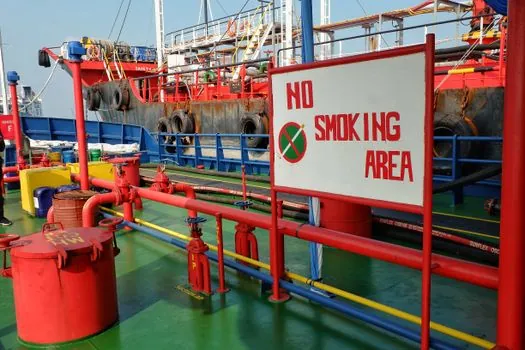
For Zone 1 and Zone 2 (gas) and Zone 21 and Zone 22 (dust) the gland must carry the matching Ex d (flameproof) or Ex e (increased safety) rating, and the certificate number must cover the specific cable construction and the gland's sealing range, not just the gland body [S2]. On a refinery or an ATEX-rated chemical line, choosing a general-purpose brass gland because it "looks the same" is the single most common procurement error, and it invalidates the Ex certificate of the whole assembly.
The honest scope limit: an engineer who has not been told the zone classification, the gas group, and the cable type cannot select a hazardous-area gland from a catalogue page alone, and the gland certificate (not the catalogue marketing copy) is the document that governs. For non-hazardous outdoor work, IP66 or IP68 with UV-stable materials is the practical ceiling, and specifying higher adds cost without real benefit.
Common Procurement Mistakes and Field Reality
Three errors appear on most retrofit audits: sizing to conductor cross-section rather than jacket OD, mixing metric and PG glands on the same panel, and using a nylon gland outdoors where UV will embrittle the body within a service interval [S2]. On the demand side, oil and gas, chemical, power generation, and rail tend to use the most glands per kilometre of cable, while commercial fit-outs use the fewest, so the per-project gland count is a reasonable proxy for the engineering effort the spec deserves [S2].
Split-gland buyers often select on connector size and forget the jacket OD, which produces a gland that fits the connector but cannot seal the cable, a fault that only shows up on the IP test [S3]. The fix is the same as for solid glands: measure both, and pick the insert whose clamping range brackets the measured jacket OD with margin [S2][S3]. Where a cable gland is being matched to a linear guide or another moving-cable carrier on a machine, the gland also has to accept the dynamic bend radius without binding, which is a separate spec point on top of IP.
Trackable next signals to watch: revision updates to IEC 60529 (the IP code), changes to common gland certification schemes (ATEX 2014/34/EU, IECEx), and the move toward higher-density split entries on robotic and EV charging cabinets, where a single M40 cut-out increasingly carries four or more pre-terminated cables.
See also our earlier report, Aerospace Coating Selection: Friction, Corrosion, and Qualified Process Controls.