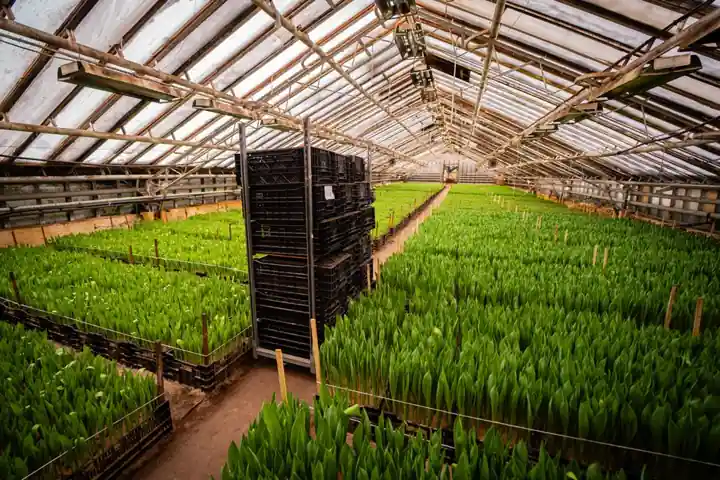
A GE gas-turbine sensor can generate roughly 500 GB per day, which scales to 182.5 TB per year for one sensor before backups, metadata, or replicated copies [S2].
Plant-wide capacity must be calculated from sensor count, sample frequency, record size, retention period, and the share of raw data retained for analysis [S2][S4].
Separate Raw Capture From Retained Plant Data
The 500 GB per day example is a high-rate industrial case, not a universal plant average [S2].
The correct first calculation separates generated bytes from retained bytes. Generated data is the raw acquisition rate multiplied by operating time. Retained data is the portion preserved after sampling, aggregation, compression, or deletion. Plants commonly sample, average, or discard sensor data, and many machine controllers keep only a short window of detail before overwriting it [S2].
Convert Sample Counts Into Defensible Capacity
A simple sizing formula uses bytes per reading, samples per second, active seconds per year, and a replication factor. [S2]
The same formula shows why frequency matters.
Divide that total by 1,000,000,000 for gigabytes or 1,000,000,000,000 for terabytes. Apply a separate replication allowance to stored copies rather than hiding it inside the raw calculation.
Compare Storage Strategies By Recoverability And Cost

Plants may sample, average, or discard data and retain only a fraction of what survives those operations [S2].
The principal comparison is raw history against aggregated history against selective capture. Raw history maximizes analytical detail and storage cost. Aggregation reduces volume but can erase short excursions, including brief pressure or temperature events that occur inside an averaged interval [S2]. Selective capture balances both by retaining event windows and selected summaries.
Hourly averages are unsuitable as the only record when investigating transient disturbances.
Choose Sensors And Capture Equipment For The Load
Plant sensor selection should begin with the engineering question, not the storage allowance. Wearable plant sensors can support precision-agriculture applications, but they are often inadequately tested in crop-relevant environments and require further development for use in open fields, greenhouses, and vertical farms [S1].
The data logger should match sample rate, sensor count, time synchronization, local buffering, and network outage requirements.
For test and commissioning work, a digital multimeter may provide the reference measurements needed to validate a connected sensor or logger. That validation should establish whether the generated dataset represents the physical process rather than controller noise, quantization, or an incorrect scaling factor.
Account For Plant Infrastructure And Retention
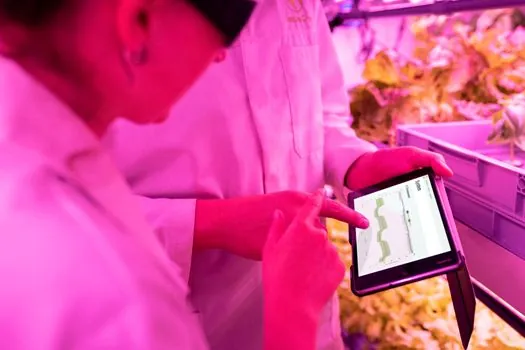
Network capacity and storage were often designed for production counts, work orders, and quality records rather than terabytes of machine telemetry [S2]. Centralizing a full stream therefore requires both transfer bandwidth and persistent capacity, while many controllers retain only a short detailed window before overwriting it [S2].
Historical retention should be tied to the questions the plant expects to answer. More detail in how much historical data makes analytics pay off is useful when it supports failure analysis, production improvement, or model validation, but storage without an assigned analytical use is an operating cost rather than an asset [S2].
Use A Mixed Retention Policy
Industrial data storage normally needs three tiers: high-resolution event windows, summarized production history, and long-term business or compliance records. The research describes a common plant pattern in which live values remain visible while detail is trimmed, averaged, or discarded [S2]. That architecture limits storage but can make later investigation impossible.
A workable policy preserves raw samples around alarms, startup, shutdown, tool changes, batch transitions, and abnormal conditions. It stores cycle summaries for routine production analysis and maintains separate retained records for selected assets with established failure-history or model-training needs. The detailed rules for keeping raw sensor data before downsampling must reflect the failure mechanism and sampling frequency, not one universal duration.
Capacity planning should be tested against measured payloads rather than controller labels. Track two figures: generated bytes per year and retained bytes per year. A single sensor can generate roughly 500 GB per day, or about 15 TB per month, while plants keep only a fraction of data after sampling and averaging [S2].
The next trackable check is the ratio between raw sensor output and preserved history, including backup copies, for each machine and data logger; a rising storage curve without a defined analytical use is a strong signal to revisit sampling and retention rules.