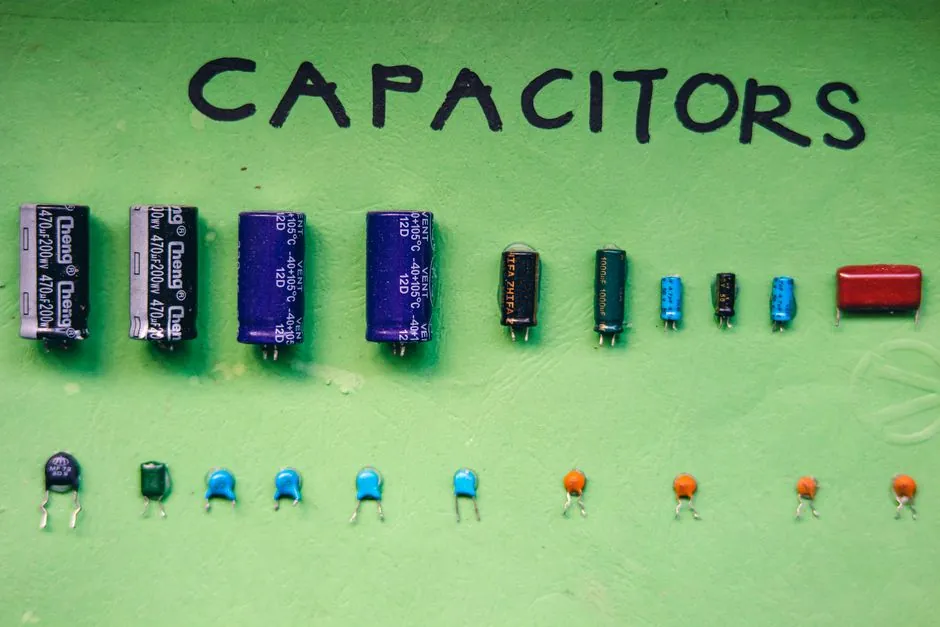
Three sensing principles cover roughly 95% of industrial pressure sensor selections, and the right one is driven by full-scale range, accuracy class, bandwidth, and power budget rather than by brand or cost alone [S1][S2].
Capacitive cells pair a fixed plate with a pressure-deflected diaphragm, measure ΔC, and convert it through an ASIC; piezoresistive cells use four resistors diffused into a silicon diaphragm wired as a strain gauge Wheatstone bridge; bonded-foil strain gauge cells use a metal foil gauge glued to a stainless diaphragm or beam, read out as a bridge [S1][S2][S3].
Operating Principle and Typical Pressure Range
Capacitive pressure sensors read capacitance change between two isolated plates when the top diaphragm bends, with typical spans from 0.1 inH₂O (≈ 0.025 kPa) up to roughly 100 psi (≈ 690 kPa) and accuracies as tight as ±0.25 inH₂O (±0.009 psi) in HVAC and cleanroom HVAC/R products [S2][S4].
Piezoresistive sensors use a four-resistor Wheatstone bridge diffused into a silicon die; full-scale spans commonly run from 0.15 psi (≈ 1 kPa) to 15 000 psi (≈ 100 MPa) and dominate automotive, consumer, and general industrial MEMS parts because the silicon process is mature and cheap [S1][S2].
Bonded-foil strain gauge pressure sensors bolt a metal foil gauge to a stainless diaphragm or bending beam, making them well suited to ranges from 100 psi up to 100 000 psi (≈ 700 MPa) and to hostile media that would attack a silicon die [S3][S7].
Accuracy, Total Error Band, and Long-Term Stability
Capacitive cells typically deliver a lower total error band than piezoresistive cells at the same price, and they show very good long-term stability because the sensing element behaves like a passive capacitor pair with two reference and two sense capacitors cancelling common-mode drift [S2].
Setra's variable-capacitance parts hit ±0.25 inH₂O (±0.009 psi) accuracy in low-pressure HVAC/critical-care ranges, a level that bonded strain gauge metal-foil cells rarely reach below 1 psi because foil gauge non-linearity rises as the diaphragm gets softer [S4].
Piezoresistive sensors usually need active temperature compensation because the diffused resistors have a temperature coefficient of resistance an order of magnitude worse than the strain itself, so expect an extra ASIC and a calibration table to hold the total error band competitive [S6].
Power Consumption and Signal Conditioning
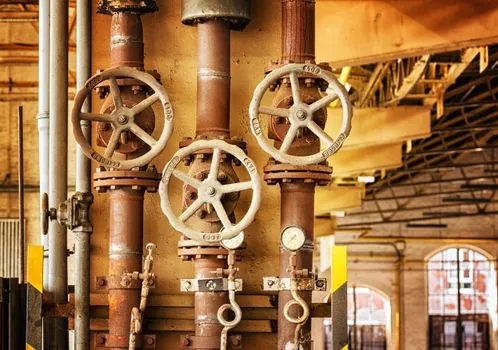
Capacitive pressure sensors draw far less current than piezoresistive because no DC flows through the sense element, only a small excitation charge is needed to read ΔC, making them the standard choice for battery or implanted medical devices and remote wireless nodes [S2].
Piezoresistive bridges need a constant excitation current or voltage to develop an output, which typically pushes quiescent current 5–10× higher than an equivalent capacitive cell running the same duty cycle; this is documented as a clear power-budget penalty in the design literature [S2][S9].
Dynamic Response, Overrange, and Media Compatibility
Capacitive diaphragms are mechanically soft for high sensitivity at low pressure, so proof pressure is usually 2–5× FS and burst pressure 5–10× FS; pushing them above 100 psi FS costs accuracy, so for high-pressure oil & gas, hydraulics, or downhole, a pressure transmitter with a metal-diaphragm strain gauge or piezoresistive cell is the working answer [S2][S4].
For dynamic measurements above ~1 kHz, e.g. combustion, injection, or blast testing, piezoelectric sensors win on bandwidth and on a very small, near-zero static drift; the trade is that they cannot hold a true static reading, while strain gauge cells hold both static and dynamic, just with lower resonance [S5].
Comparison Matrix for Selection
On full-scale range, capacitive typically covers 0.025 kPa–690 kPa, piezoresistive 1 kPa–100 MPa, and bonded strain gauge roughly 0.7 MPa–700 MPa, so range alone eliminates two of the three for many jobs [S1][S2][S3].
On accuracy, capacitive parts reach ±0.05% FS or better in HVAC and cleanroom, piezoresistive with compensation land around ±0.1%–±0.25% FS, and bonded strain gauge usually sits in the ±0.1%–±0.5% FS band depending on grade [S2][S4].
On power, capacitive draws microamps, piezoresistive draws milliamps, and bonded strain gauge draws milliamps, with the pressure sensor excitation current dominating all three above the signal chain [S2][S9].
When to Choose Each Technology
Pick a capacitive pressure sensor when full scale is below ~15 psi (≈ 100 kPa), when ±0.1% FS or better is required, when the loop is 4–20 mA two-wire, or when the device runs on a coin cell, a wireless HVAC transmitter, or an implanted medical platform [S2][S4].
Pick a piezoresistive cell when full scale sits between 5 psi and 15 000 psi (≈ 35 kPa–100 MPa), the cost target is low, the media is clean or isolated by a stainless diaphragm, and the design can absorb a few mA and a temperature-compensation ASIC; automotive MAP/BAP, HVAC duct static, hydraulic test stands, and disposable medical CPAP parts all sit in this lane [S1][S2][S3].
Limitations and Failure Modes
Capacitive diaphragms can be over-driven by water hammer or ice plugging, where proof/burst ratings of 2–5× FS are exceeded and the membrane either bottoms out permanently or fractures, so always spec proof ≥ 1.5× the highest possible surge pressure including transients [S2][S4].
Piezoresistive silicon dies drift with temperature unless actively compensated, and a non-isolated die exposed to condensing humidity or ionic fluids will see corrosion or leakage paths; specifying an isolated, oil-filled stainless module addresses both [S1][S6].
Bonded foil strain gauges suffer creep, hysteresis, and zero return errors, which are typically 0.02%–0.05% FS in industrial grades and an order worse in cheap load-cell builds, so dynamic weighing and force loops need periodic re-calibration or a higher grade [S3][S7].
Sourcing, Standards, and Selection Hygiene
For process-plant duty, insist on at least one hazardous-area certification, e.g. ATEX 2014/34/EU or IECEx, on the data sheet before buying; for oil & gas with H₂S exposure, confirm NACE MR0175 compatibility; for sanitary service, the wetted finish must meet 3-A or EHEDG and an Ra surface finish ≤ 0.8 µm [S3].
Confirm the published total error band includes non-linearity, hysteresis, non-repeatability, and thermal effects over the operating range, because raw non-linearity is often half or less of TEB; the worst-case TEB, not the headline accuracy, is the spec a pressure calibrator test will catch in the field [S2][S4].
Next step: lock the full-scale pressure and the worst-case surge, then the TEB, then the media and certification, and only then look at supplier choice, because flipping that order is how projects end up with an over-spec'd silicon die in sour gas or an under-spec'd foil cell on a 0.5 inH₂O cleanroom duct.