Vacuum-bagged carbon-fiber epoxy laminates can reach 58% fiber volume fraction and less than 2% voidage when resin viscosity is controlled, while poor consolidation can produce 10% or greater void content [S3].
Wet layup is the more flexible and economical route, but vacuum bagging adds atmospheric compaction that improves consolidation, reduces resin surplus, and makes part-to-part quality more controllable [S1][S4].
Wet Layup and Vacuum Bagging Process Definitions
Wet layup places dry reinforcement in a mold, wets it with liquid resin, and works the resin into the fibers with rollers or squeegees; vacuum bagging then encloses that wet laminate with a flexible film and removes air to compress the part under atmospheric pressure [S1][S4].
The distinction is consolidation, not reinforcement content. Both routes can use carbon fiber and epoxy resin, and either can be used for prototypes, custom parts, marine or aerospace repairs, and low-volume structural components [S1]. Wet layup is most natural where geometry changes, small batches, or on-site repair work justify a manual process, while bagging is appropriate when void content, fiber fraction, and repeatability require tighter process control [S1][S3].
Vacuum bagging adds an upper pressure limit of 29.92 inHg, equivalent to approximately 10 tons per square metre, when the bag, seals, and tooling form an intact vacuum system [S4]. This pressure consolidates the wet laminate while excess resin is drawn into bleed material and a catch pot [S4].
Quality Comparison by Void Content and Fiber Fraction
Vacuum bagging produces a better result only when the resin viscosity, cure schedule, resin distribution, and sealing are controlled; the decisive quality parameter is resin viscosity at the moment pressure is applied [S3].
For the MY750/HY917/DY070 and LY1927/HY1927 epoxy systems tested with XA-S carbon fiber, a cure-cycle dwell raised resin viscosity before bag pressure was applied. Within the resulting viscosity window, laminates achieved up to 58% fiber volume fraction and less than 2% voidage [S3].
The same study states that conventional vacuum-bagged wet layup can suffer from inherently high void content compared with autoclaved prepreg systems and can reach 10% or more in some cases [S3]. That gap matters: manual saturation and drainage are easier to reproduce in a small laboratory coupon than in a large tool, while bag pressure can bridge complex geometry or pull resin from dry regions [S3][S4].
Cost is the main trade-off. Wet layup needs less equipment and is straightforward to learn, but it is labor-intensive and resin distribution can vary between parts; vacuum bagging uses consumables, vacuum equipment, seals, bleed media, and scheduled cure control to improve uniformity [S1][S4].
Decision Matrix: Manual Wet Layup Against Bagged Wet Layup

Manual wet layup wins on setup cost, repair flexibility, and one-off geometry, whereas vacuum bagging wins on attainable void content, consolidation, resin control, and repeatability when its process window is established [S1][S3][S4].
On capital and training, manual wet layup has the lower barrier because it requires minimal equipment and can be modified during placement [S1]. On void content, controlled bagging achieved less than 2% in the tested systems, compared with conventional outcomes that can reach 10% or above [S3]. On material yield, bagging removes excess resin through a catch pot, but the removed quantity varies with resin timing and vacuum application, so the material advantage is not automatic [S4].
On integration effort, wet layup requires fewer auxiliary systems, while bagging adds a pump, sealed bag, release film or peel ply, bleed cloth, catch pot, leak monitoring, and controlled pressure application [S4]. On production scale, large parts can require more than one bagging cycle because resin pot life limits the available working time, whereas manual wet layup is highly adaptable but harder to keep uniform across repeated parts [S1][S4].
Use manual wet layup for prototypes, tooling trials, local repairs, and short runs where operator control is strong. Use vacuum bagging for load-bearing laminates, larger parts, or repeat production when a resin-specific viscosity window can be defined and verified. For volume-critical laminates, resin infusion is the more direct quality route because dry reinforcement remains in the mold while resin is introduced under vacuum, producing more uniform distribution and high fiber content with minimal voids [S1].
Resin Viscosity and Cure-Window Control
Resin viscosity is the critical parameter in producing low-void carbon-fiber epoxy laminates, and each resin system has a viscosity window that can be mapped from its viscosity, temperature, and time behavior [S3].
A cure dwell before vacuum application is more technically meaningful than specifying bag pressure alone. Stringer’s 1989 work increased resin viscosity during the cure-cycle dwell, then applied bagging pressure within the material’s usable window; the tested systems reached up to 58% fiber volume and less than 2% voidage [S3].
The viscosity window was described as bounded by the same viscosity limits across different resin systems and temperatures, allowing the process to be constructed from a material’s time-temperature-viscosity data [S3]. In production, this means recording resin lot, temperature, elapsed time after mixing, and pressure-application point rather than following a fixed bagging delay across different rooms, tooling, and ambient conditions.
Prepreg remains the benchmark when repeatable low porosity matters more than manual processing flexibility. The comparative study identified autoclaved prepreg systems as the lower-void reference against which conventional wet layup and vacuum bagging were measured [S3]. For process selection, Carbon Fiber Prepreg vs Resin Infusion: Process Selection by the Numbers provides a useful comparison with the closed-mold infusion route.
Bag Sealing, Geometry, and Common Failure Modes
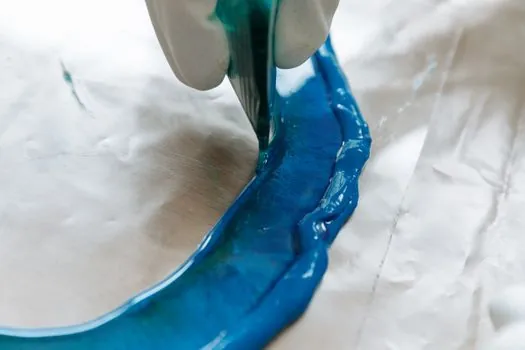
An intact seal must sustain the specified vacuum without leaks, and the bag must conform to the entire part without bridging sharp changes in geometry [S4].
Over-tensioning or sizing the bag incorrectly can cause the film to bridge over complex features, producing local gaps and uneven pressure transfer [S4]. Under-sized or poorly fitted bags do not provide full contact with the laminate, while a leak can force a rushed diagnosis and compromise the cure [S4].
Void formation is a process-control failure, not simply a bagging label. Entrapped air, premature pressure application, resin-rich zones, and low fiber fraction can all reduce structural performance; the literature identifies resin viscosity as critical to void control [S1][S3]. Bagging also leaves the surface of the component constrained by the bag and peel system, and excess-resin removal is not uniform from one part to another [S4].
Vacuum bagging is not the right choice where the part must be made without a sealed tool and curing-cycle control, where labor can be tightly controlled but vacuum equipment is unavailable, or where a one-off repair must be completed with minimal setup. It is the stronger option when internal porosity and laminate consistency dominate acceptance criteria and the manufacturer can establish a documented resin-specific process window [S1][S3].
Verification, Production Control, and Sourcing
Quality control should test the variables that determine the laminate: resin viscosity at pressure application, achieved vacuum, resin content, fiber volume fraction, void content, and part-to-part consistency [S3][S4].
For the cited carbon-fiber epoxy work, a defensible internal target is at least 58% fiber volume fraction with less than 2% voidage, provided the specified resin and cure schedule remain within the established viscosity window [S3]. A common bagging rule is not supported without that qualification because the dwell and viscosity limits depend on the resin system and temperature [S3].
Source the reinforcement as a defined carbon fiber architecture, since the reported result covered unidirectional and bidirectional 0/90-degree layups with XA-S high-strength carbon fiber and two named epoxy systems [S3]. Also source the resin with a documented viscosity-temperature-time curve, the bagging consumables as a complete system rather than isolated film and sealant, and the vacuum pump against the required leak and pressure performance [S4].
Track the first production article by measuring resin viscosity at bag application, vacuum stability, fiber fraction, and void content, then compare each lot with the 58% and 2% reference values. If those controls cannot be maintained, change to resin infusion or prepreg rather than tightening an uncontrolled wet-layup process by procedure text alone [S1][S3].